

Pair Mahogany Bedside
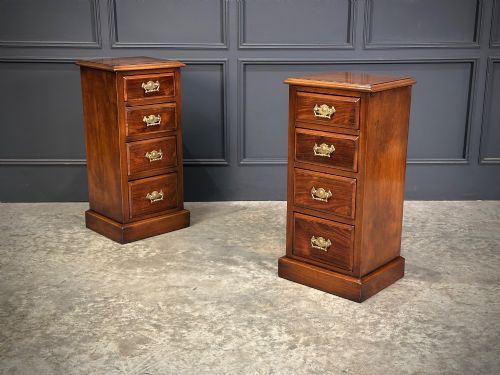
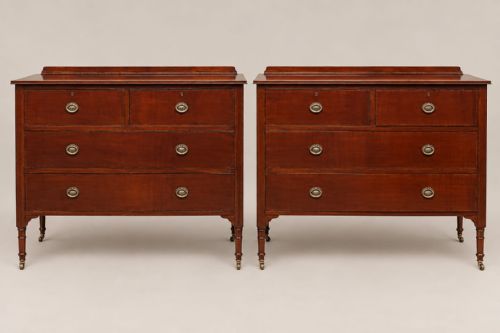
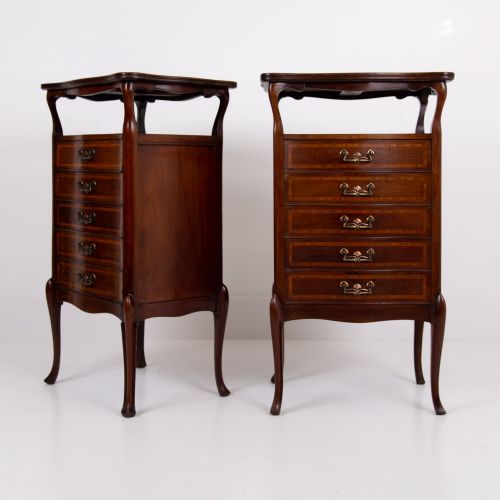
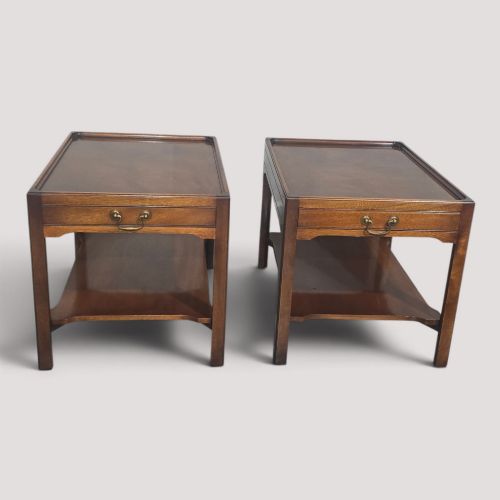
When you select a pair mahogany bedside, you secure matched night storage built from resilient hardwoods spanning multiple historic periods.
Pair Mahogany Bedside
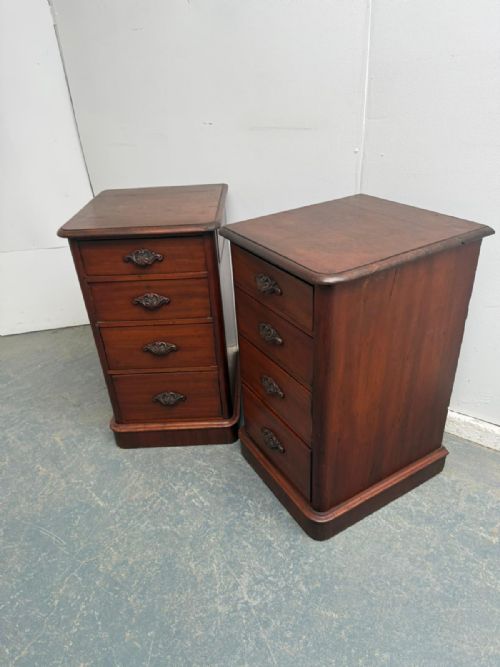
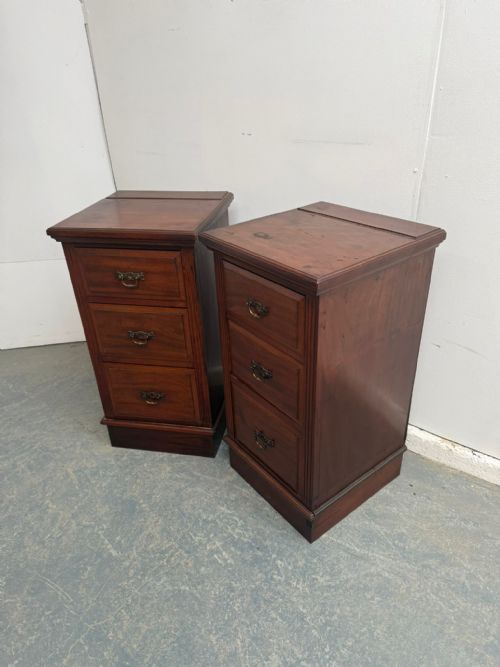
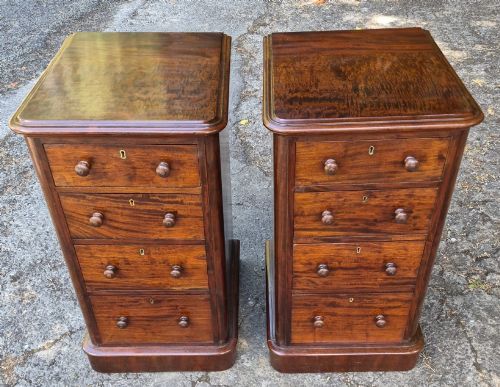
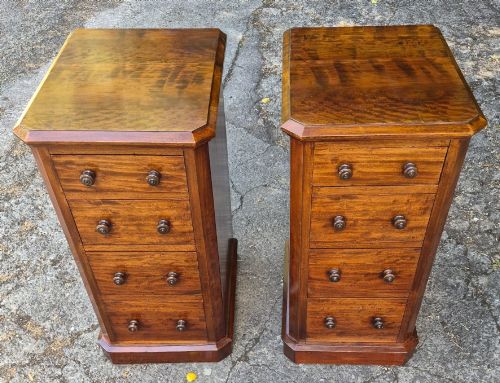
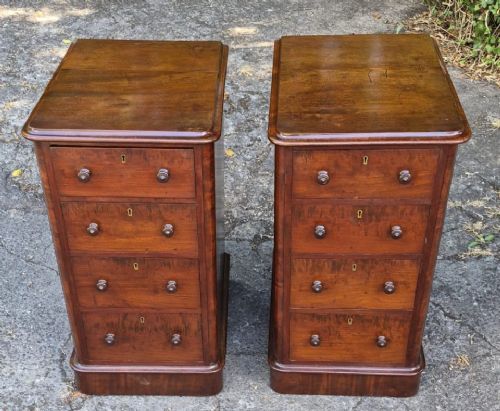
A pair mahogany bedside search reveals dual matching items designed for nighttime storage, most commonly encountered as Victorian chests of drawers or Edwardian cabinets.
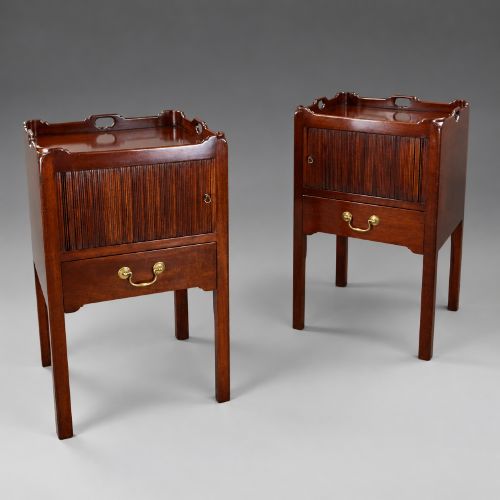
The selection ranges from Georgian style cupboards and Regency lamp tables to later twentieth-century interpretations, offering matched symmetry beside a bed.
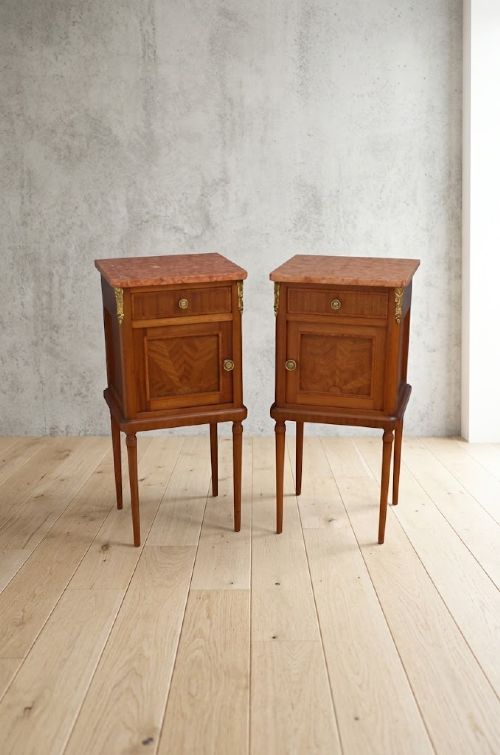
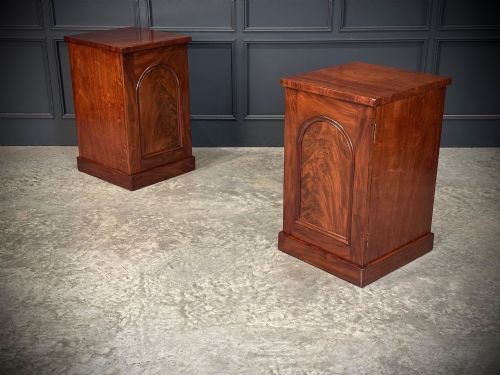
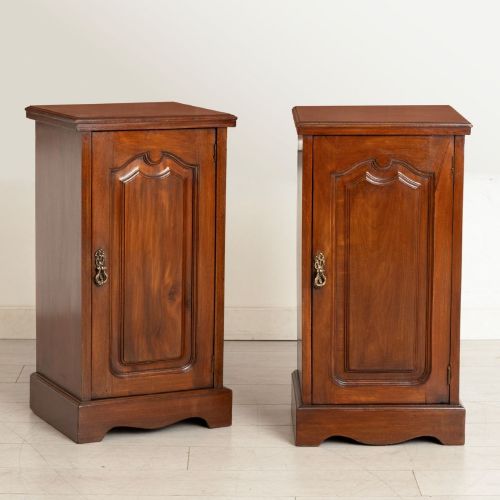
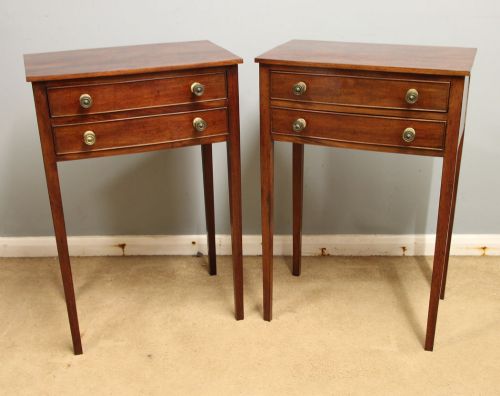
These pieces function as miniature chests, pedestal cupboards, or small side tables equipped with doors or multiple drawers to keep personal items concealed.
How They Were Made
Cabinet makers utilised solid mahogany and flame mahogany veneer over secondary timbers, occasionally accenting surfaces with satinwood inlay or contrasting brass hardware.
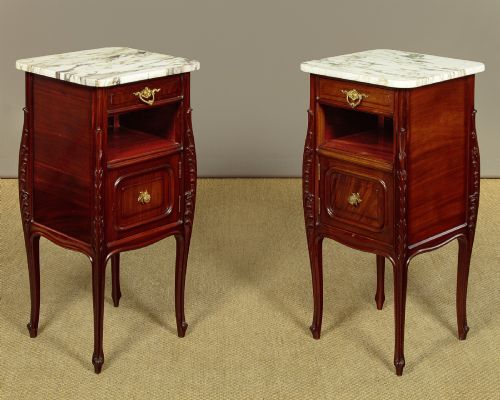
Some configurations incorporate inset marble tops, metal detailing, or iron elements, combining sturdy structural joinery with polished wax finishes.
Current listings feature mahogany alongside marble, brass, satinwood, and iron elements.
What Varies in Quality
Quality rests on the precision of the timber matching, particularly where symmetrical flame mahogany veneers adorn the drawer fronts and cabinet doors.
Refined examples show careful proportioning in serpentine or bow fronts, alongside crisp execution of revival carving styles like Chippendale or Louis XV.
Warings Liverpool·Holland and Sons
The Pair Mahogany Bedside Glossary
- Flame mahogany
- A distinctive wood grain figure resembling flickering flames, achieved by cutting through timber branches at specific angles. This decorative veneer appears frequently on high-status drawer fronts.
- Pedestal cupboard
- A narrow, single-door cabinet standing on a plinth or feet, designed to enclose chamber pots or general bedside storage. These tall units maximise vertical space in compact sleeping quarters.
- Serpentine front
- A furniture face curving outward in the centre and inward at the sides in a gentle 'S' shape. This complex shaping demands advanced carpentry skill.
- Inlay
- Contrasting woods or materials fitted into recessed portions of a base timber to form decorative patterns. Edwardian pieces often utilise satinwood for this contrasting work.
Pair Mahogany Bedside: Frequently Asked Questions
What periods do these come from?
The available selection spans from the eighteenth century through the Victorian and Edwardian eras into the early twentieth century. Georgian and Regency pieces represent the earlier end, while 1920 and 1930 items reflect later revivals.
Buyers also encounter nineteenth-century adaptations where older elements are reconfigured into matched pairs for modern bedroom use.
How were bedside cabinets originally used?
In historic bedrooms, these enclosed pieces served primarily to house chamber pots and nighttime necessities out of sight. Over time, their function shifted toward holding lamps, books, and personal effects.
Pairs ensure symmetrical placement on either side of a bed frame, balancing the room's layout.
Are all pairs perfectly identical?
Many listings describe near pairs, which share matching dimensions, periods, and timbers but may exhibit slight variations in hardware or grain pattern. True matched pairs were constructed alongside each other in the workshop.
Inspect the specific descriptions to determine whether cabinets were born together or assembled later as a matching set.
What is the difference between a chest and a cupboard?
Bedside chests feature multiple horizontal drawers stacked vertically for organising smaller items. Cupboards generally open via one or two hinged doors to reveal interior shelf space.
Both forms serve the same basic role beside a bed while offering different internal storage layouts.