



Pair Louis XVI Candlesticks
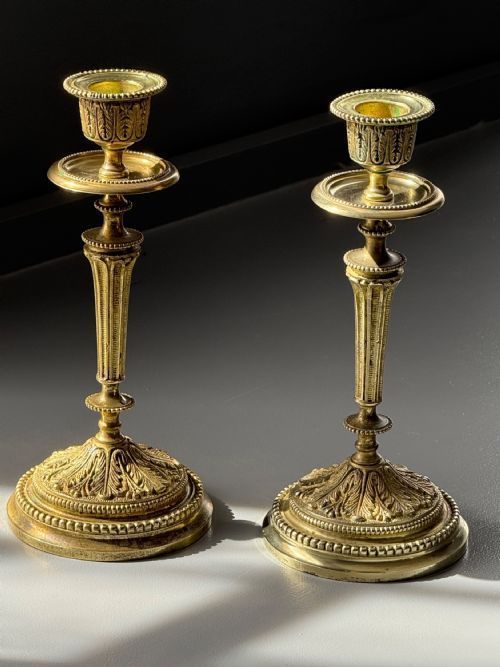
These pair louis xvi candlesticks bring neoclassical symmetry and patinated bronze into a room with genuine period presence.
Pair Louis XVI Candlesticks
When you search for pair louis xvi candlesticks, you are looking at matched dual lighting supports rooted in neoclassical design. The examples appearing on this page span the eighteenth century, the nineteenth century, and turn-of-the-century revivals.
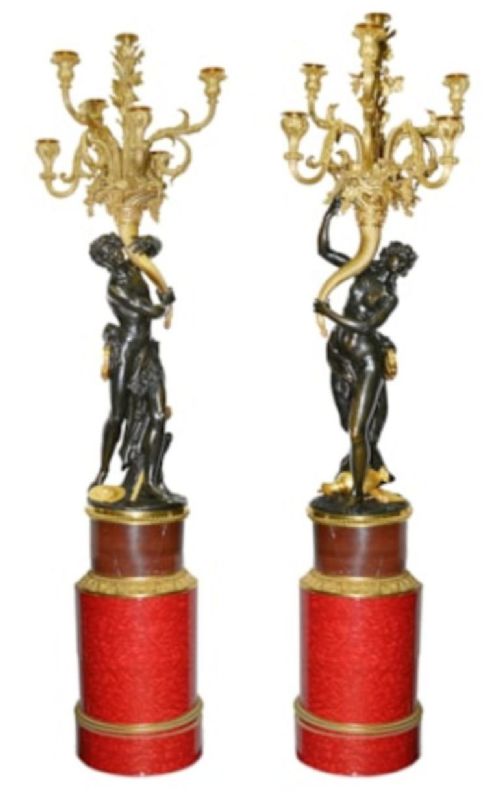
Most pieces you meet here belong to the nineteenth-century Louis XVI style tradition rather than the original eighteenth-century period. They take forms ranging from standard pillar candlesticks to multi-arm candelabra and converted lamps.
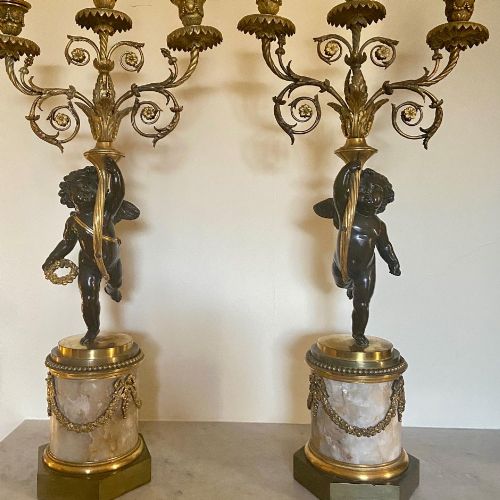
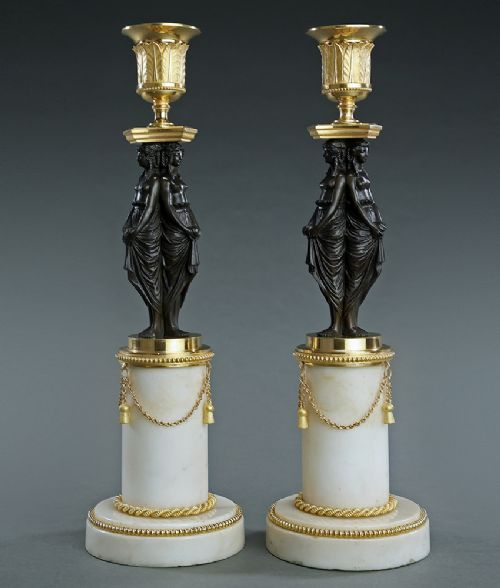
The materials include gilt bronze, ormolu, patinated bronze, white marble, fluorspar, and mahogany. Figures such as putti, cherubs, and caryatids frequently support the candle holders.
Materials and construction
Foundry workers cast bronze into detailed figural and architectural components, utilising patination or mercury gilding to create ormolu surfaces. These metal elements combine with turned white marble bases or carved mahogany bodies.
Lapidary techniques shape the marble and fluorspar sections that anchor the metal mounts. Assembly relies on threaded rods and hidden pins to secure the heavy cast components together.
Pair Louis XVI Candlesticks Retail Price Guide 2026
Typical asking prices for pair louis xvi candlesticks among the pieces listed under this phrase on Sellingantiques today, from the lower quarter to the upper quarter. They describe what is for sale here now, not the wider market.
The forms extend beyond standard sticks to include two-arm candelabra and cassolettes supported by winged putti.
Assessing quality
The weight and selection of materials dictate the presence of the piece, with dense marbles and heavy gilt bronze outperforming lighter substitutes. Original gilding longevity and intact patination complete the measure of a finer pairing.
Francois Redmond·Dugourc·Claude Clodion
The Pair Louis XVI Candlesticks Glossary
- Ormolu
- Gilded bronze produced by applying a mercury and gold amalgam to a bronze base and heating it. This technique creates a durable golden surface seen on many French lighting pieces.
- Patinated bronze
- Bronze treated with chemical solutions to darken or colour the metal surface. It provides contrast against bright gilt mounts.
- Caryatid
- A sculpted female figure serving as an architectural support pillar. In these pieces, they form the central stem of the candlestick.
- Fluorspar
- A mineral sometimes incorporated into decorative bases or mounts. It introduces natural colour variation to the stone elements.
Pair Louis XVI Candlesticks: Frequently Asked Questions
Are these wired for electricity?
Many examples on this page function as candle holders, while others have been converted into table lamps over time.
Conversion methods vary, and buyers should inspect the wiring status of any lamp variant before use.
How do I distinguish eighteenth-century pieces?
Original period pieces show distinct casting techniques, wear patterns, and metallurgical signatures characteristic of eighteenth-century French foundries.
Revival pieces from the nineteenth century often display heavier construction and different chasing styles.
Where should I place these?
These balanced pairs suit mantelpieces, sideboards, or console tables where symmetry enhances the room's proportions.
Their substantial weight requires a sturdy surface capable of supporting bronze and marble.
What maintenance do they need?
Dusting with a dry soft cloth preserves the delicate gilt bronze and patinated surfaces without damaging the finish.
Avoid chemical polishes that strip away original gilding and alter the metal appearance.