
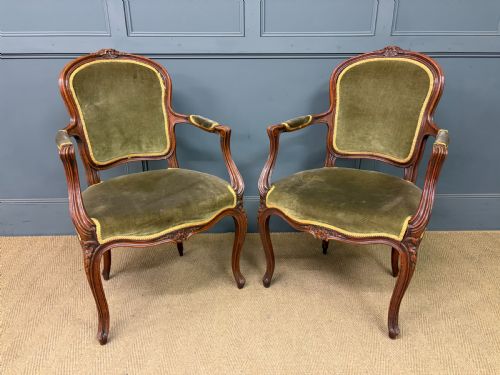
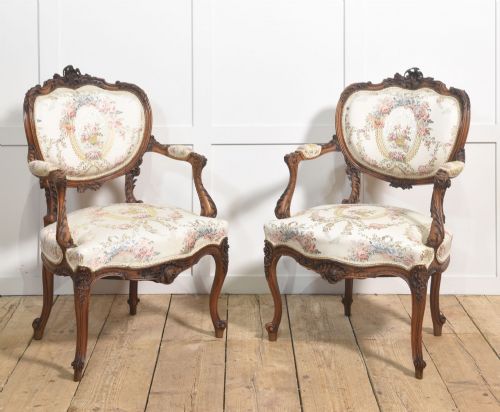
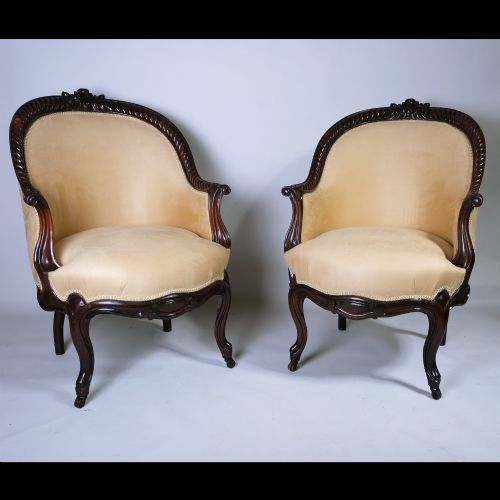
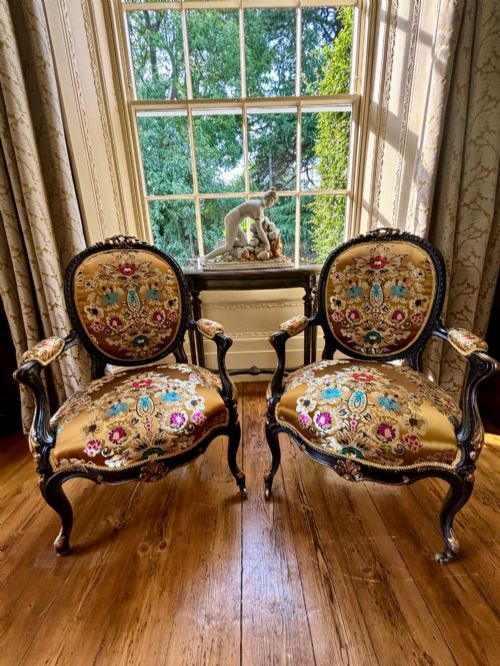
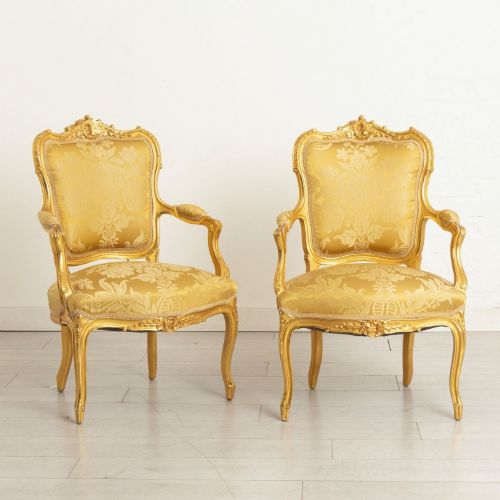


Pair Louis XV Salon Armchairs
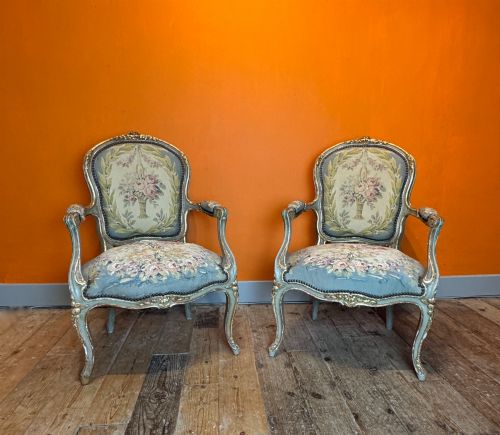
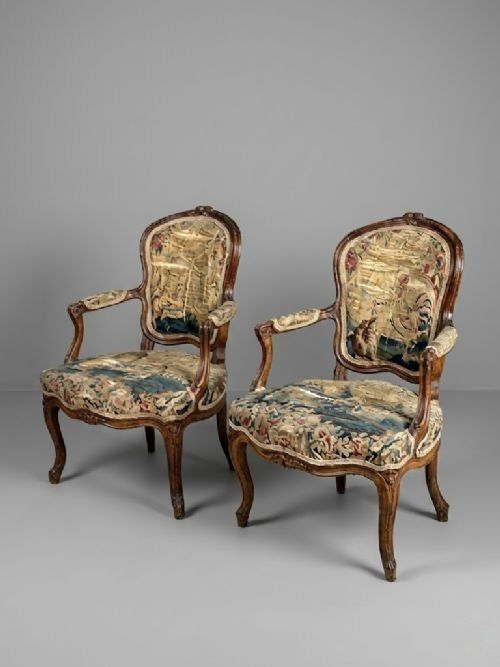
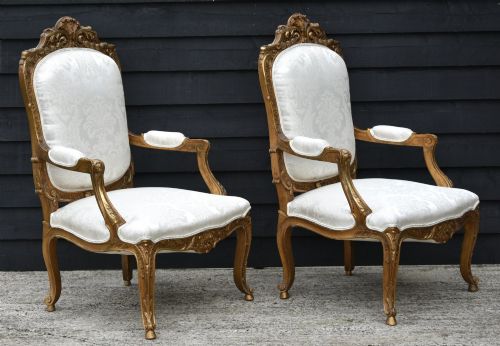
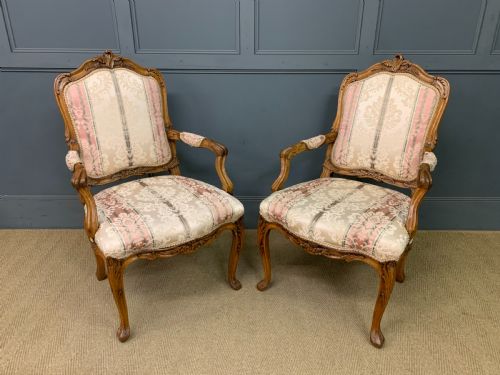
These pair louis xv salon armchairs bring French rococo elegance to a room, offering scrolled frames and gracious seating carved for formal reception spaces.
Pair Louis XV Salon Armchairs
A pair louis xv salon armchairs search brings up matching sets of open-armed seating rooted in French rococo design. These pieces originate predominantly from nineteenth-century revivals, alongside examples from the eighteenth, twentieth, and Edwardian periods.
The form encompasses walnut, beech, oak, and mahogany frames finished in giltwood, paint, or polished wood. They appear with silk, tapestry, or modern upholstery fabric suited to grand drawing rooms and intimate parlours alike.
Materials and construction
Craftsmen shaped these frames from solid timbers such as walnut, beech, and mahogany, often applying layers of gold leaf or paint to the carved wood. Giltwood surfaces require meticulous preparation of gesso over timber before applying fine metal leaf.
Upholstery relies on traditional webbing and stuffing secured beneath coverings of silk, tapestry, or patterned fabric. Carved floral motifs and curved cabriole legs emerge directly from the structural timber rather than as separate applied ornaments.
Listings feature walnut, beech, mahogany, and oak frames finished in giltwood, paint, and exposed wood.
Judging the work
Depth and crispness in the wood carving separate ordinary frames from superior examples. Master carvers created asymmetrical floral scrolls with sharp undercut details that catch the light, whereas lesser pieces display soft, shallow moulding.
Proportion and wood selection dictate the overall harmony of the seat. Dense walnut and clean-grained beech support slender, flowing arms and cabriole legs without appearing clumsy.
The Pair Louis XV Salon Armchairs Glossary
- Fauteuil
- An open-armed upholstered armchair with exposed wooden framing, typical of French domestic seating. The armrests usually feature padded elbow rests for comfort.
- Giltwood
- Timber coated with thin gold leaf over a prepared gesso ground. This finish gleams softly in candle or daylight.
- Cabriole leg
- A furniture leg that curves outward in a convex arc and tapers inward in a concave arc to a pad or scroll foot. It mimics the natural shape of an animal limb.
- Rococo
- An ornate artistic style characterised by shellwork, scrolls, and asymmetrical natural forms. It dominated mid-eighteenth-century French design and later nineteenth-century revivals.
Pair Louis XV Salon Armchairs: Frequently Asked Questions
How do I use these in a modern room?
Pair these armchairs as statement seating opposite a modern sofa or place them symmetrically beside a fireplace. Their curved profiles soften rigid architectural lines in contemporary spaces.
Keep surrounding furniture low in scale so the carved crest rails and open arms remain visible from across the room.
Are these armchairs comfortable for daily sitting?
These seats were designed for polite conversation rather than deep lounging. The upright backs and supportive armrests encourage an attentive posture.
Consider adding a small lumbar cushion if you prefer a softer lean during extended periods of reading or resting.
How do I distinguish eighteenth-century pieces from nineteenth-century revivals?
Examine the timber shrinkage, tool marks, and joinery methods beneath the frame. Eighteenth-century pieces display hand-cut joinery and aged patination unique to early forestry practices.
Nineteenth-century revival pieces often utilise machine-assisted secondary woods while closely imitating earlier rococo carving styles.
What is the difference between giltwood and painted finishes?
Giltwood involves applying delicate sheets of gold leaf over a prepared base to create a luminous metallic sheen. Painted finishes use pigmented layers, sometimes with parcel-gilt highlights on the carved motifs.
Both treatments reflect period tastes for bright, decorative salon furniture designed to catch ambient light.