


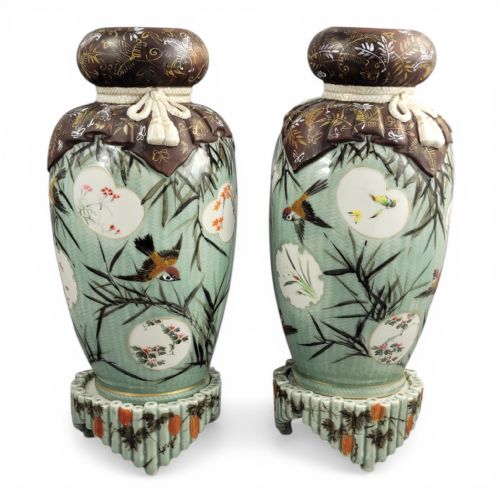


Pair Large Japanese Vases
Pair large japanese vases bring monumental scale and intricate narrative detail into a room, spanning bronze casting and painted porcelain from the Meiji period and beyond.
Pair Large Japanese Vases
When searching for pair large japanese vases, collectors encounter substantial vessels made for display, ranging from heavy bronze temple pieces to delicate porcelain floor jars.
The most common examples on this page date from the nineteenth century, particularly the Meiji period, featuring traditional Satsuma earthenware, Kutani porcelain, and Imari palettes.
How they were made
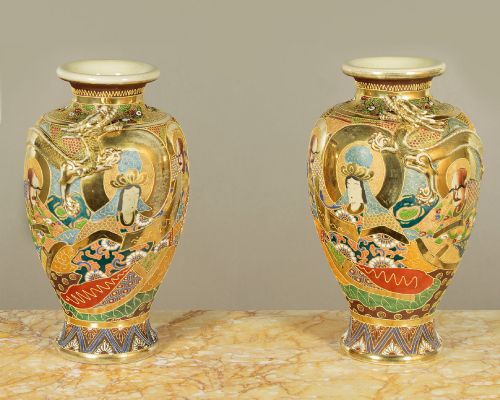
Potters shaped earthenware and porcelain by hand or on the wheel before applying detailed underglaze blue, enamel colours, and gold leaf highlights.
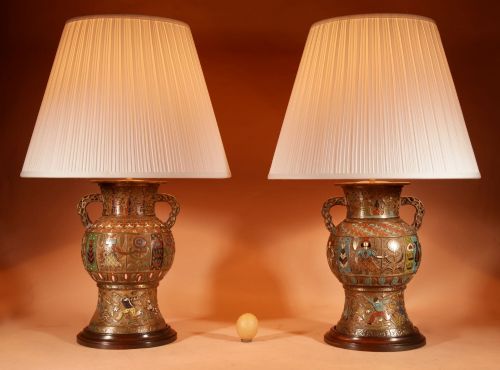
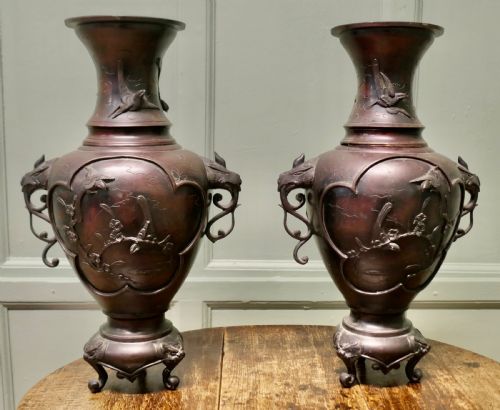
Metalworkers utilised bronze and brass casting techniques, often incorporating champlevé enamel or inlaid mixed metals to create textured surfaces.
Listings feature items spanning the Edo period, Meiji period, and Showa period, utilising porcelain, bronze, enamel, and carved wood.
What varies in quality
The standard of craftsmanship depends on the precision of the hand-painted enamel work and the crispness of detail in cast bronze or carved lacquer panels.
Signatures by recognised workshops or master makers elevate a pair, alongside the presence of matching original stands and intact gilding.
Kato Sanhei·Kinkozan·Hamada Yoshifumi
The Pair Large Japanese Vases Glossary
- Satsuma
- A type of Japanese earthenware featuring a crackled ivory glaze and elaborate polychrome and gilt enamel decoration.
- Imari
- A traditional style of Japanese porcelain decorated in underglaze blue, iron red, and gold, named after the port of export.
- Champlevé
- An enamelling technique where troughs are carved into a bronze surface and filled with vitreous paste before firing.
- Usubata
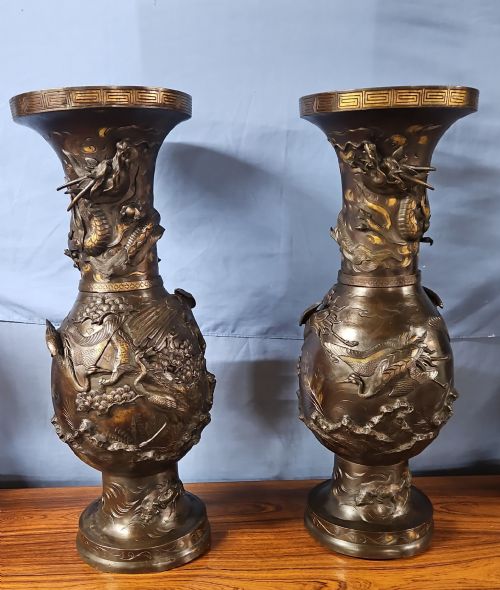
- A distinct bronze vessel shape with a wide flat rim, traditionally designed for flower arrangement and garden display.
- Meiji Period
- The era spanning from 1868 to 1912, noted for a surge in decorative arts produced for international export markets.
Pair Large Japanese Vases: Frequently Asked Questions
How were large japanese vases displayed originally?
These imposing vessels stood in grand entrance halls, alcoves, or formal reception rooms as symbols of wealth and artistic taste. Many were supplied with matched wooden or porcelain stands to elevate their presence.
In Western interiors of the late nineteenth century, large bronze examples were frequently converted into table lamps while retaining their decorative integrity.
What is the difference between satsuma and imari?
Satsuma ware consists of an earthenware body with a characteristic creamy, crackled glaze that provides a textured canvas for dense pictorial enamel painting.
Imari pieces are made of hard-paste porcelain, decorated with strong underglaze blues and contrasting iron reds with gilt detailing.
How do I identify a meiji period vase?
Meiji period pieces date between 1868 and 1912, an era marked by the opening of trade and a high volume of ornate export wares.
They often display meticulous detail, signature panels, and a combination of traditional motifs such as phoenixes and floral landscapes.
Are bronze vases hollow cast?
Bronze examples were produced using traditional lost-wax or sectional casting methods, resulting in heavy, robust vessels capable of supporting intricate surface inlays.
Many of these metal pieces feature patination ranging from deep brown to polished highlights on applied mixed metals.