



Painted Porcelain Floor Vases
Painted porcelain floor vases command the room with scale, carrying the weight of centuries through monumental shapes and rich pigments.
Painted Porcelain Floor Vases
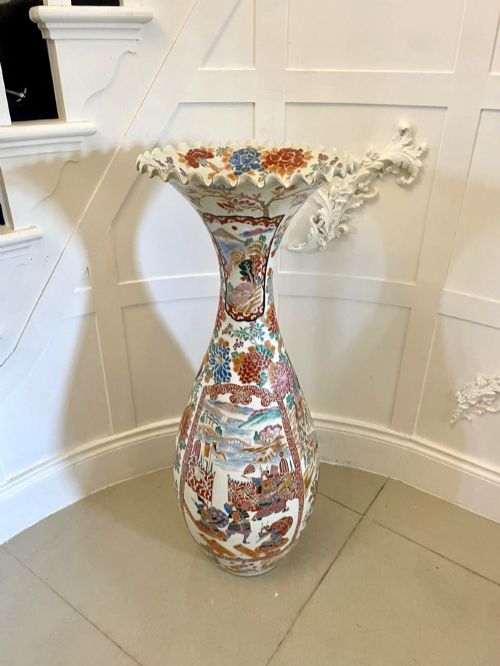
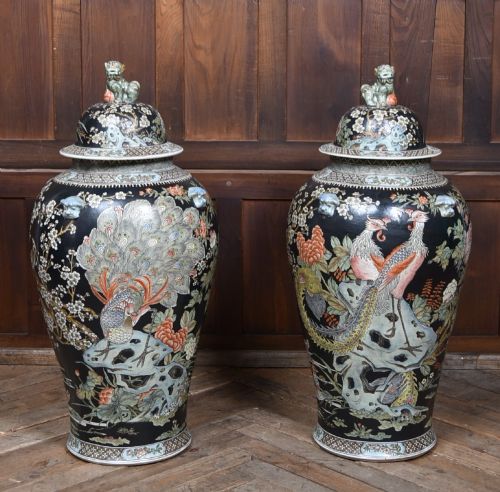
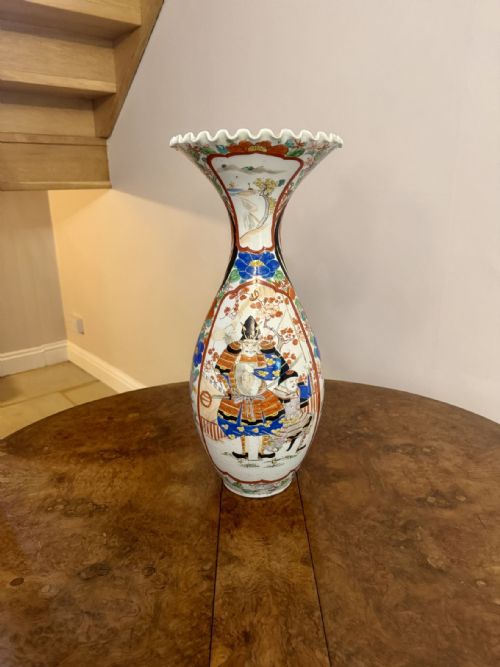
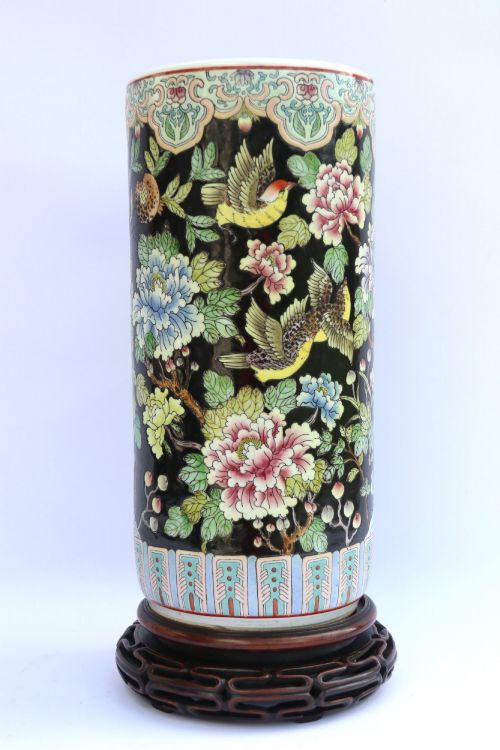
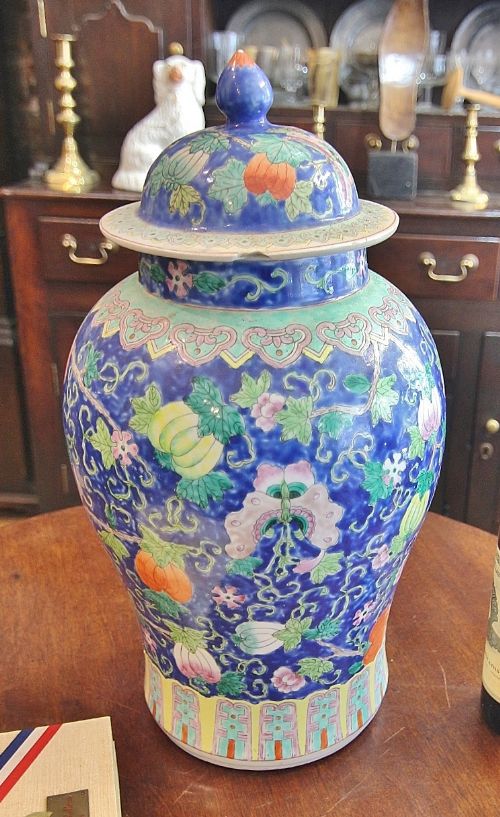
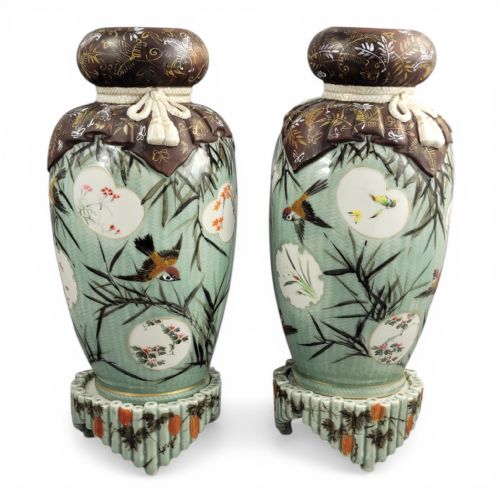
Painted porcelain floor vases bring substantial height and visual weight to an interior, often standing well above ordinary tabletop vessels. When you search for painted porcelain floor vases, you encounter grand vessels originating from Chinese workshops and Japanese kilns. The selection spans the nineteenth and twentieth centuries, encompassing monumental palace jars, baluster forms, and pairs designed for balanced placement.
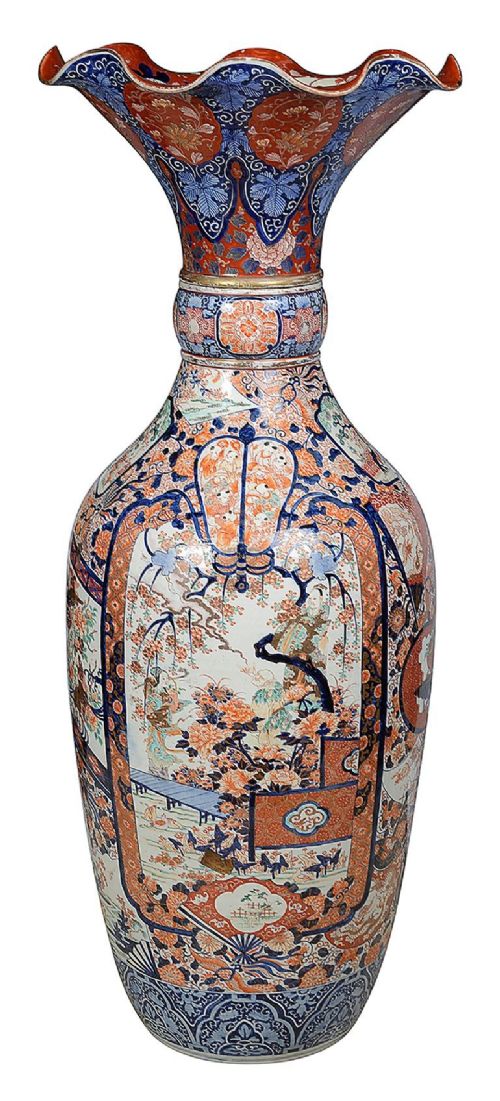
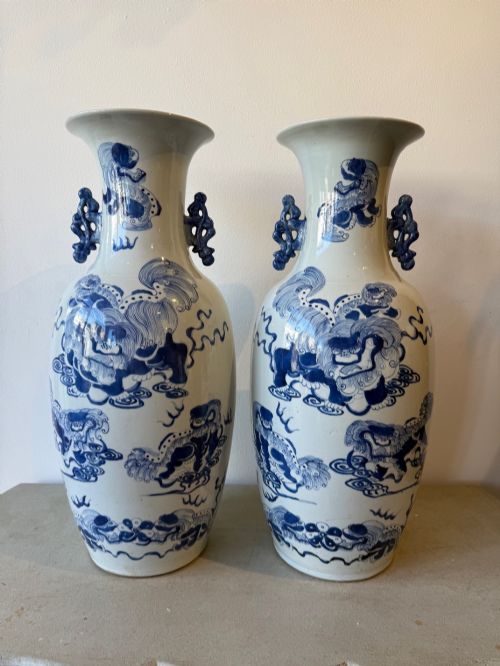
Chinese pieces frequently present famille rose, famille verte, and blue and white palettes across bulbous bodies and tall necks. Japanese examples lean heavily toward the Imari palette, Satsuma wares, and Kutani styles, sometimes resting on original hardwood or porcelain stands. These grand forms serve to anchor hallways, reception rooms, and high-ceilinged spaces with historical presence.
Materials and construction
Potters shaped dense ceramic bodies from refined clay before applying mineral glazes and hand-painted pigments. Overglaze enamels, gold leaf, and cobalt blue provide the primary colouration, fixed through high-temperature kiln firings. Certain Japanese variants incorporate lacquer applied over black paint to achieve alternate surface textures.
Monumental scale required segmental throwing or moulding, followed by careful drying to prevent warping before glazing. Many pieces retain original wooden stands or matching porcelain bases designed to support their considerable weight and presence.
Listings span the nineteenth and twentieth centuries, incorporating Qing dynasty and Meiji period pieces alongside wood and gilt components.
Assessing quality and presence
Quality rests upon the precision of the hand-painted detail and the clarity of the enamel pigments across a large surface. Finer examples display disciplined brushwork in complex figural, floral, or geometric panels rather than repetitive stencilling. The crispness of the porcelain body and the controlled application of gold leaf differentiate standard production from exceptional works.
Scale also dictates status, as monumental floor-standing jars and matched pairs require immense technical skill to fire successfully without distortion. The inclusion of matching original stands or distinctive maker attributions further elevates the standing of an individual vessel.
Kato Sanhei·Fukagawa
The Painted Porcelain Floor Vases Glossary
- Imari palette
- A traditional Japanese decorative scheme utilising rich cobalt blue, iron red, and gilt highlights on porcelain. This style dates back centuries and remains prominent on nineteenth-century export vessels.
- Famille rose
- A Chinese ceramic palette dominated by opaque pink enamel, introduced during the Qing dynasty. It allowed artists to render soft gradients in floral and figural scenes.
- Baluster vase
- A tall vessel form characterised by a bulbous lower body that tapers toward a narrower neck and flared rim. This silhouette provides stability and generous space for painted decoration.
- Satsuma ware
- Japanese earthenware or porcelain decorated with finely detailed polychrome enamels and gilding. Pieces often depict crowded figural narratives or intricate floral patterns.
- Blue and white
- A classic decorative technique employing cobalt oxide pigment painted directly onto the clay body beneath a transparent glaze. The method originated in China and gained global popularity over multiple dynasties.
Painted Porcelain Floor Vases: Frequently Asked Questions
Where should I place a floor vase?
These large vessels suit wide hallways, grand reception rooms, and corners that require strong vertical emphasis. Their height and painted surfaces allow them to stand alone without competing furniture.
Pairs look effective flanking a fireplace or framing a doorway, while single monumental jars anchor empty wall spaces effectively.
How do I distinguish Chinese from Japanese styles?
Chinese pieces often feature famille rose, famille verte, or deep blue and white pigments with flowing botanical and narrative scenes. Japanese export works frequently display the distinctive Imari palette of iron red and gold or the densely painted figures characteristic of Satsuma.
Examining the underlying clay body and the specific motifs helps clarify the regional origin of each vessel.
Are these vases meant for fresh flowers?
Due to their antique status and monumental scale, these vessels are primarily decorative objects rather than functional umbrella stands or planters. Using them for heavy water volumes can risk internal damage to historical ceramic bodies.
Dry stems or branches are occasionally displayed, though many collectors prefer to leave them empty to showcase the painted surface.
What periods do these pieces date from?
The available selection spans the nineteenth and twentieth centuries, capturing late Qing dynasty production in China and the Meiji period in Japan. Many pieces reflect the height of nineteenth-century export trade.
Exact dating relies on stylistic traits, palette characteristics, and recorded kiln periods associated with specific workshops.