


Pair Kingwood Cabinets
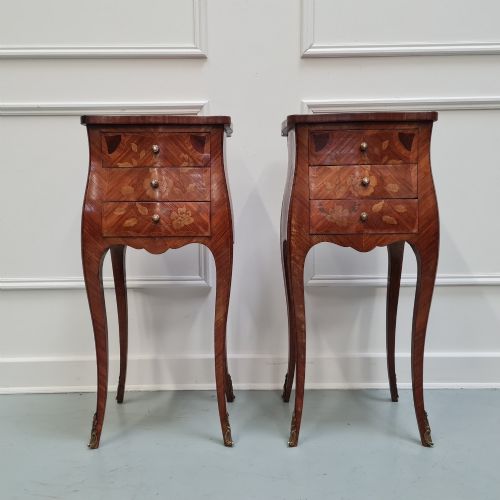
These pair kingwood cabinets unite matching French forms with rich violet-brown timbers, offering symmetry and period elegance to a room.
Pair Kingwood Cabinets
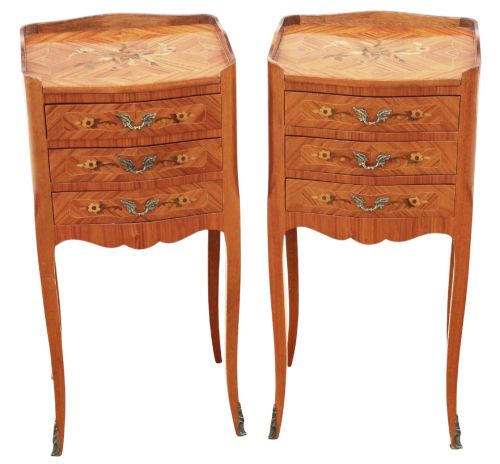
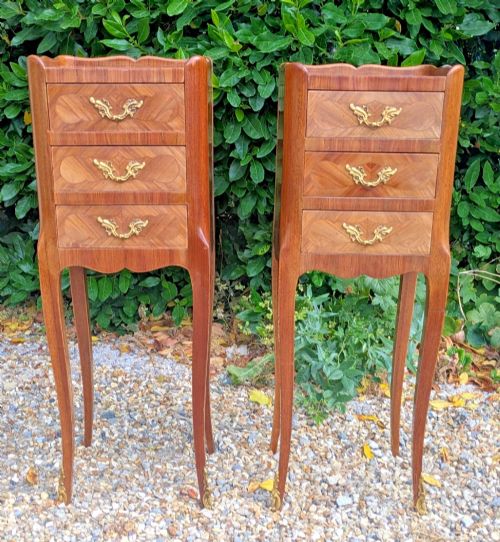
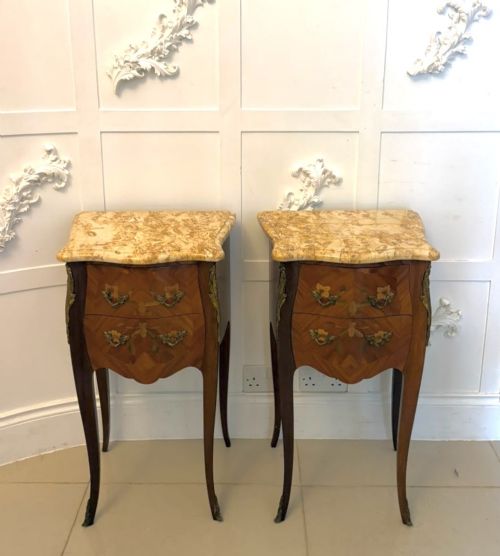
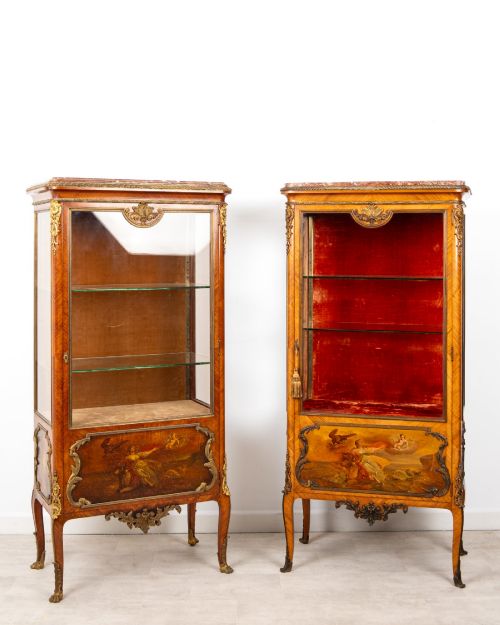
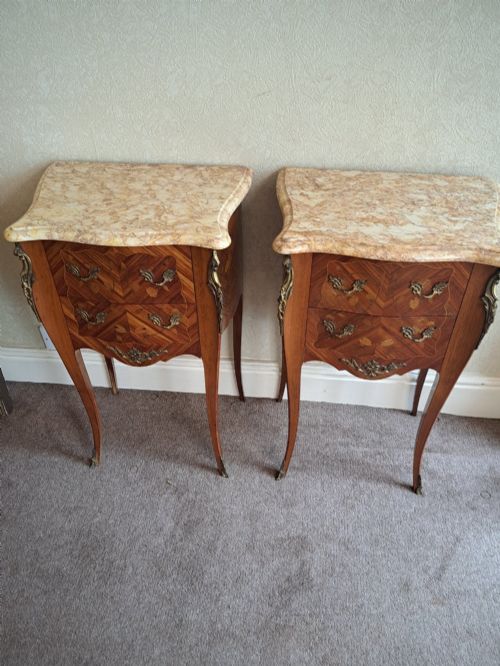
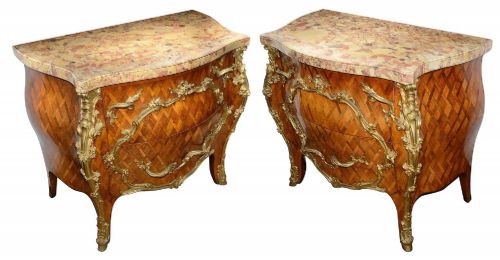
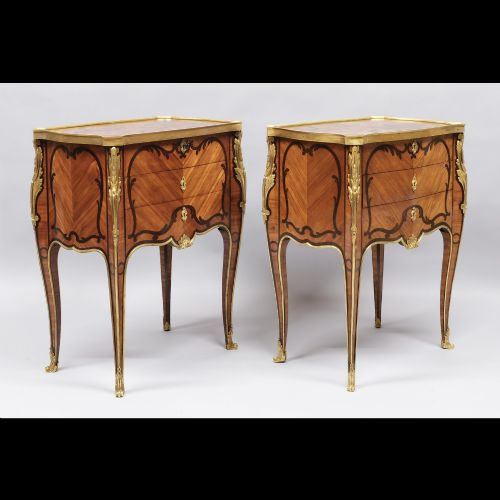
When searching for pair kingwood cabinets, buyers encounter a prevalence of matching bedside tables, commodes, and vitrines dating from the eighteenth century through to the 1930s. The selection spans compact French nightstands with marble tops to larger nineteenth-century display cabinets and side chests.
Most examples lean heavily into Continental aesthetics, particularly Louis XV and Louis XVI revival styles, featuring curved bombe profiles or straight neoclassical lines. These matched pairs provide balanced proportions for symmetrical interior placement, often functioning as bedside furniture or decorative lamp tables.
How they were made
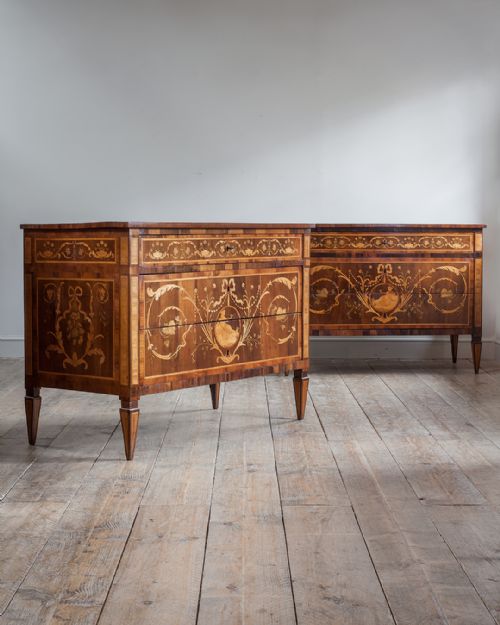
Cabinetmakers utilised dense Brazilian kingwood veneers, frequently arranged in intricate geometric parquetry or floral marquetry patterns across the carcase. Walnut, rosewood, and satinwood often serve as secondary timbers or contrasting border elements within the veneer work.
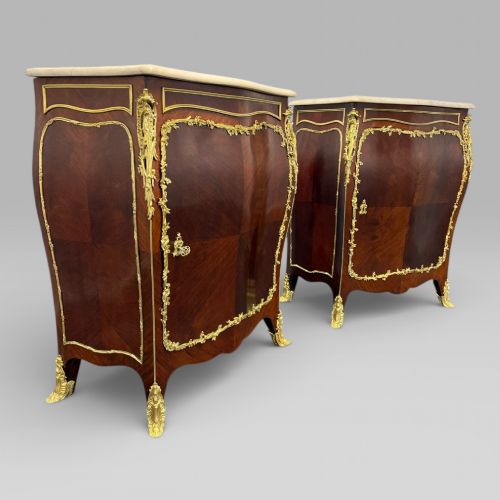
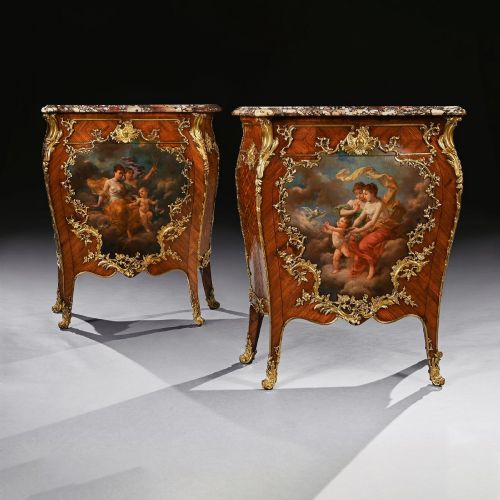
Finished pieces incorporate heavy cast or chased ormolu and gilt bronze mounts on corners and feet, alongside polished marble slabs fitted precisely to the upper surfaces. Glass panels feature in display variations, while internal construction relies on traditional dovetailed joints in oak or pine.
Listings feature kingwood paired with walnut, mahogany, and rosewood across nineteenth-century and 1930s iterations.
What varies in quality
The standard of execution in the marquetry patterns and the crispness of the bronze or ormolu mounts dictate the tier of a piece. Finer examples display meticulous grain matching and hand-chiselled detailing rather than mass-produced cast metalwork.
The integrity of the original marble slab, the subtlety of the timber fading, and the precision of the mitred veneer joints separate standard workshops from notable makers and high-period productions.
E. Kahn·Sormani
The Pair Kingwood Cabinets Glossary
- Kingwood
- A dense, heavy Brazilian timber displaying violet-brown shades with darker streaks, prized for veneering fine furniture.
- Marquetry
- The art of applying small pieces of veneer to a structure to form decorative patterns or pictorial designs.
- Ormolu
- Gilt bronze mounts cast and finished to ornament the corners, handles, and feet of cabinet furniture.
- Bombe
- A swelling, outwardly curved contour characteristic of continental furniture forms, particularly commodes and bedside chests.
- Parquetry
- Geometric patterns formed from inlaid wood veneers, often creating cube or herringbone motifs across surfaces.
Pair Kingwood Cabinets: Frequently Asked Questions
What rooms suit pair kingwood cabinets?
These matching cabinets sit comfortably beside a bed as nightstands or function as lamp tables in a drawing room. Their balanced proportions bring symmetry to either side of a fireplace or entryway.
The reflective polished marble tops and gilt bronze mounts bounce ambient light, making them practical surfaces for smaller spaces that require decorative focus.
How do I identify Louis XV style?
Louis XV pieces exhibit asymmetrical curves, cabriole legs, and flowing rococo botanical motifs in the marquetry and ormolu mounts. The overall silhouette avoids straight lines in favour of organic, swelling contours.
Later revival pieces from the nineteenth and twentieth centuries replicate these fluent organic shapes while maintaining strict symmetry across the pair.
Are marble tops original to these cabinets?
Most French bedside tables and commodes from this tradition were designed specifically to accommodate fitted marble slabs on their upper surfaces. These stone tops served a practical purpose for placing water jugs and evening items.
Slight variations in the thickness or veining of the marble reflect the specific workshop standards of the period.
How should I care for kingwood surfaces?
Keep these cabinets away from direct sunlight and strong heat sources to prevent the delicate wood veneers from drying or splitting. Dust regularly with a dry cloth and apply occasional high-grade wax to preserve the polish.
Avoid placing damp items directly onto the timber surfaces, relying instead on the protective stone tops where fitted.