


Kingwood Marble Chest
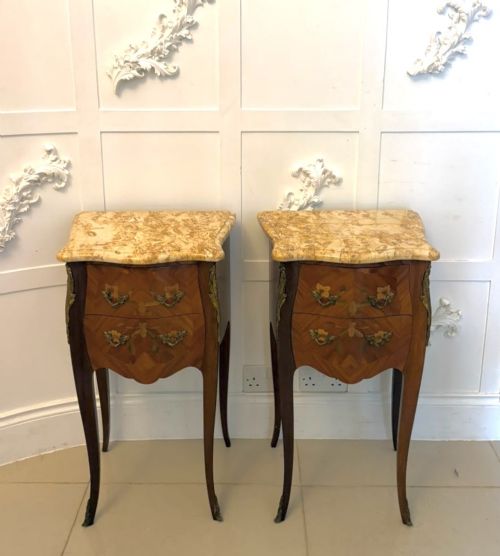
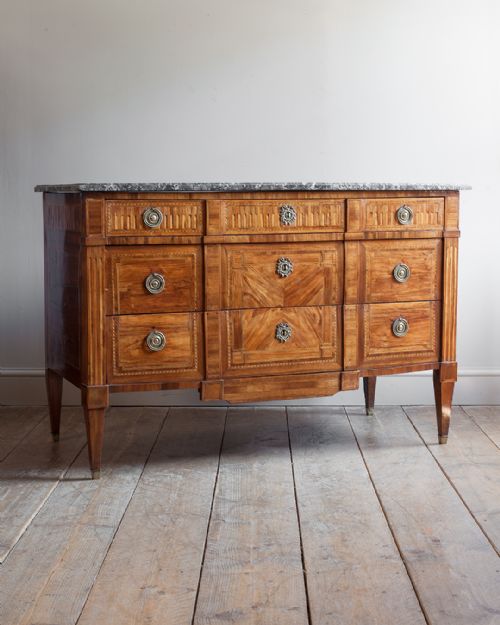
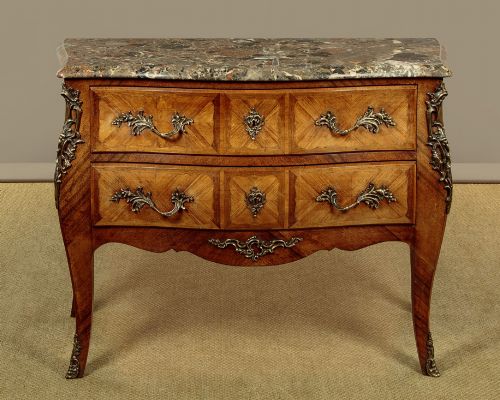
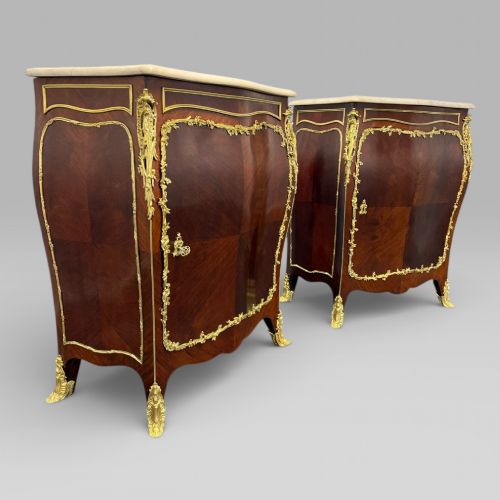
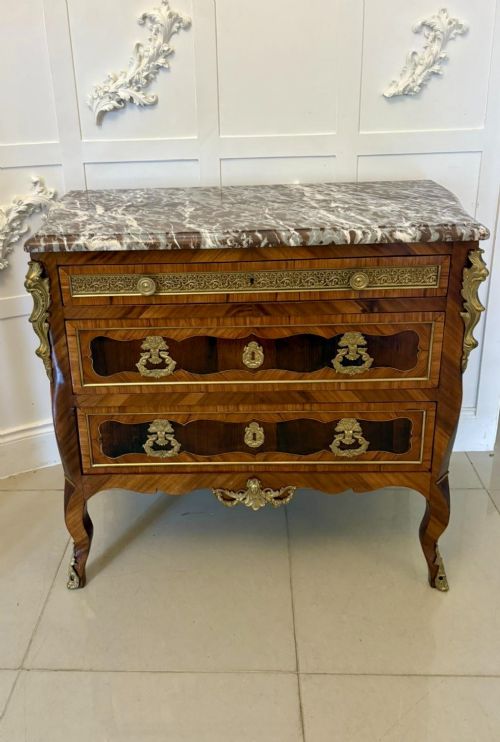
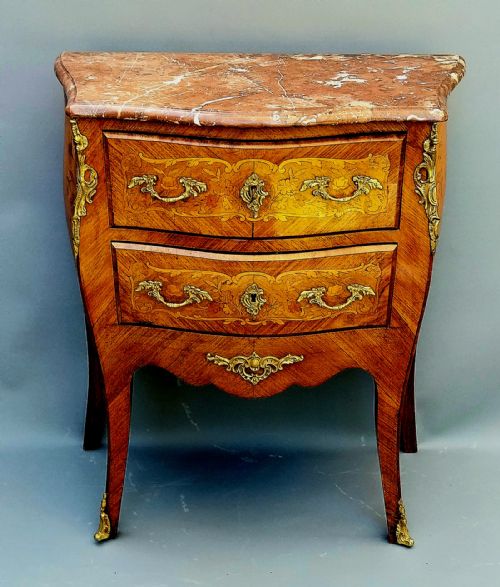
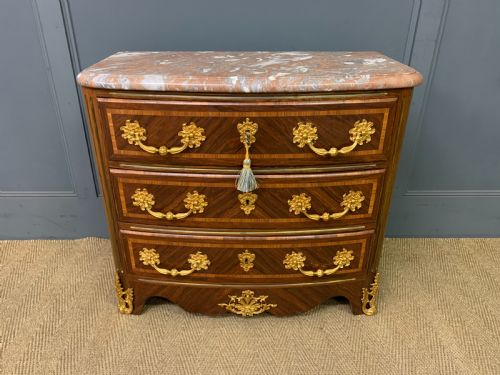
A kingwood marble chest combines figured exotic veneers with cool stone tops, most commonly seen in French commodes and bedside cabinets from the eighteenth and nineteenth centuries.
Kingwood Marble Chest
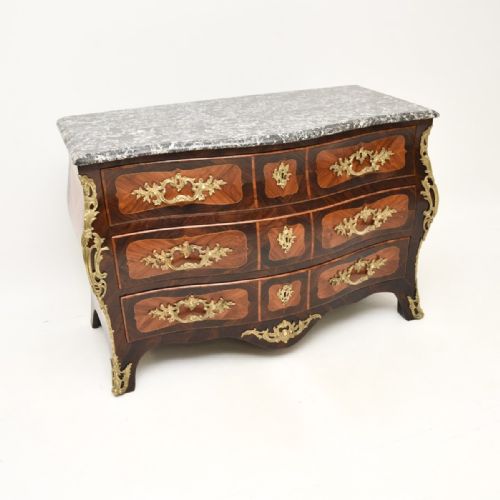
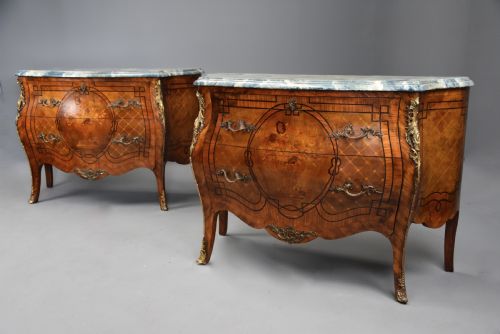
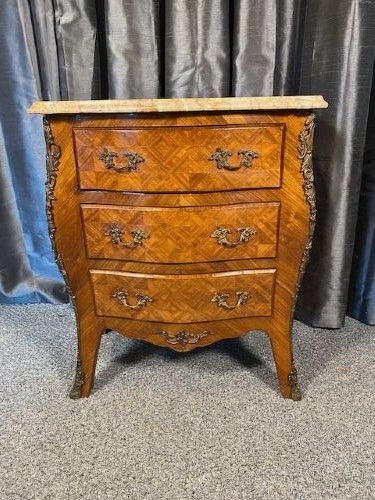
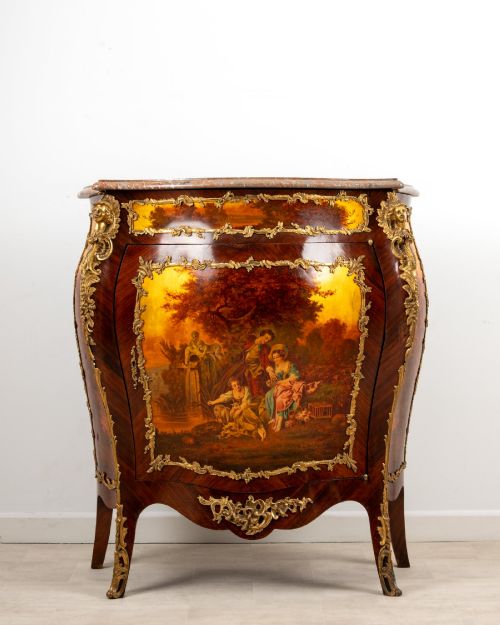
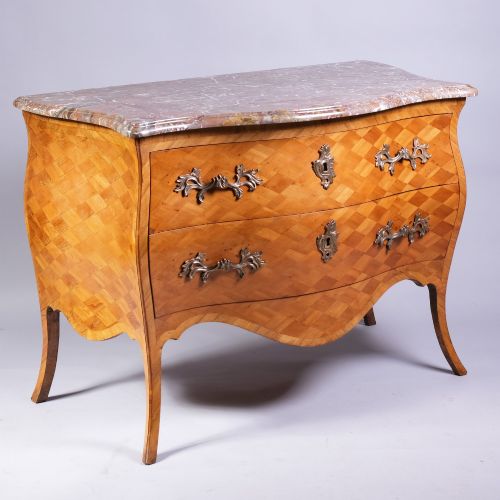
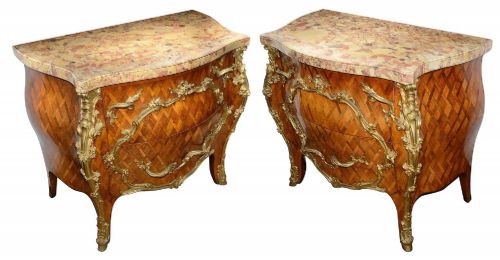
Most pieces display the swelling contours of the French Rococo or Louis XV style, often featuring serpentine or bombe silhouettes. Bedside cabinets and larger chests of drawers dominate the available selection, originating primarily from French workshops.
How they were made
Cabinetmakers constructed carcases from native timbers before applying fine veneers of kingwood, rosewood, and walnut, frequently arranged in intricate marquetry or parquetry patterns. Slabs of marble, cut to follow the serpentine or straight profiles of the tops, were fitted directly onto the timber frames.
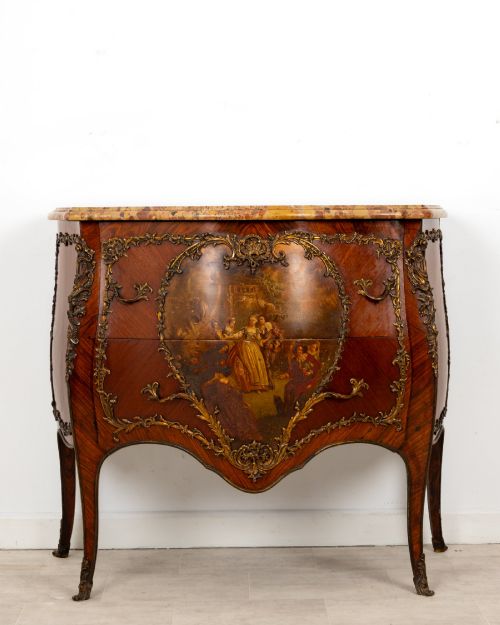
Mounts and sabots cast in ormolu, gilt bronze, or brass were secured to the corners, legs, and aprons to accent the structural lines. Varnish finishes such as Vernis Martin added depth and painted detail to selected panels.
Some bedside cabinets secretly double as small writing desks with pull-out surfaces for midnight correspondence.
What varies in quality
The sophistication of the veneer work and the crispness of the bronze mounts set individual items apart. Finer examples display symmetrical grain matching and heavily chased, fire-gilded metalwork that follows the contours without gaps.
The weight and selection of the marble top also indicate grade, with thicker, profiled stone slabs marking the higher end of production compared to simpler cut slabs.
Jacques Bircklé·E. Kahn·Bruneau
The Kingwood Marble Chest Glossary
- Kingwood
- A dense, heavily figured exotic timber with dark violet and brown tones, used extensively for veneering fine eighteenth and nineteenth-century furniture. It provides the characteristic rich contrast seen on many commodes.
- Ormolu
- Gilded bronze mounts applied to furniture edges and feet for ornamentation and protection. The technique involves applying a mercury and gold amalgam to bronze before firing.
- Bombe
- A swelling, outward-curving chest profile that expands toward the base and sides. This exuberant shape defines many Louis XV revival pieces.
- Vernis Martin
- A type of polished resin varnish developed in France to imitate Japanese lacquer. It frequently appears on decorative panels alongside gilt bronze mounts.
- Commode
- A low chest of drawers designed for the bedroom or salon, typically standing on four legs. The form evolved significantly through the eighteenth century.
- Marquetry
- The art of applying small pieces of veneer to a structure to form decorative patterns or pictures. Craftsmen utilised contrasting timbers like tulipwood and kingwood to achieve tonal depth.
Kingwood Marble Chest: Frequently Asked Questions
What is a kingwood marble chest?
A kingwood marble chest is a decorative storage piece, most often a commode or bedside cabinet, surfaced with exotic timber veneer and topped with stone.
These items draw heavily on French eighteenth-century designs, particularly the Louis XV and Louis XVI styles.
How do I date a kingwood chest?
Dating relies on examining the construction methods of the carcase, the style of the bronze mounts, and the timber framing beneath the marble top.
Eighteenth-century originals show distinct hand-cut joinery, whereas nineteenth-century revival pieces often incorporate machine-sawn elements while imitating earlier aesthetics.
Where were these chests made?
The vast majority of these pieces originated in French workshops, particularly in Paris, where cabinetmakers specialised in veneered case furniture.
Regional variations and later European interpretations also exist, reflecting the widespread influence of French design.
How should I care for marble and kingwood?
Kingwood veneer responds best to stable room temperatures and occasional waxing with a traditional furniture polish to maintain the timber's lustre.
Marble tops require simple cleaning with a damp cloth, avoiding acidic substances that can etch or dull the polished stone surface.