

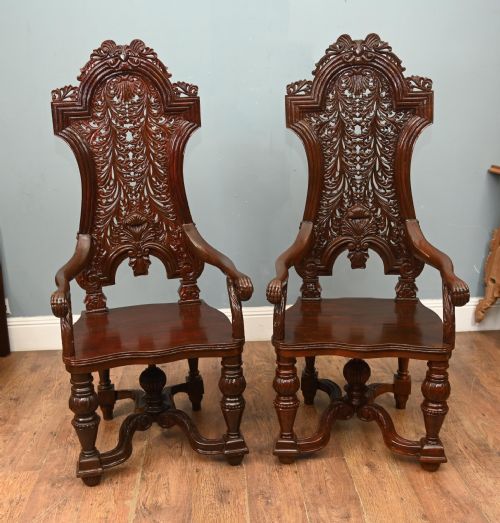


Pair Gothic Hall Chairs
When you search for pair gothic hall chairs, you enter a world of architectural timber built to impress visitors in grand entranceways.
Pair Gothic Hall Chairs
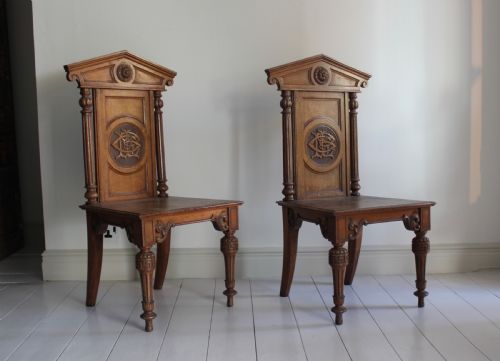
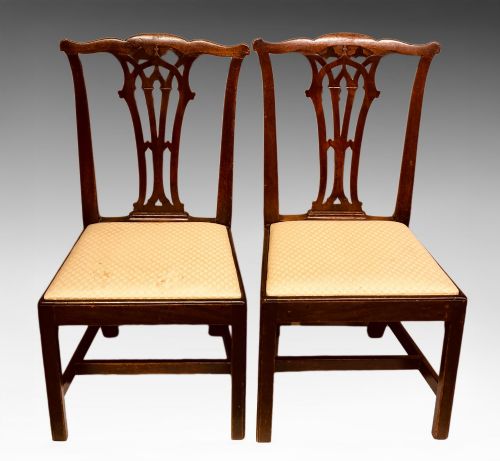
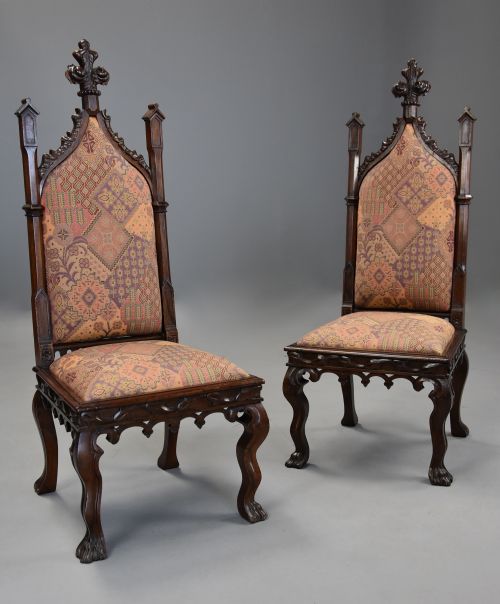
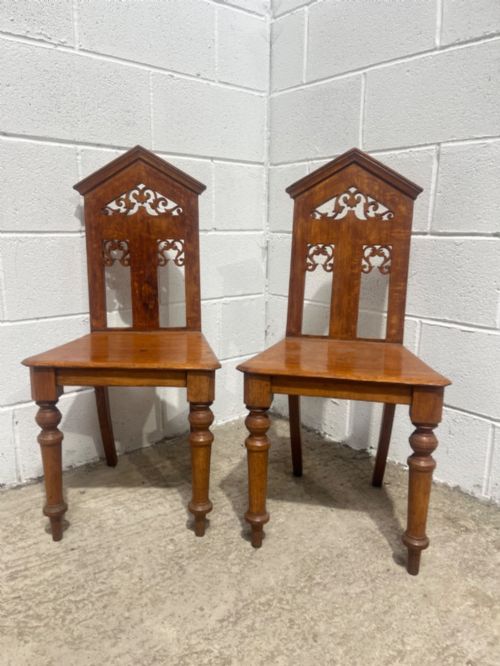
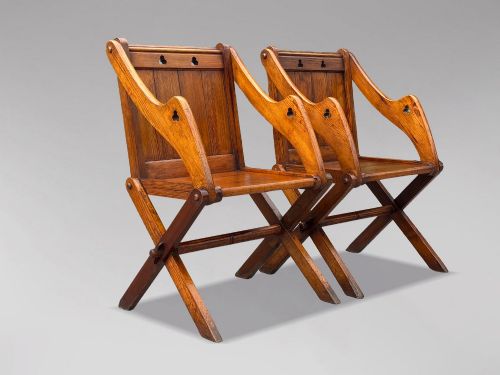
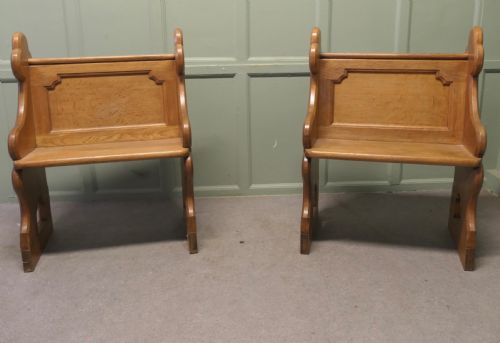
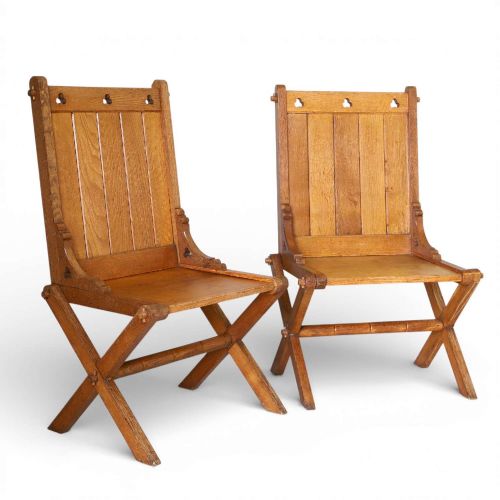
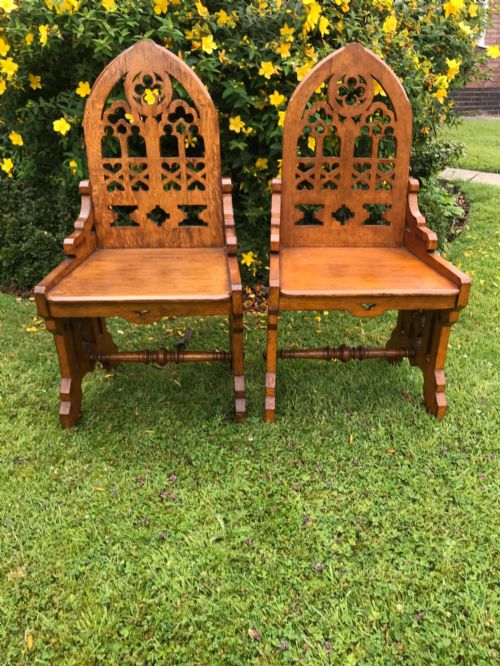
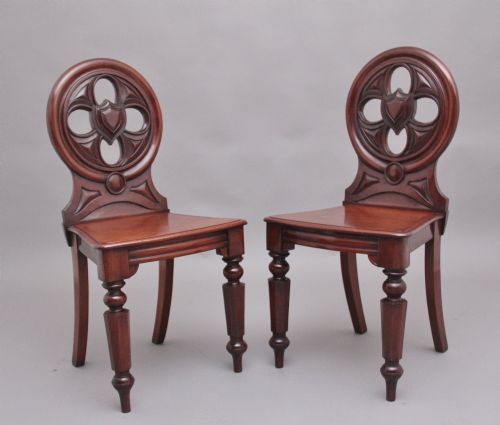
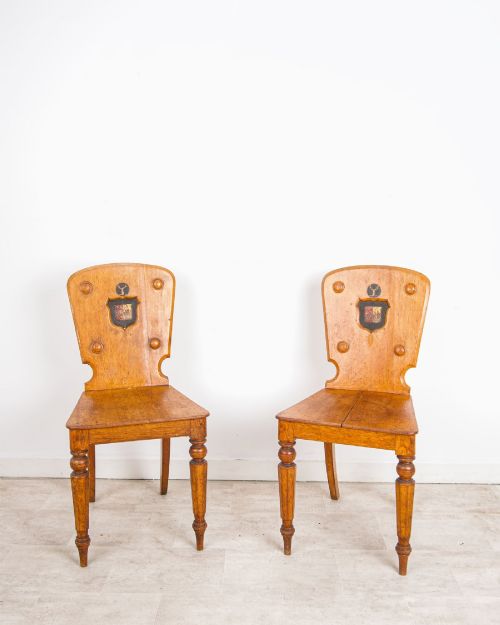
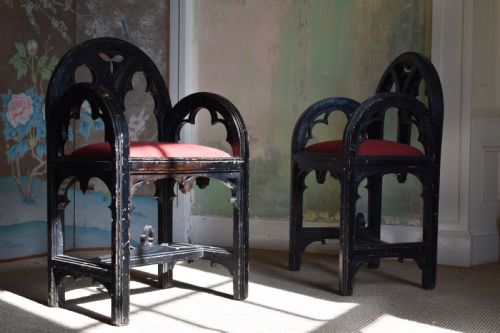
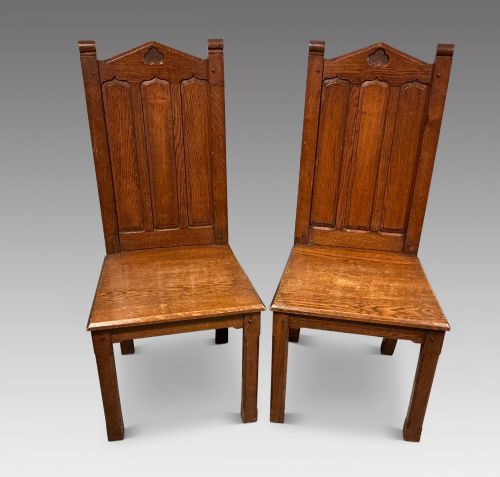
Pair gothic hall chairs comprise matching sets of seating designed primarily for nineteenth-century hallways, vestibules, and reception rooms. The pieces appearing most frequently on this page combine sturdy timber construction with pointed archways, trefoil details, and heraldic shield backs.
Makers produced these items in various regional workshops and larger factories during the Victorian era and the broader nineteenth century. Alongside standard side chair forms, buyers frequently encounter heavier armchairs, throne seats, and Glastonbury designs rooted in the Gothic Revival movement.
How they were made
Carpenters relied heavily on solid oak, mahogany, and pitch pine to build structures that could withstand daily use in busy corridors. Workshops frequently applied hand-carving techniques to shape trefoils, linenfold panels, and intricate tracery directly into the timber.
Upholstery elements such as leather, velvet, and textile inserts appear alongside decorative touches like brass studs, ceramic tiles, and Minton insets. Joinery methods of the period prioritized rigid mortise and tenon construction to maintain stability in tall, upright frames.
Certain nineteenth-century hall chairs secretly double as gossip seats, designed with opposing seats for intimate hallway whispers.
What varies in quality
Depth and crispness of the hand-carving distinguish standard production items from workshop pieces executed by skilled hands. Crisp relief work on heraldic shields and tracery indicates a maker who invested significant time in the detailing.
The choice and thickness of timber dictate the structural integrity and weight of the seat. Dense golden oak and well-figured mahogany retain their joints better over generations than softer pine alternatives.
Gillows of Lancaster·Bruce J Talbert·W A Willcocks
The Pair Gothic Hall Chairs Glossary
- Gothic Revival
- An architectural and decorative style popular during the nineteenth century that revived medieval forms. It heavily utilises pointed arches and ecclesiastical motifs.
- Glastonbury chair
- A specific type of folding armchair with an X-frame base and sloped arms. Originating from medieval designs, it gained popularity during the Victorian Gothic Revival.
- Trefoil
- A graphic ornament composed of three overlapping rings or lobes. Craftsmen frequently carved this shape into the wooden backs of hall seating.
- Hall chair
- A rigid, upright seat placed in an entranceway for brief use or decorative display. These items often feature solid wooden backs emblazoned with crests or coats of arms.
- Pitch pine
- A resinous softwood utilised by nineteenth-century makers for large furniture. It offers distinct grain patterns when finished.
Pair Gothic Hall Chairs: Frequently Asked Questions
Where were hall chairs placed?
Homeowners positioned these seats in entrance halls, corridors, and landings to serve visitors waiting briefly inside the house. They functioned as formal statements of taste rather than items for prolonged lounging.
Because hallways lacked warmth, the wooden construction resisted drafts and dampness better than upholstered drawing room furniture.
Are these chairs comfortable for daily use?
Most examples provide an upright, supportive posture intended for brief sitting rather than relaxing. The rigid wooden backs and shallow seats reflect their original placement in transitional spaces.
Some variants incorporate buttoned leather or upholstered pads to soften the seating experience for the user.
How do I date a Gothic hall chair?
Makers during the nineteenth century integrated specific revival styles, ranging from early Georgian interpretations to elaborate Victorian Gothic and Arts and Crafts movements. Examining the timber species, joinery methods, and secondary woods helps narrow down the decade.
Maker labels, stamps, or engraved plaques occasionally provide direct documentation of the workshop and year of creation.
Did these chairs always come in pairs?
Many workshops produced these seats in matched pairs or larger sets to flank a hallway console table or fireplace. Surviving matching sets indicate they were commissioned or bought together for symmetry in grand interiors.
Single pieces also exist today due to separation over the centuries, making true matching pairs desirable for collectors.