
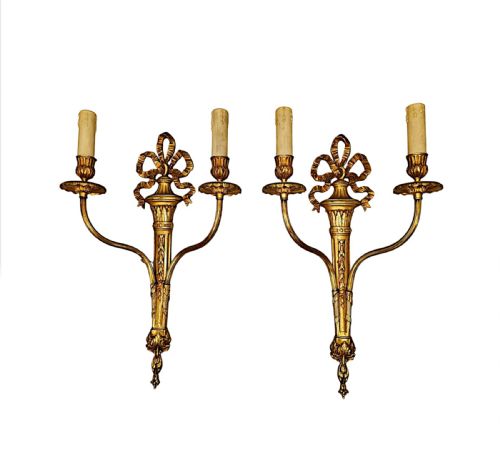
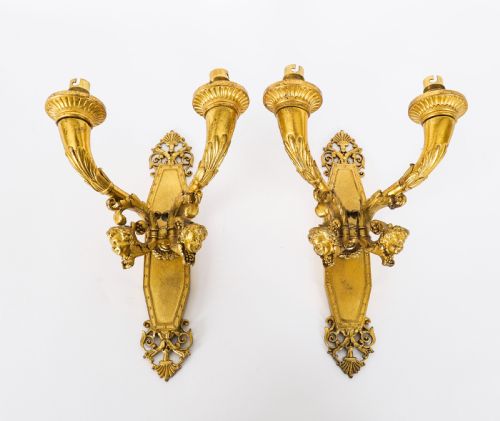
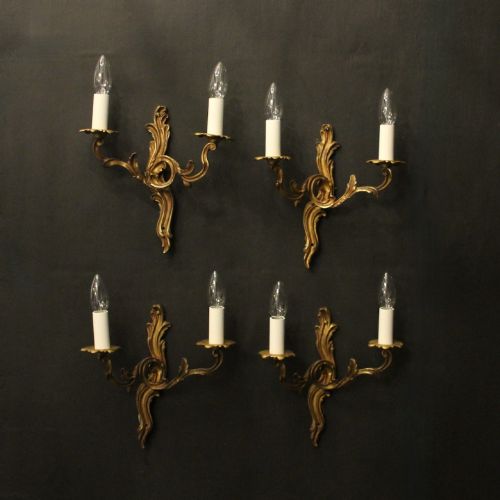

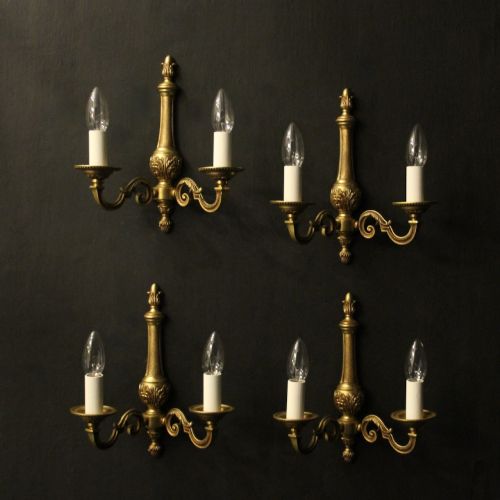
Pair Gilt Wall Appliques
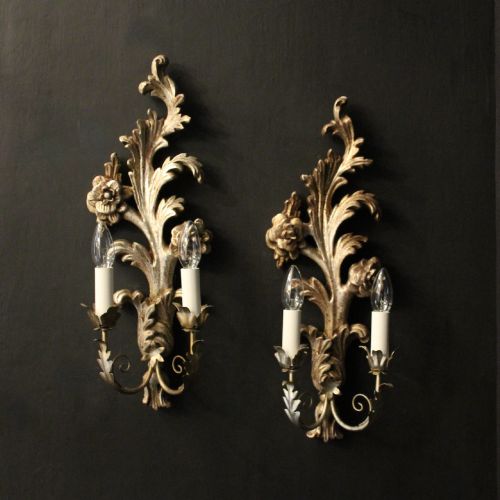
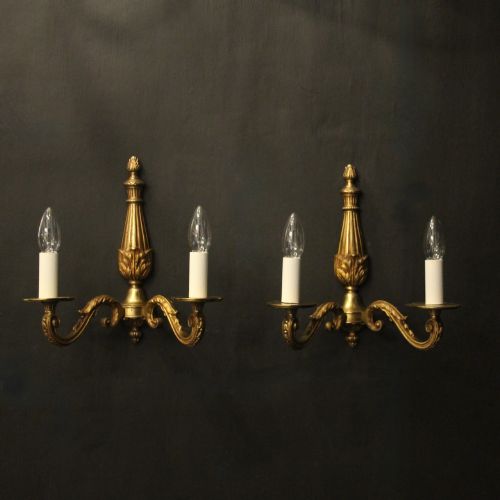
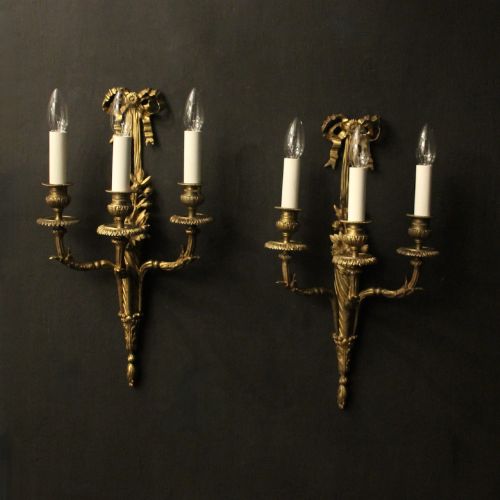
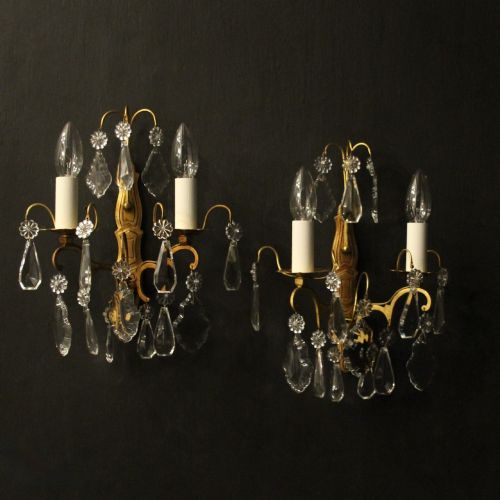
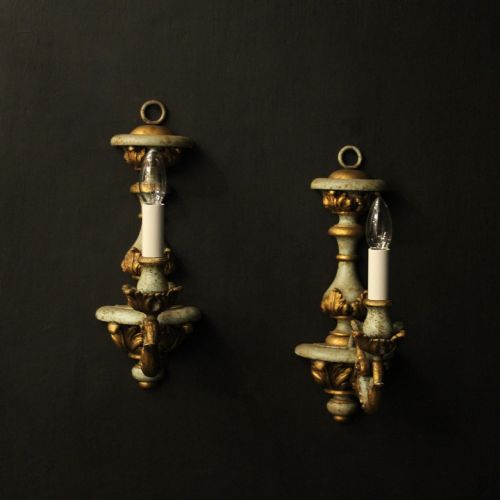
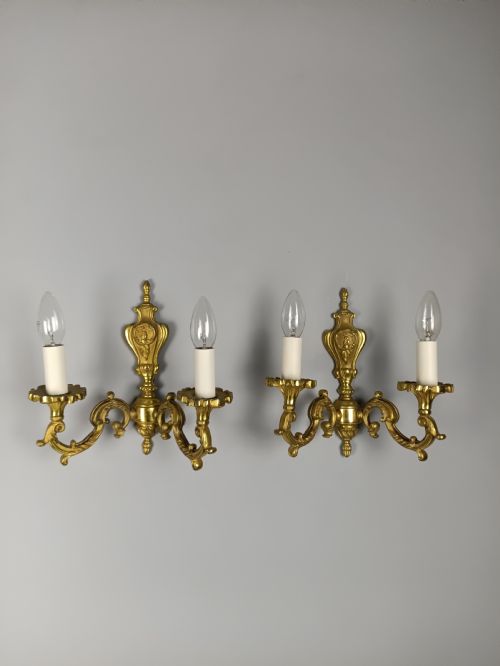
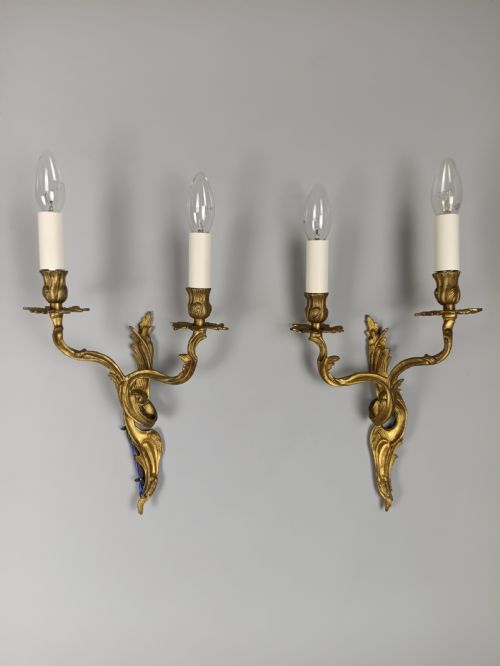
These pair gilt wall appliques bring warmth and candlelit drama to a room, cast in bronze, brass and giltwood across French and Italian styles.
Pair Gilt Wall Appliques
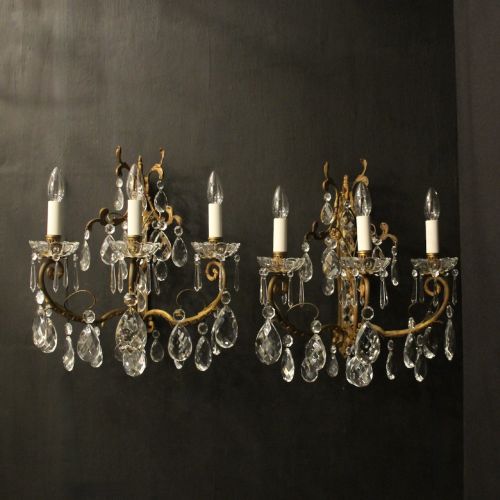
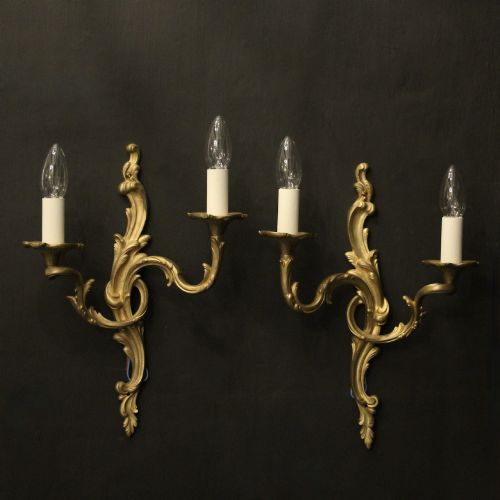
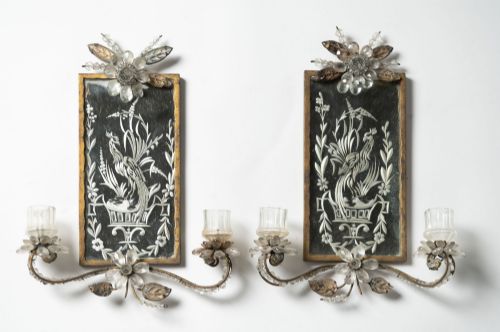
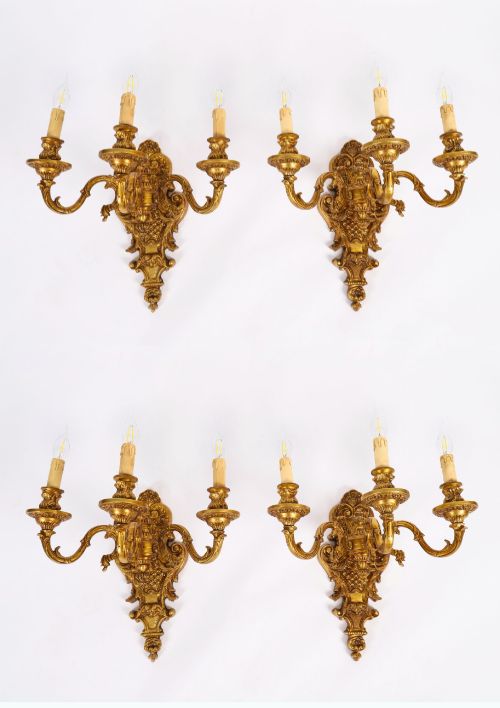
When you search for pair gilt wall appliques, you encounter dual-arm and multi-arm sconces designed to mount directly onto interior walls. The selection draws heavily from French manufacture, spanning Louis XIV, Louis XV, Louis XVI and Rococo revivals alongside Italian baroque and Florentine giltwood pieces.
Most examples date from the nineteenth and early twentieth centuries, particularly around nineteen twenty and nineteen thirty, taking forms like wall lights, candelabras and half lanterns. They frequently incorporate twin or triple arms, ribbon motifs, cherubs and floral porcelain details to project light across a space.
What varies in quality
Structural integrity of the arm junctions and the purity of integrated materials, such as genuine rock crystal or clear Murano glass drops rather than moulded glass, elevate an appligue's standing within a room.
Watch for cheeky porcelain cherubs hiding among the bronze leaves, keeping a permanent floral watch over your hallway.
Maison Baguès
The Pair Gilt Wall Appliques Glossary
- Ormolu
- Gilded bronze produced by applying a mercury and gold amalgam to a bronze base and heating it. This technique creates a durable golden surface seen on nineteenth-century French light fittings.
- Giltwood
- Timber, often lime or pine, that has been coated in gesso and covered with thin sheets of gold leaf. Florentine makers utilised this process extensively for carved wall lights.
- Sconce
- A wall-mounted lighting fixture designed to hold candles or electric bulbs. These pieces project illumination outward using reflective gilt backplates and arms.
- Applique
- A decorative wall fitting, often functioning as a light fixture or architectural mount. The term derives from French usage for elements applied directly to wall surfaces.
- Rococo Revival
- A nineteenth-century design movement mimicking the asymmetrical C-scrolls, plant motifs and exuberant curves of the eighteenth century. It dominates many French bronze wall lights.
Pair Gilt Wall Appliques: Frequently Asked Questions
How do I wire old wall appliques?
Most twentieth-century and nineteenth-century sconces were originally built for candles or early electrical conversions, meaning modern rewiring requires feeding heat-resistant flex through the internal channels of the arms.
A qualified electrician should handle the installation to ensure the backplates mount securely to wall joists without damaging fragile ormolu or giltwood surfaces.
Where should I hang wall appliques?
These fixtures sit best flanking a fireplace, mirror or doorway at approximately eye level to create balanced ambient light in a reception room or hallway.
Ensure the projection of the twin or triple arms clears surrounding furniture and curtains so the gilt surfaces catch the light effectively.
How do I date an applique?
Dating relies on examining the casting methods, screw threads, fastening types and stylistic indicators such as Louis XVI symmetry versus Rococo asymmetry. Nineteenth-century pieces often display heavier bronze casting and hand-finished chasing compared to later twentieth-century iterations.
Checking the backplate fixings and the wear patterns on the gilding provides further clues regarding whether an item originates from the eighteen hundreds or the nineteen thirties.
Can I clean gilt bronze safely?
Dusting gently with a soft, dry microfibre cloth prevents particle buildup without disturbing the delicate gold leaf or ormolu surface layer. Avoid abrasive cleaners, water and metal polishes entirely, as chemical agents strip away historic gilding instantly.