

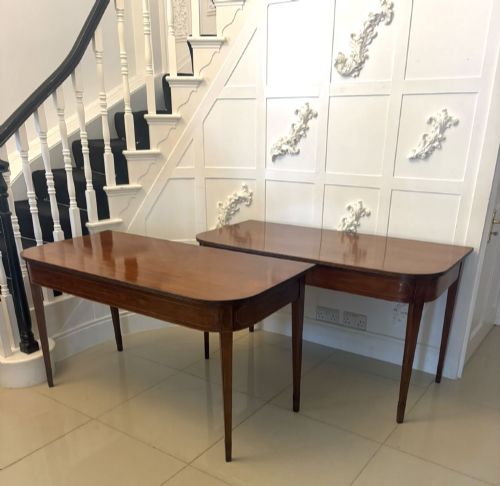
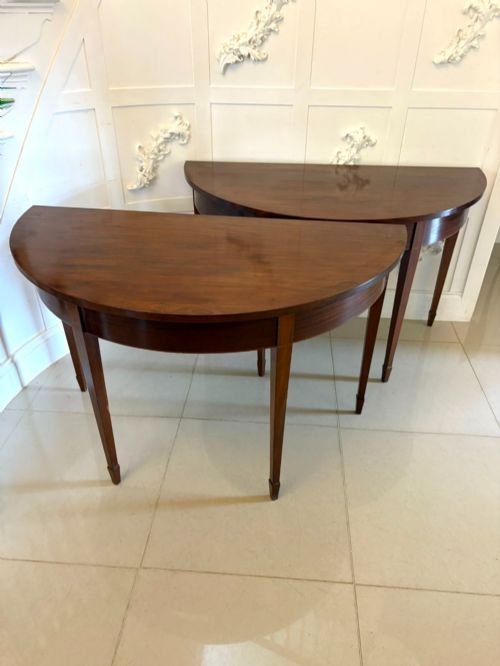
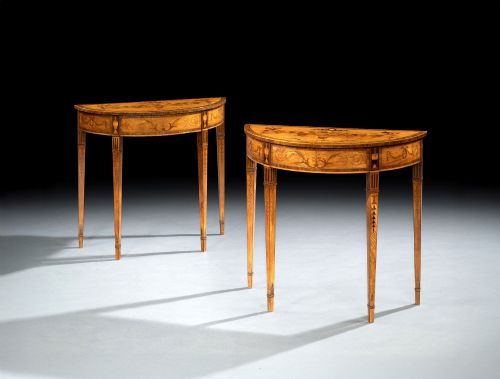
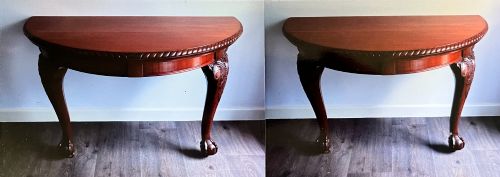


Pair Georgian Wall Tables
These pair georgian wall tables are symmetrical consoles and side tables designed to anchor a room, sought after for their refined proportions and matching presence.
Pair Georgian Wall Tables
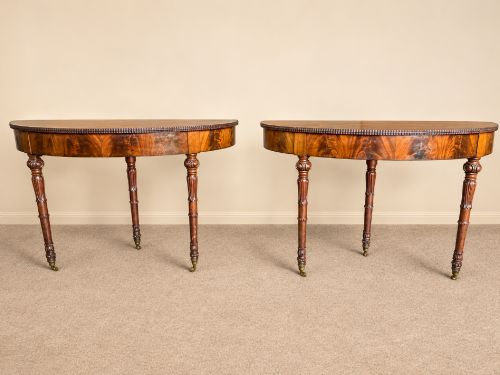
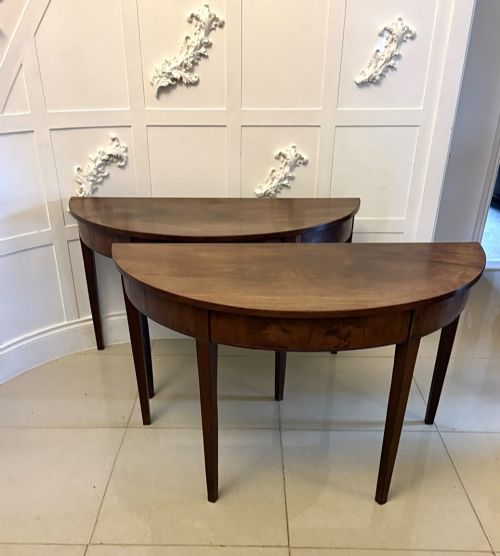
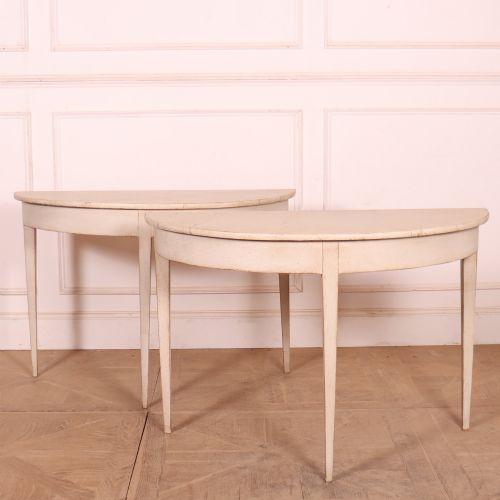
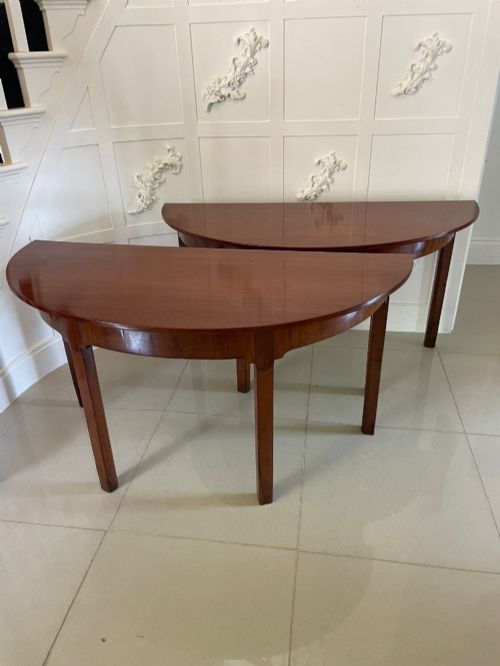
When you search for pair georgian wall tables, you are looking at matched consoles and side tables originating from periods spanning the eighteenth and nineteenth centuries, alongside later revival pieces. The most common forms you will meet on this page are demi-lune console tables designed to sit flush against a wall.
The selection ranges from George III mahogany examples and George IV dining tables to Sheraton Revival painted satinwood and twentieth-century interpretations. These tables frequently serve as hall furniture or decorative centrepieces, appearing in matched sets that maintain visual balance within a room.
Origins stretch from the eighteenth century into the twentieth century, encompassing Neoclassical, Rococo, and Queen Anne styles. Buyers encounter both substantial figured mahogany designs and lighter inlaid pieces finished with marquetry or hand-painted enamel.
How they were made
Makers constructed these tables primarily using solid wood and mahogany veneer, often incorporating figured mahogany or burr walnut for decorative surfaces. Craftspeople applied boxwood inlay, marquetry, and hand-painted enamel details to enhance the visual depth of the timber.
Carved wooden elements define specific pieces, particularly in giltwood and Adams style variations, where surface ornamentation required specialist joinery and carving techniques. Symmetrical forms like demi-lune shapes demanded precise geometric construction to ensure the two halves of a pair matched seamlessly.
Pair Georgian Wall Tables Retail Price Guide 2026
Typical asking prices for pair georgian wall tables among the pieces listed under this phrase on Sellingantiques today, from the lower quarter to the upper quarter. They describe what is for sale here now, not the wider market.
Styles span George III, George IV, Regency, Chippendale, and Adams designs, alongside twentieth-century revival pieces.
What varies in quality
The degree of natural figuring in the mahogany or walnut timber distinguishes standard examples from exceptional ones, with highly figured grain commanding greater visual impact. Precision in the boxwood inlay and marquetry work also separates basic construction from finer cabinetmaking.
The complexity of the carved ornamentation and the crispness of painted enamel surfaces determine the overall refinement of a pair. Cohesion between the two tables dictates how successfully they function as a matched set.
The Pair Georgian Wall Tables Glossary
- Demi-Lune
- A half-moon shape popular for console tables designed to stand flat against a wall. This profile allowed tables to occupy minimal floor space while providing a functional surface.
- Marquetry Inlay
- Decorative patterns created by fitting contrasting pieces of wood veneer into a primary surface. Craftspeople utilised this technique to introduce pictorial or geometric designs.
- Giltwood
- Wood that has been coated with a thin layer of gold leaf or gilt finish. This treatment provided a bright, reflective surface favoured in formal rooms.
- Figured Mahogany
- Mahogany timber exhibiting natural grain patterns such as flame, curl, or fiddleback. Cabinetmakers selected these sections for prominent tabletops to create striking visual movement.
- Console Table
- A table supported by wall brackets or legs, designed to stand against a vertical surface. These pieces often functioned as decorative ledges in hallways and reception rooms.
Pair Georgian Wall Tables: Frequently Asked Questions
Where should I place these tables?
These tables sit flat against a wall, making them well-suited for entrance halls, living rooms, and dining spaces where floor space is at a premium. Their symmetrical nature allows them to frame a doorway, a fireplace, or a large mirror.
Because they often come as demi-lune shapes, they tuck neatly into alcoves or line long corridors without obstructing movement through the room.
Are these tables meant for dining?
Certain variations, such as George IV console dining tables, were constructed to adapt or extend for use during meals. Most examples listed here function primarily as side or console tables rather than everyday dining furniture.
Their primary historical role was decorative and functional display, holding lamps, decorative objects, or serving items in formal rooms.
How do I date these tables?
Dating relies on identifying timber choices, construction methods, and stylistic markers associated with specific periods like the George III or Sheraton Revival eras. Mahogany veneer and specific inlay styles point towards eighteenth or nineteenth-century craftsmanship.
Later twentieth-century revivals often replicate these earlier aesthetics, meaning construction techniques and wood maturity provide essential clues to age.
What is the difference between a console and a side table?
Console tables traditionally rely on wall fixings or specific leg configurations to stand flush against a vertical surface, often serving an architectural display purpose. Side tables are free-standing items of furniture designed to be moved more easily around a room.
In modern usage, the terms often overlap, particularly with demi-lune shapes designed specifically for perimeter placement.