

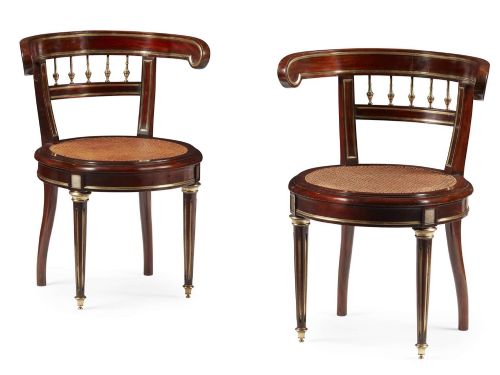
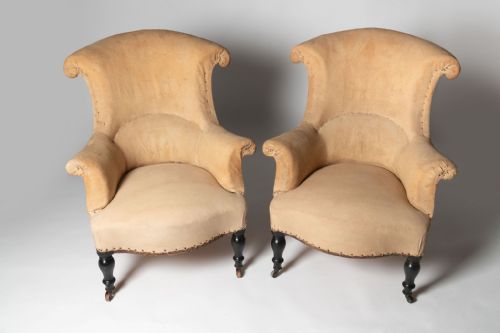
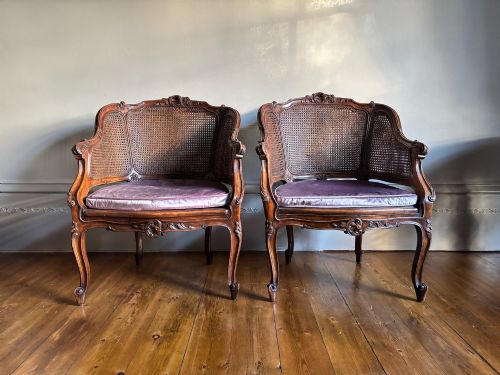
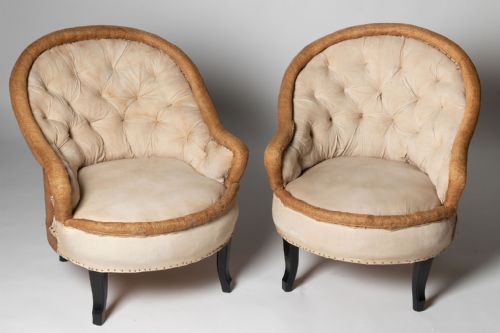
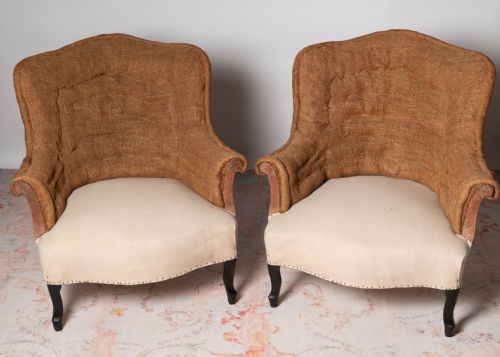
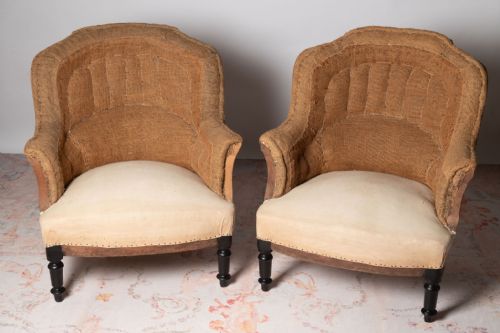
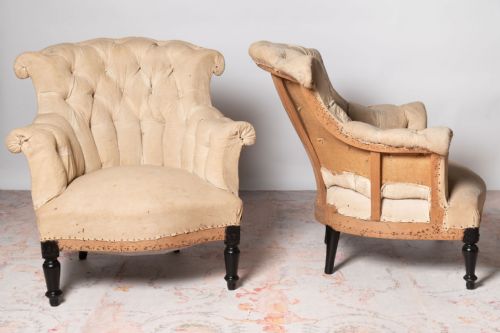

Pair French Tub Chairs
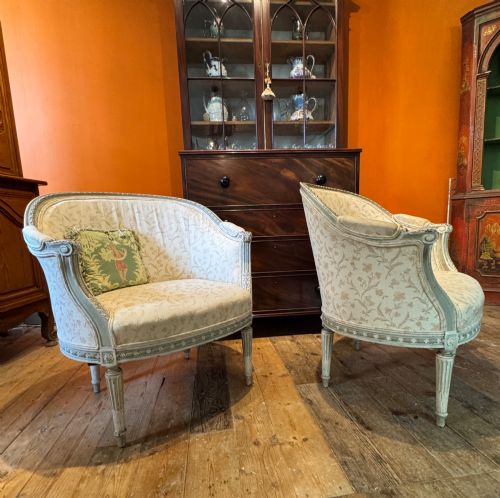
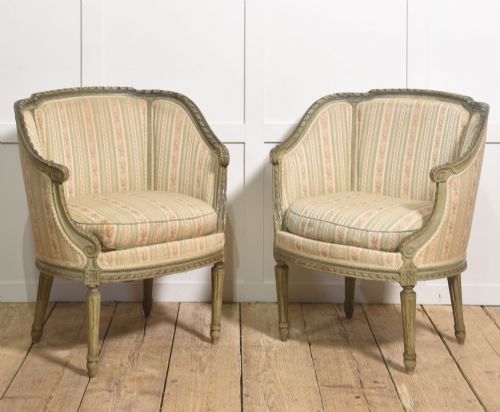
Pair French tub chairs bring curved comfort and continental elegance to a room, offering deep seats wrapped in supportive frames.
Pair French Tub Chairs
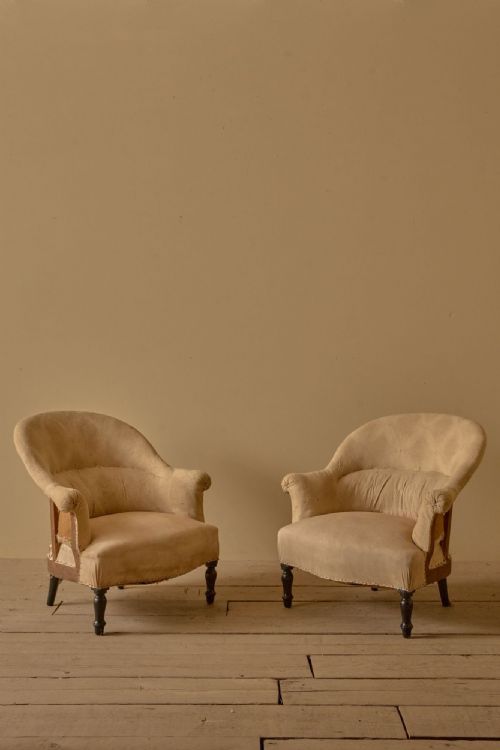
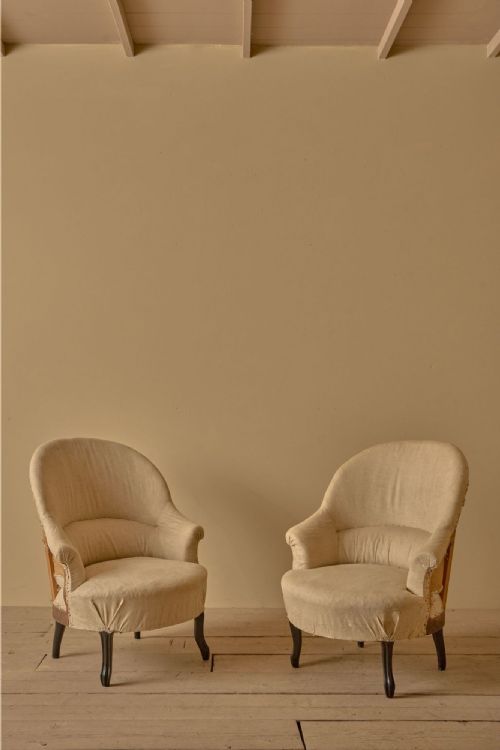
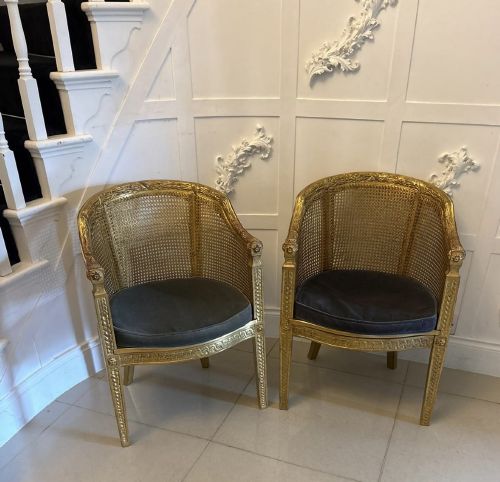
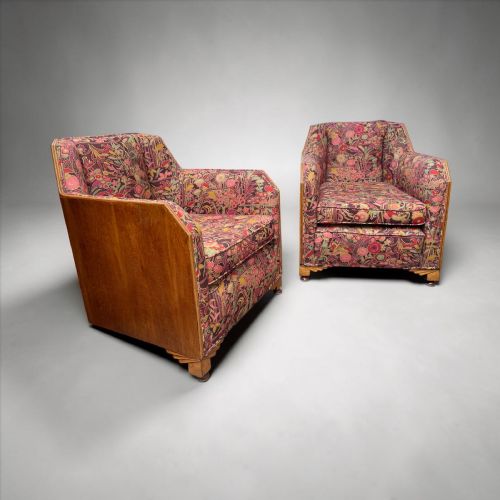
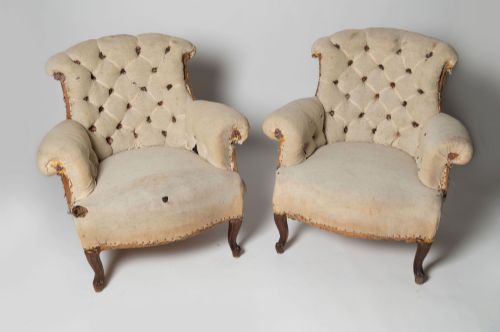
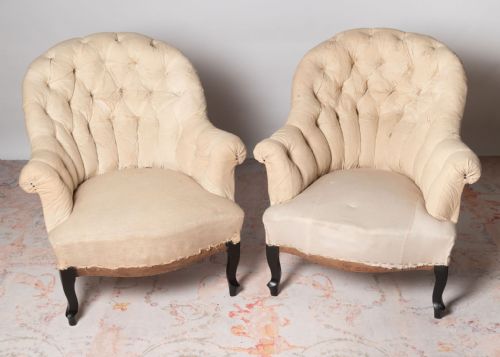
When you search for pair french tub chairs, you are looking at matched pairs of low, rounded armchairs originating from France or following French design traditions. The evidence shows these pieces span from the mid nineteenth century through the art deco period, taking forms such as bergere armchairs, fauteuils, and salon suites.
You are most likely to meet nineteenth century examples, particularly those finished in original paint, giltwood, or cane, alongside later twentieth century iterations from the nineteen thirties. These seats typically function as salon or library seating, combining enclosed rounded backs with upholstered or cane panels.
How they were made
Cabinetmakers shaped solid timber frames using beech and walnut, often applying giltwood or hand paint finishes to the exposed woodwork. These frames supported woven cane panels or deep upholstery foundations layered with hessian, calico, and velvet.
Joinery techniques relied on traditional mortise and tenon construction to maintain the curved structural integrity required by the distinctive tub silhouette.
Pair French Tub Chairs Retail Price Guide 2026
Typical asking prices for pair french tub chairs among the pieces listed under this phrase on Sellingantiques today, from the lower quarter to the upper quarter. They describe what is for sale here now, not the wider market.
Original paint finishes often reveal layers of historic colours beneath, telling a quiet story of past drawing rooms.
What varies in quality
The distinction between tiers rests upon the crispness of the wood carving and the integrity of original surface finishes, such as untouched paint or genuine gilding. Frames that retain their original cane work or early upholstery foundations command greater attention from discerning buyers.
Proportion and structural balance also dictate the standing of a pair, with harmonious curves and substantial timber scantlings separating standard production from finer workshop output.
The Pair French Tub Chairs Glossary
- Bergere
- An enclosed upholstered armchair with wooden framing around the sides and back. This enclosed form defines the classic tub shape.
- Fauteuil
- An open framed armchair with upholstered armrests. These pieces typically feature exposed carved wooden arms.
- Giltwood
- Timber treated with a thin layer of gold leaf or metallic gilt finish. This decorative treatment appears frequently on nineteenth century salon pieces.
- Cane
- Woven rattan material used for chair backrests and seats. It provides a lightweight yet durable structural panel.
- Hessian
- A coarse woven fabric typically utilised as a foundation layer under top upholstery. It supports internal padding in traditional seating.
Pair French Tub Chairs: Frequently Asked Questions
How do I use tub chairs in a modern room?
These seats suit conversational groupings or reading corners where their curved profiles soften rigid architectural lines. Their compact footprint allows them to sit comfortably opposite larger sofas without crowding the floor.
Pairing them with neutral surroundings lets the historic timber frames and textile finishes stand out as focal points in the space.
Are these chairs comfortable for everyday sitting?
The deep seats and enclosed upholstered backs are designed for relaxed lounging rather than upright desk work. Their supportive proportions accommodate extended periods of reading or conversation.
Original spring or webbing interiors dictate the softness of the seat, which varies depending on the specific decade of manufacture.
How do I identify a Napoleon III chair?
Napoleon III period seating often incorporates eclectic revivals of earlier French royal styles combined with nineteenth century comfort innovations. Look for rounded tub forms paired with hessian upholstery or giltwood frames.
This era favoured generous padding and expressive decorative framing that reflected the prosperous tastes of the Second French Empire.