




Pair French Sideboards
These pair french sideboards bring matched presence to a room, offering surface space and concealed storage through balanced design.
Pair French Sideboards
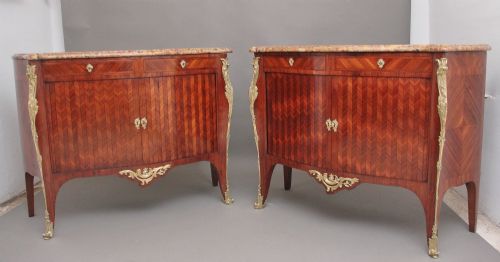
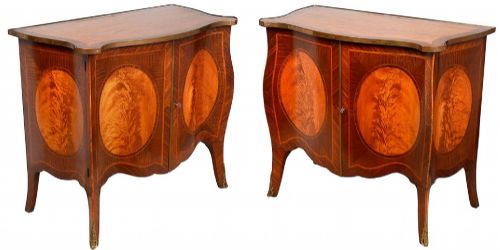
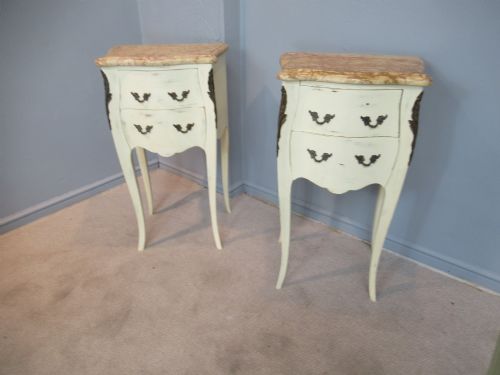
When searching for pair french sideboards, collectors encounter matched dual furniture pieces primarily spanning the nineteenth and early twentieth centuries. These forms include side cabinets, commodes, credenzas, and console tables designed to sit in symmetry within formal interiors.
The selection ranges from neoclassical styles and Napoleon III pieces to Sheraton revival models and French chateau expressions. Walnut, mahogany, and ebonised wood dominate the structural forms, frequently paired with contrasting veneers and decorative mounts.
The historical archive shows earlier server sideboards alongside the diverse cabinets and commodes currently presented. This inventory reflects the enduring demand for dual decorative storage pieces that anchor grand rooms.
Construction and materials
Cabinetmakers utilised dense timbers such as walnut, mahogany, kingwood, and rosewood as foundational structures for these dual pieces. Marquetry and parquetry veneers decorated the surfaces, creating intricate geometric or floral patterns across doors and drawer fronts.
Mounts in ormolu, gilt bronze, and brass added structural accent and corner protection, while inset slabs of polished marble provided durable display surfaces. Interior elements often incorporated glass doors, adjustable shelving, and occasionally porcelain plaques.
Specialised techniques such as ebonising timber and inlaying pietra dura panels appeared on nineteenth-century examples. Boulle work involving tortoiseshell and brass inlay also marked the most ornate Napoleon III productions.
Pair French Sideboards Retail Price Guide 2026
Typical asking prices for pair french sideboards among the pieces listed under this phrase on Sellingantiques today, from the lower quarter to the upper quarter. They describe what is for sale here now, not the wider market.
Some nineteenth-century makers hid secret compartments inside commodes, ensuring a buyer's private letters remained safe from curious guests.
Evaluating craftsmanship and detail
Quality in these matched pieces rests on the precision of the timber matching and the crispness of the bronze or ormolu mounts. Finer examples display hand-chased metalwork and seamless veneer work that aligns perfectly across both cabinets.
The choice of top surface distinguishes standard production from exceptional work, with thick slabs of figured marble or detailed pietra dura inlay elevating a piece. Interior construction, including secondary timbers and drawer dovetailing, further separates workshop tiers.
Attribution to documented makers or workshops elevates the standing of a pair, particularly when pieces bear signatures or distinctive structural traits associated with master cabinetmakers.
Joseph Zwiener·Jean-Henri Riesener·Edmond Poteau
The Pair French Sideboards Glossary
- Ormolu
- Gilded bronze mounts applied to furniture edges and corners. This technique provides metallic contrast against dark wood surfaces.
- Marquetry
- Decorative veneer work forming pictorial or geometric designs. Artisans cut various coloured woods and fit them into a unified panel.
- Pietra dura
- Inlay technique using cut and fitted polished coloured stones. This method creates stone mosaic panels of floral or abstract motifs.
- Commode
- A low decorative chest of drawers with legs. These pieces served both storage and display functions in formal rooms.
- Boulle work
- Marquetry technique utilising tortoiseshell and brass inlay. Developed in France, it creates a rich metallic and dark tortoiseshell pattern.
Pair French Sideboards: Frequently Asked Questions
What defines a pair of sideboards?
A matched set of two storage units designed to complement each other in scale, material, and decorative vocabulary. They provide balanced furniture placement within dining rooms and grand salons.
Historically, such matched pieces ensured symmetry in interior decoration, allowing homeowners to display decorative objects and store dining wares across two coordinated surfaces.
How do I identify nineteenth century pieces?
Nineteenth-century pieces typically display period-specific revival styles such as Napoleon III, Louis XVI, or Victorian aesthetics. Construction indicators include hand-cut dovetails and traditional timber framing methods.
Materials such as heavy marble tops, cast ormolu mounts, and exotic wood veneers like kingwood and rosewood also point to nineteenth-century workshop practices.
Where should I place these sideboards?
These matched pieces suit formal dining rooms, large hallways, or expansive living spaces where symmetry creates architectural balance. They provide a continuous surface for lighting and display.
Placement depends on the scale of the room and the height of the pieces, ensuring the matched pair commands the wall space effectively without overcrowding.
How do I care for marble and wood?
Marble surfaces require gentle cleaning with neutral soap and water to avoid staining from acidic liquids. Wooden veneers benefit from occasional waxing to maintain moisture and lustre.
Keeping these pieces away from direct sunlight and extreme temperature fluctuations preserves both the timber substrate and the delicate gilt bronze mounts.