
Brass Mounted Sideboard
A brass mounted sideboard brings architectural dignity and storage to a room, uniting timber surfaces with metallic detail.
Brass Mounted Sideboard
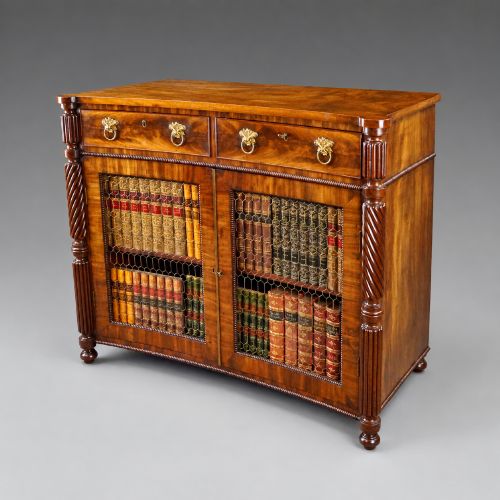
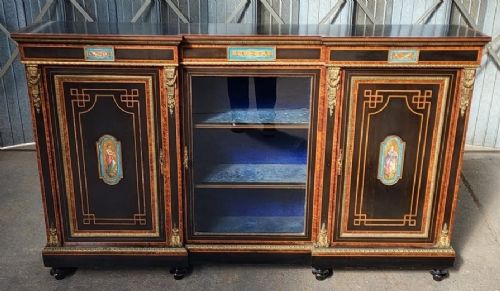
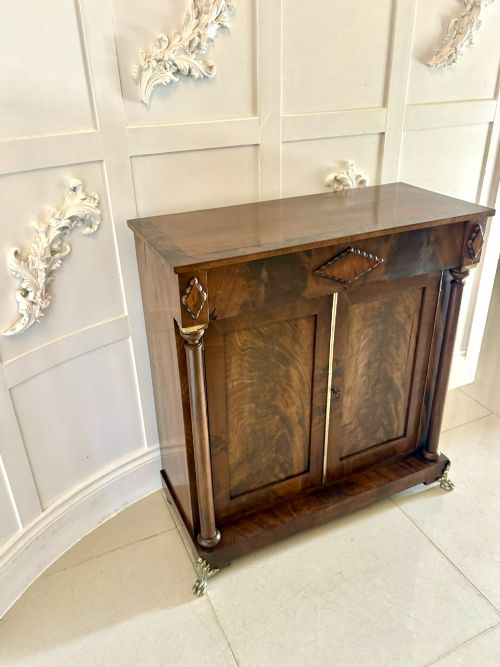
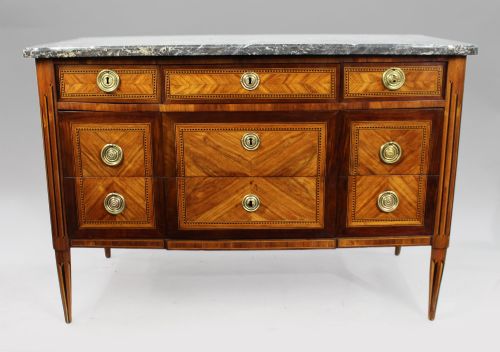
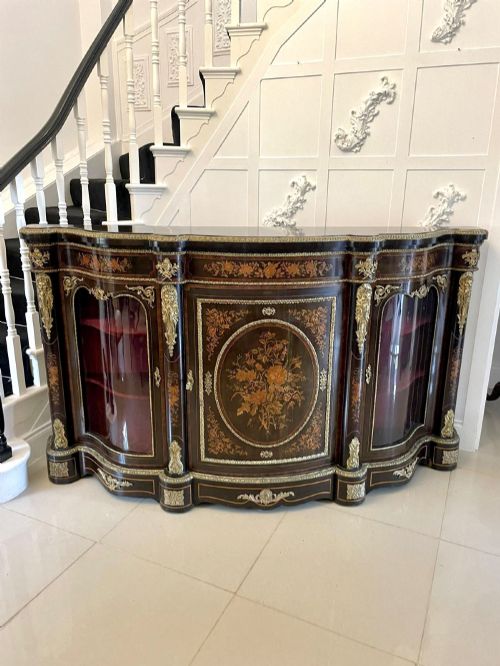
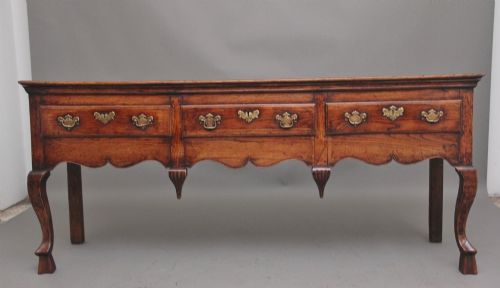
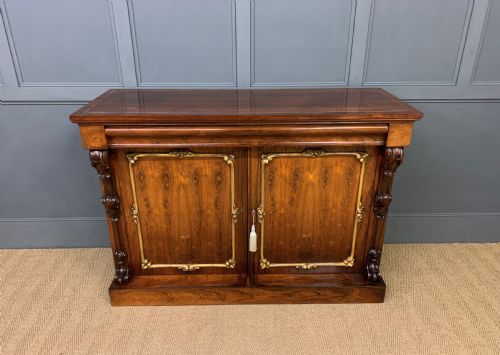
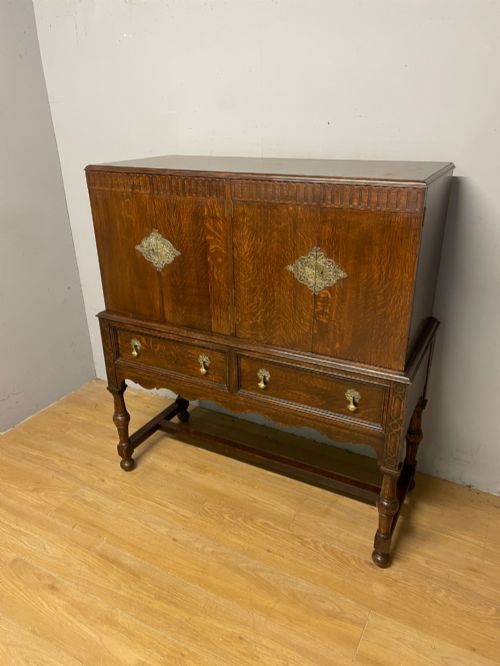
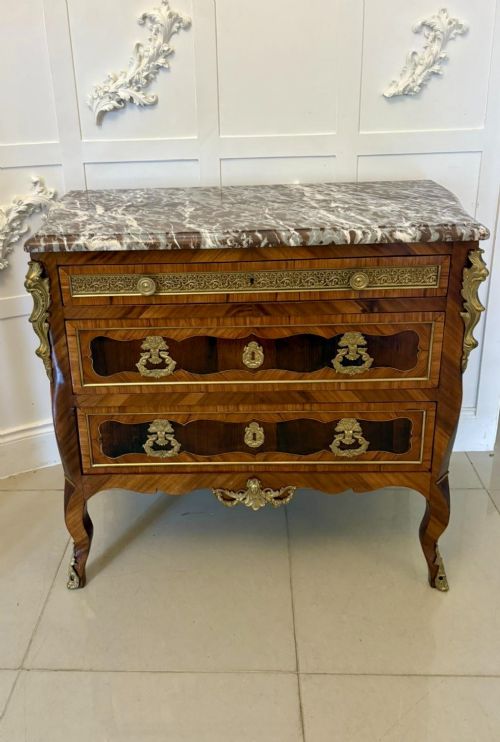
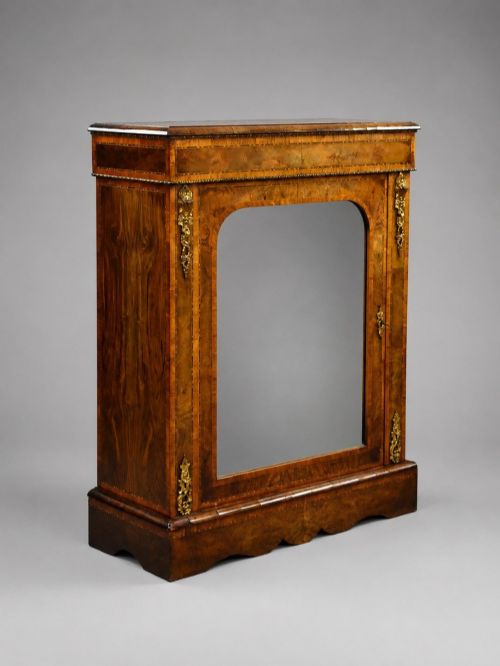
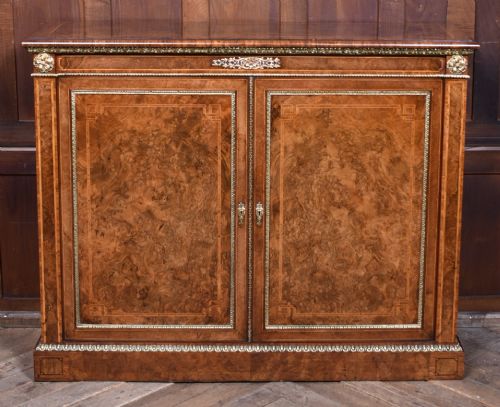
A brass mounted sideboard encompasses a variety of timber storage furniture, including chiffoniers, credenzas, and commodes, enhanced with metal mounts. These pieces range from Regency rosewood designs to Victorian walnut cabinets and French commodes.
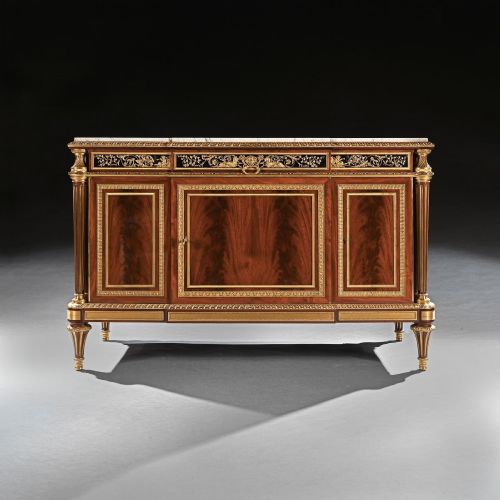
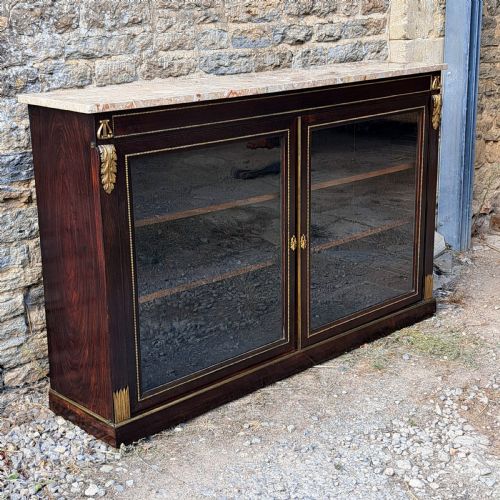
The version most commonly encountered on this page is the 19th-century or Regency side cabinet featuring brass or ormolu mounts, often topped with marble or executed in figured mahogany, rosewood, and ebonised wood.
How they were made
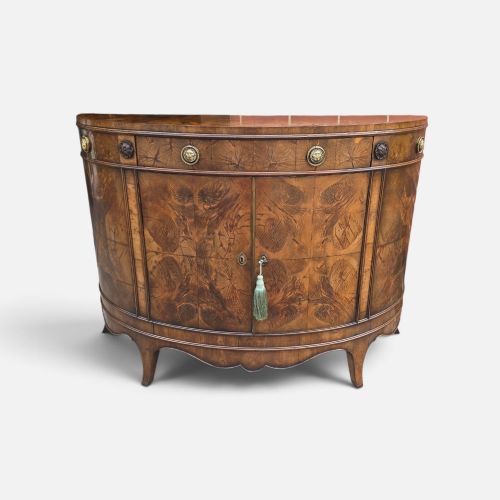
Cabinet makers utilised dense hardwoods such as mahogany, rosewood, walnut, and oak as the structural foundation, frequently employing marquetry, parquetry, and burr veneers across the surface.
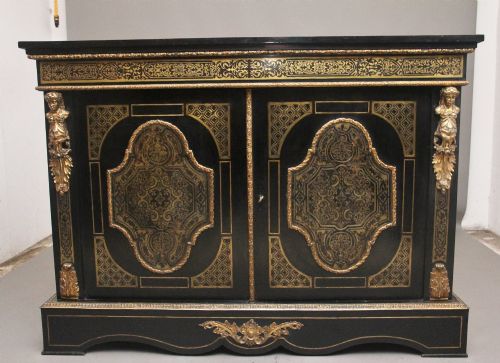
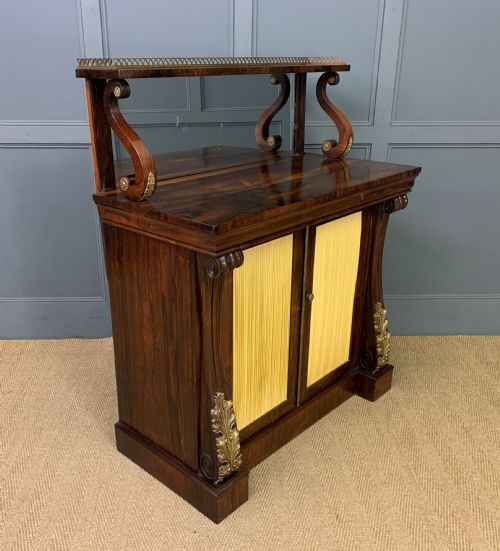
Cast brass and ormolu mounts, galleries, and inlays were meticulously applied to corners, doors, and friezes, sometimes paired with marble tops, glass panels, or pleated fabric.
Design styles span Regency, Victorian, Louis XVI, Chinoiserie, and Arts and Crafts across side cabinets, chests of drawers, and credenzas.
What varies in quality
The refinement of the timber selection and the crispness of the brass or ormolu casting dictate the tier of the piece. Superior examples display precise marquetry inlay, well-figured grain, and heavy, finely chased metalwork.
Construction methods and overall proportion separate standard production from master workshops, evident in the seamless integration of marble tops, internal fittings, and structural stability.
Henry Dasson·Weisweiler·Gillows·Liberty and Co·Harrods
The Brass Mounted Sideboard Glossary
- Ormolu
- Gilded bronze mounts applied to furniture. This technique was widely utilised in French and Victorian pieces to highlight architectural corners and doors.
- Credenza
- A low cabinet or sideboard designed for display and storage. They frequently incorporate glass doors or elaborate marquetry.
- Marquetry
- Decorative veneer patterns assembled from various woods. Craftsmen cut intricate floral and geometric motifs to adorn the cabinet fronts.
- Chiffonier
- A compact sideboard cabinet featuring shelves or drawers. Regency and Victorian versions often include brass galleries or fabric panels.
- Boulle
- An ornamentation technique using tortoiseshell and brass inlay. It appears on ebonised cabinets from the nineteenth century.
Brass Mounted Sideboard: Frequently Asked Questions
What is a brass mounted sideboard?
A brass mounted sideboard is a timber storage cabinet decorated with brass or ormolu fittings. These pieces function as credenzas, chiffoniers, or commodes.
They combine practical shelving with ornamental metalwork, originating primarily from the eighteenth, nineteenth, and early twentieth centuries.
How do I style a side cabinet?
These cabinets suit dining rooms, hallways, or living spaces as focal points for display. Placing a lamp or decorative objects on the surface complements the timber.
Ensure the room has sufficient clearance for doors to open and that the timber tone coordinates with existing interior elements.
What woods were used?
Cabinet makers relied on hardwoods such as mahogany, rosewood, walnut, oak, and yew. Ebonised wood and fruitwood veneers also appear frequently.
Surfaces often display decorative grain patterns, burr walnut, or geometric parquetry alongside marble tops.