
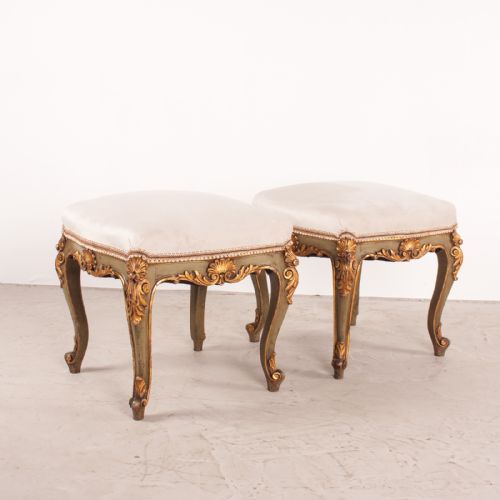


Pair French Low Stools
Pair french low stools bring low seating and ornamental proportion to a room, offering genuine period charm.
Pair French Low Stools
When you search for pair french low stools, you are looking at low seating forms that span the nineteenth century, including Regency, Victorian, and later revival periods. These pieces appear primarily as footstools and stools, alongside occasional related forms such as prie-dieu chairs.
The most common versions on this page originate from nineteenth-century workshops and follow revival styles like French Rococo, Louis XIV, and Louis XV. They combine low profiles with decorative woodwork and upholstery suited to period interiors.
How they were made
Makers shaped these low forms using solid timbers including walnut, mahogany, beechwood, and painted or gilded wood. Carved wood details define the frames, often accented with gold leaf.
Upholstery completed the pieces, utilising velvet, textile, fabric, and tapestry upholstery to cover the padded seats.
Some chairs double as kneeler prayer stations, proving that nineteenth-century relaxation and devotion shared the exact same height.
What varies in quality
The standard of carving in the wood distinguishes finer examples from simpler workshop output. Crisp execution in walnut or gilt frames separates better pieces.
The integrity and selection of the upholstery materials, from heavy velvet to tapestry, shape the overall finish of the seating.
The Pair French Low Stools Glossary
- Walnut
- A dense hardwood prized for its rich grain and strength, frequently utilised in fine nineteenth-century frames. It takes a crisp carved edge exceptionally well.
- Gilt
- A thin layer of gold leaf applied to the wooden surface of a frame to create a brilliant decorative finish. This technique highlights carved scrollwork and ornamental details.
- Rococo Revival
- A nineteenth-century design movement inspired by earlier French styles featuring asymmetric curves, C-scrolls, and naturalistic motifs. It dominates many Continental and Victorian seating pieces.
- Prie-Dieu
- A devotional chair designed for prayer, featuring a low seat and an upper rest. They share the compact scale and upholstered comfort of traditional low stools.
Pair French Low Stools: Frequently Asked Questions
What are pair french low stools?
These pieces are matched sets of low seating designed for nineteenth-century interiors. They take the form of footstools and small decorative stools.
They draw on French revival styles such as Louis XV and Rococo. Their low stature makes them versatile for placement around a room.
How were they used historically?
Period users placed these low seats near firesides or alongside larger armchairs for resting feet. Their decorative frames also allowed them to serve as occasional ornamental seating.
In some instances, related forms like prie-dieu chairs accommodated private devotional practices within the home.
How do I live with them?
Position these low seats in front of sofas or beside low tables where their decorative frames remain visible. Their compact proportions allow them to fit easily into smaller spaces.
Protect the historic textiles and carved wooden surfaces from direct sunlight and heavy daily wear to preserve their condition.
How do I tell periods apart?
Examine the timber, carving style, and silhouette to identify the era. Regency examples show different proportions compared to later Victorian revivals.
Revival pieces often incorporate specific historical motifs, such as Louis XIV or Louis XV scrollwork, pointing to the nineteenth-century interpretation of those earlier reigns.