
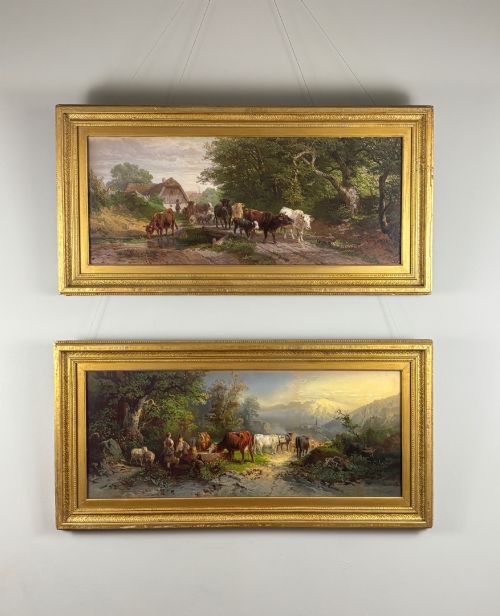
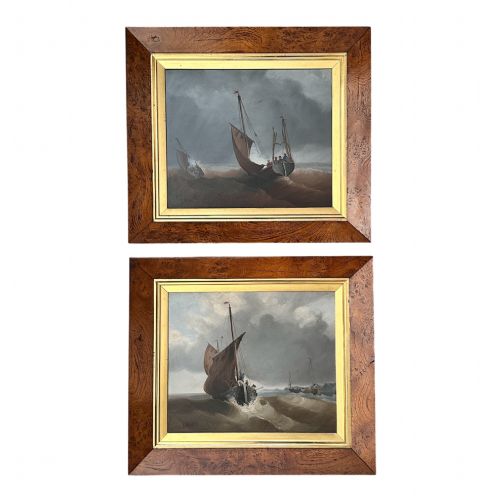
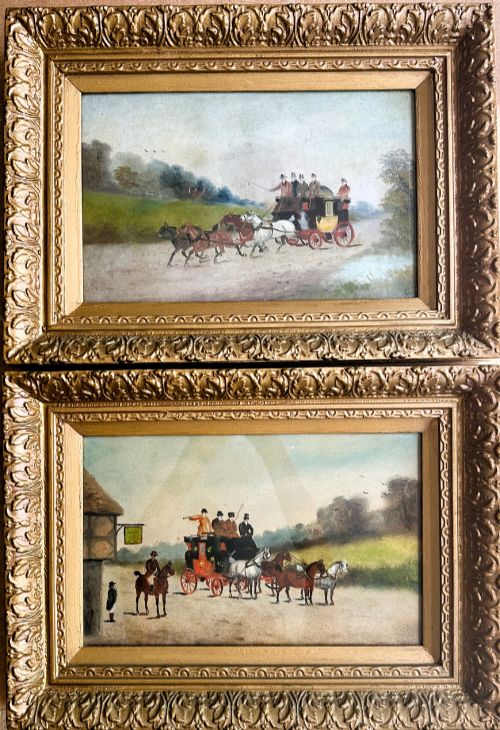


Pair Framed Oil Landscapes
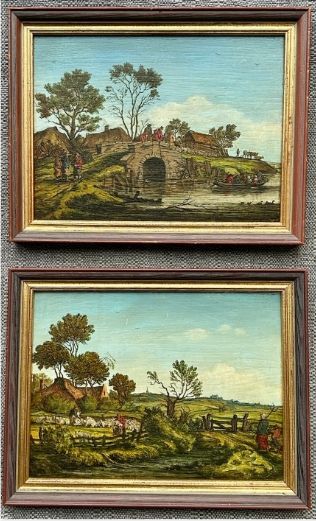
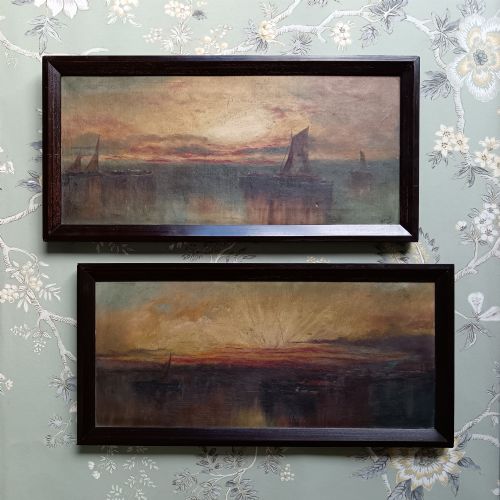
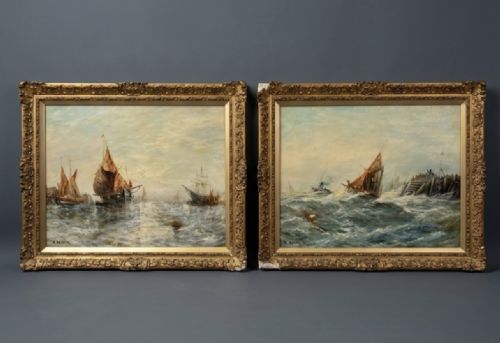
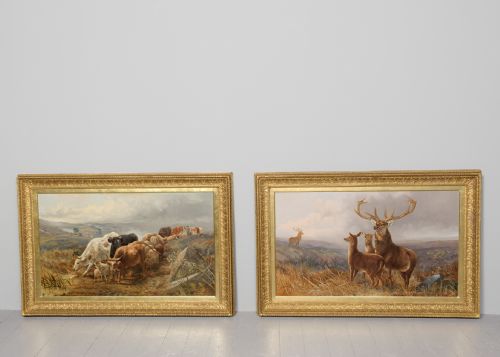
These pair framed oil landscapes bring together matched works of art spanning the eighteenth, nineteenth, and early twentieth centuries.
Pair Framed Oil Landscapes
Pair framed oil landscapes present dual matched compositions designed to hang together, recording natural scenery, pastoral views, and architectural subjects. These works appear most commonly from the nineteenth century, including Victorian and Edwardian periods, executed in oils.
The subjects range from coastal marine views and highland scenes to pastoral riverbanks and classical ruins. Many examples showcase specific settings such as North Wales or the Isle of Wight, framed to complement each other.
Buyers encounter matching canvases and wood panels created by named artists and regional schools. The pairings frequently depict complementary times of day, such as sunrise and sunset, or seasonal shifts.
How they were made
The artists applied oil paint using brushes and occasionally palette knives onto prepared surfaces of canvas, wood panels, or board. These supports provided a stable ground for building up layers of pigment and glaze.
Surrounding the paintings, makers constructed frames using wood, gesso, and giltwood or gold leaf enrichment. These frames were tailored to match the dimensions and aesthetic weight of both panels in the pair.
Listings feature works from the eighteenth to the early twentieth century, utilising oil paint on canvas, wood panels, and board.
What varies in quality
The skill of the brushwork and the precision in rendering light, atmosphere, and perspective distinguish finer examples. Masterful control of tone brings depth to skies, water, and foliage.
The integrity of the original frames, including the crispness of the gesso mouldings and the warmth of the gilt surface, contributes significantly to the visual success of the pair. Matched preservation across both items maintains their historical pairing.
Robert Cleminson·John Moore of Ipswich·Gustave De Bréanski·Pieter Cornelis Dommersen·John Frederick Herring Jnr
The Pair Framed Oil Landscapes Glossary
- Oil on canvas
- Pigments bound in drying oils applied to a woven fabric support stretched over a wooden frame. This medium allowed artists to work with rich colours and subtle blending.
- Giltwood
- Timber carved and coated with gold leaf or metallic powder. It provided a reflective, decorative border for fine paintings.
- Gesso
- A plaster mixture applied to wood or canvas as a base for painting or gilding. It created a smooth surface for detailed frame ornamentation.
- Tondo
- A circular work of art. This format presented landscape scenes within a rounded boundary rather than a traditional rectangle.
Pair Framed Oil Landscapes: Frequently Asked Questions
How should pair framed oil landscapes be displayed?
Hang the two matching pieces at eye level with adequate spacing to allow the composition to breathe. Keep them away from direct sunlight and excessive temperature fluctuations to protect the canvas and frame.
Ensure both works receive balanced lighting that highlights the details of the oil paint without causing distracting glare on the surface.
What subjects do these landscape paintings typically feature?
The selections encompass rural valleys, coastal waters, mountainous terrains, and pastoral farmyards. Many pairs capture corresponding scenes, such as morning and evening light.
Architectural elements and classical ruins also appear, reflecting the topographical interests of nineteenth-century painters.
How do you identify the period of the frames?
Examine the construction joints, the composition of the gesso, and the tooling of the gilt finish. Period frames often show hand-carved wooden elements and traditional gilding techniques.
Match the age of the frame to the stretcher bars and canvas behind the painting to confirm they belong together.
Were these works always created as pairs?
Artists frequently painted two complementary canvases simultaneously to be sold and displayed together as a set. Themes like sunrise and sunset or matching seasonal views were planned from the start.
Over time, some pairings remained intact through generations of collectors, preserving their original visual dialogue.