
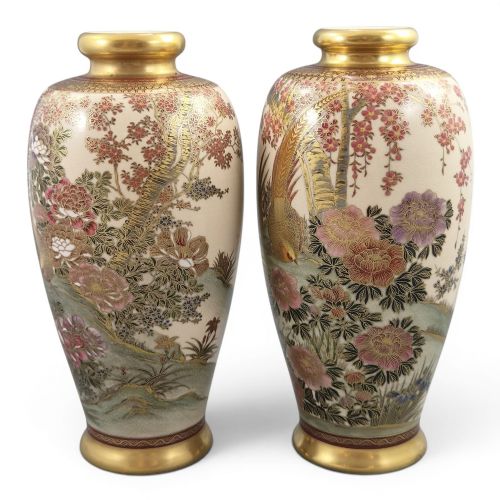


Pair Floral Porcelain Vases
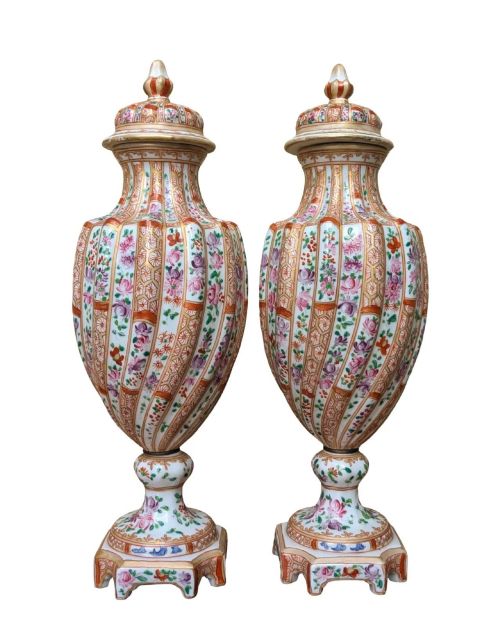
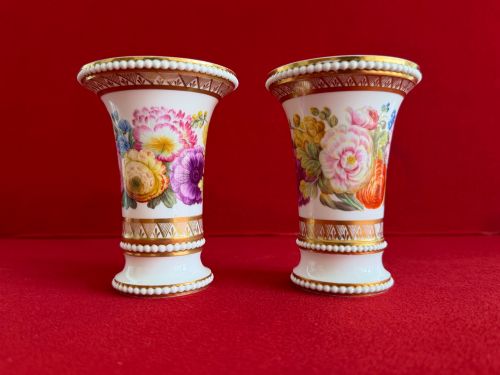
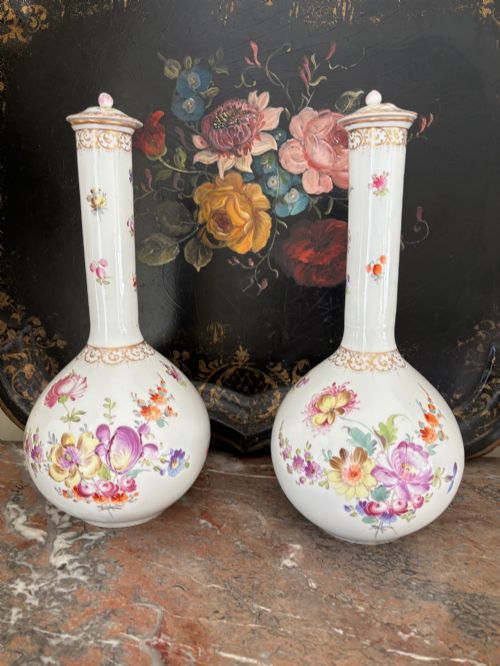
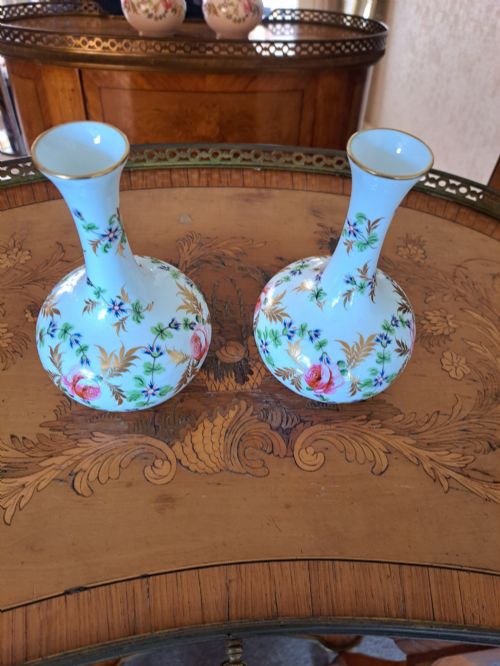
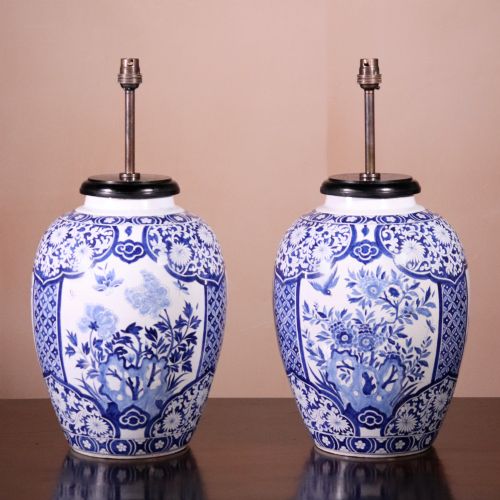
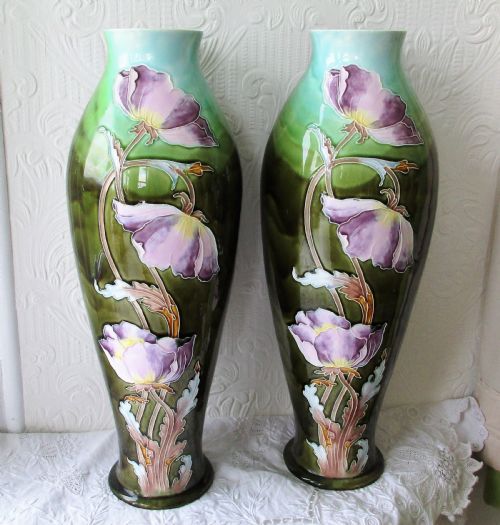
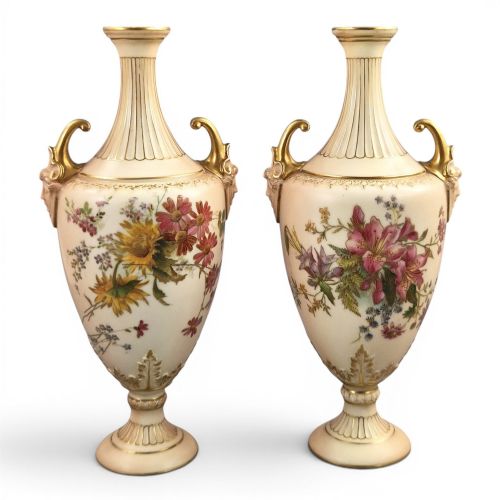
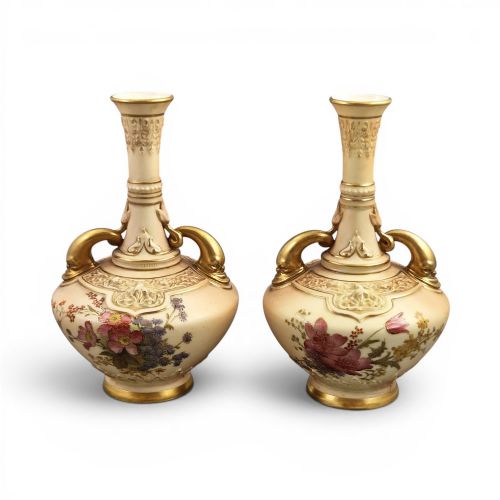
These pair floral porcelain vases bring symmetry and hand-painted botanical detail to a room, ranging from English blush ivory to Japanese Satsuma ware.
Pair Floral Porcelain Vases
A pair floral porcelain vases search uncovers matching symmetrical vessels intended for mantelpieces, side tables and cabinets. The examples found here span the nineteenth and early twentieth centuries, encompassing Victorian, Edwardian, Art Nouveau and Meiji period aesthetics.
The selection includes English works by Royal Worcester and Doulton, continental pieces from Sitzendorf, Sevres style makers and Ernst Wahliss, alongside Japanese Imari and Satsuma exports. Forms vary from bulbous lidded urns and double gourds to slender bud vases and table lamps.
How they were made
Makers shaped porcelain, earthenware and stoneware bodies before applying hand-painted floral decoration, enamel and glaze. Many pieces incorporate gilding, gold leaf or brass mounts to accentuate the ceramic form.
Techniques range from standard underglaze painting to raised white enamel and pâte-sur-pâte work. Specialised potteries utilised specific regional pastes and firing methods, resulting in distinct weights and surface sheens.
The listings span the nineteenth and early twentieth centuries, featuring porcelain, earthenware and stoneware with enamel and gilt accents.
What varies in quality
Quality rests in the precision of the hand-painted botanical detail and the crispness of any applied gilt bronze mounts or gilding. Finer examples display subtle shading in the floral motifs and superior balance in the matching pair.
The reputation of the workshop or porcelain house dictates the level of finish, distinguishing standard commercial production from exhibition pieces signed by master artists.
Sitzendorf·Crown Derby·Manpei Kobe·Mason Ironstone·Tagawa Kyoto·Hododa·Samson Paris·Doulton Burslem·Kutani·Ernst Wahliss·Royal Doulton·Royal Dux Bohemia·Moorcroft Macintyre·Jacob Petit
The Pair Floral Porcelain Vases Glossary
- Imari
- A style of Japanese export porcelain decorated in underglaze blue, iron red, gold and supplementary colours. These wares typically feature dense panelled designs of flowers and foliage.
- Blush ivory
- A soft cream-coloured porcelain ground developed by Royal Worcester in the late nineteenth century. It is usually adorned with tinted floral sprays and gilt detailing.
- Satsuma
- Earthenware originating from Japan, characterised by a crackle-glaze ivory body painted with polychrome enamels and gilding. Pieces often carry maker or studio signatures on the base.
- Pâte-sur-pâte
- A ceramic technique where wet porcelain slip is built up in successive layers to create a low relief cameo effect. The resulting design stands out against a contrasting coloured background.
- Gilt bronze
- An alloy of copper and zinc finished with a layer of gold amalgam, frequently employed for decorative mounts, handles and bases on nineteenth-century continental vases.
Pair Floral Porcelain Vases: Frequently Asked Questions
How do I display a pair of vases?
Symmetrical pairs look best balanced on a mantelpiece, sideboard or flanking a fireplace. Ensure both pieces receive adequate light to highlight their hand-painted floral details.
Keep them clear of busy backgrounds so the matching forms and gilding remain the focal point of the arrangement.
Were these vases meant for cut flowers?
Many historical vessels were created purely as decorative ornaments rather than functional water holders. Forms with narrow necks or delicate gilt mounts served to beautify a room on their own.
Lidded urns and potpourri jars were designed to hold dried flowers or scented botanical mixtures instead of fresh stems.
How can I tell Japanese export styles apart?
Imari wares rely on a distinct palette of deep blue, iron red and gold applied to a crisp porcelain body. They feature structured geometric and floral panels.
Satsuma pieces utilise a warm, crackled earthenware body with elaborate enamel paintings of flowers, wisteria and figures, often signed by the artist or studio.
What does blush ivory mean on Royal Worcester?
Blush ivory refers to a specialised shaded cream glaze introduced by the factory during the late Victorian era. It mimics the warmth of ivory and provides a muted backdrop for naturalistic floral painting.
Pieces featuring this finish often bear specific date ciphers or pattern numbers stamped into the ceramic base.