



Pair Fire Screens
Pair fire screens are matched sets designed to shield rooms from open heat, offering grand domestic utility.
Pair Fire Screens
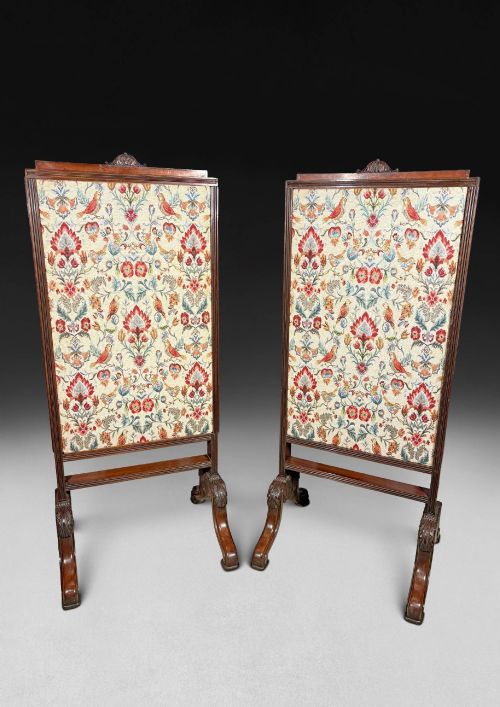
Buyers encounter matching sets fashioned in styles ranging from Hepplewhite and Regency to Louis XV. These pieces stand beside fireplaces or function as adjustable screens to deflect warmth from the face.
How they were made
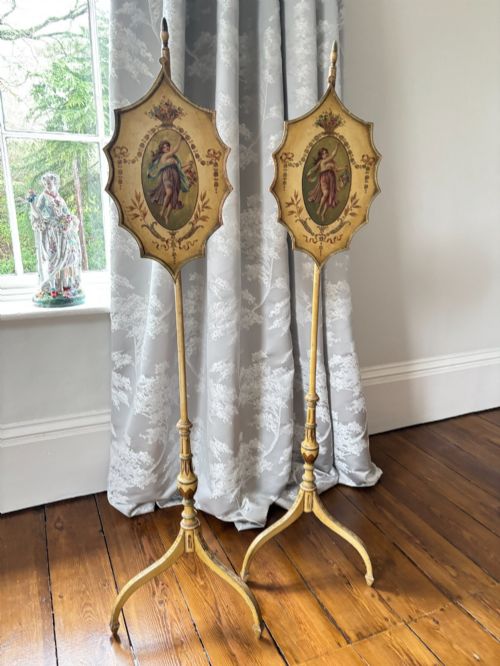
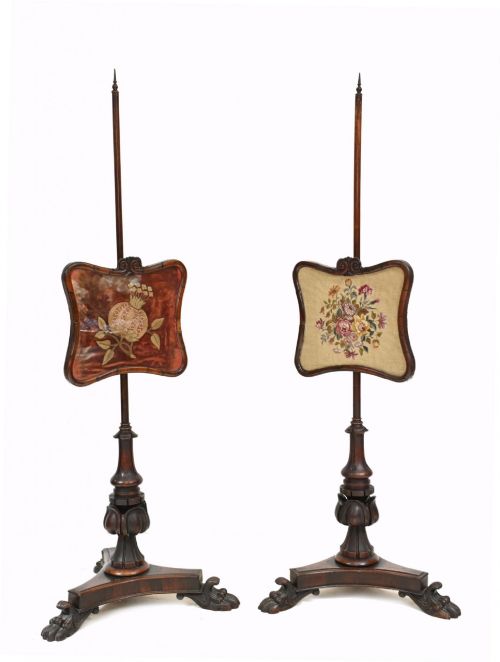
Maker construction relies on timber framing using mahogany, palisander, and painted wood, supported by spade feet or turned poles. Gilt bronze and brass provide structural mounts and adjustable mechanisms.
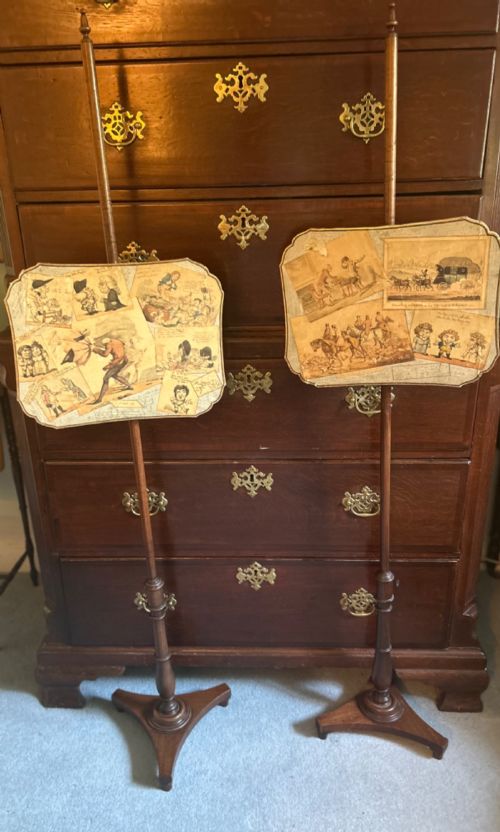
Visual surfaces incorporate needlepoint tapestry, silk, glass, and satirical prints or topographical painted scenes on papier-mâché. These decorative elements are mounted directly into frames to withstand hearth environments.
Pair Fire Screens Retail Price Guide 2026
Typical asking prices for pair fire screens among the pieces listed under this phrase on Sellingantiques today, from the lower quarter to the upper quarter. They describe what is for sale here now, not the wider market.
Listings span the eighteenth, nineteenth, and twentieth centuries, incorporating Georgian, Regency, and Victorian design vocabularies.
What varies in quality
Quality rests upon the execution of the decorative medium, where hand-stitched needlepoint tapestry or detailed topographical painting distinguishes superior examples from simpler ones. Maker attribution, such as stamps on mahogany frames, elevates historical importance.
Proportion and the integrity of the adjustable pole mechanism dictate the success of the design. Examples retaining original glass, silk panels, or satirical prints demonstrate higher preservation grades.
Gillows
The Pair Fire Screens Glossary
- Pole screen
- A vertical stand supporting an adjustable sliding panel used to shield the face from fire heat. This form dominates the available pairings.
- Face screen
- A small handheld or mounted screen designed specifically to protect the complexion from the glare and heat of an open hearth.
- Needlepoint tapestry
- Hand-stitched textile work stretched within the frame of a screen. It provides both colour and intricate pictorial detail.
- Papier-mâché
- A moulded paper pulp material pressed and lacquered to form lightweight screen panels suitable for painted scenes.
Pair Fire Screens: Frequently Asked Questions
What is a pair fire screen?
A pair fire screen consists of two matching domestic shields designed to block radiant heat from a fireplace. They were placed strategically around a room to protect sitters.
Historically, these pieces functioned as practical furnishings before evolving into decorative room accessories during the Georgian and Victorian eras.
How do pole screens work?
Pole screens feature a vertical wooden shaft mounted on a stable base, usually with spade feet. A sliding panel moves up and down the pole to adjust height.
This mechanism allows users to direct the shield precisely where heat protection is required near an open hearth.
Where were face screens used?
Face screens were utilised in formal drawing rooms where ladies sat close to open fires. They prevented excessive heat from damaging delicate complexions and cosmetics.
Many examples utilise lightweight materials like papier-mâché or mounted textiles for ease of handling.
What materials make up these screens?
Construction materials combine dense timbers such as mahogany and palisander with brass or gilt bronze hardware. Decorative surfaces rely on silk, glass, needlepoint, and painted paper.
Different periods favoured distinct combinations, shifting from carved mahogany towards moulded papier-mâché and gilt bronze.