


Pair Figural Table Lamps
Pair figural table lamps bring character and illumination together, offering matched sculptural presence for either side of a room.
Pair Figural Table Lamps
When you search for pair figural table lamps, you encounter matched sets combining human, mythological, or animal forms with functional lighting. These objects span from the nineteenth century into the nineteen-thirties, reflecting diverse artistic revivals and international influences.
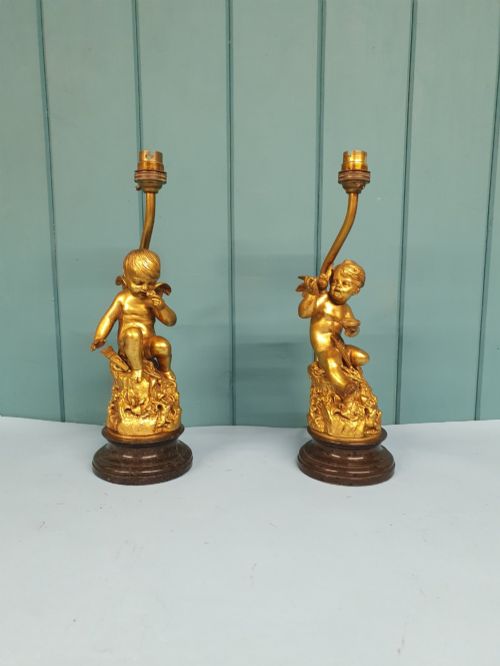
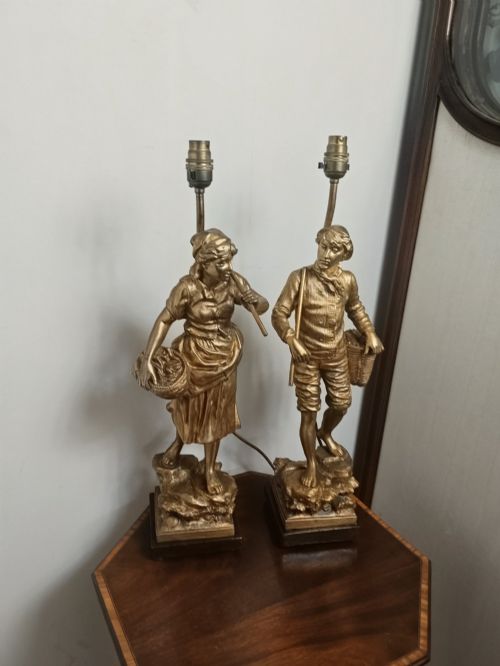
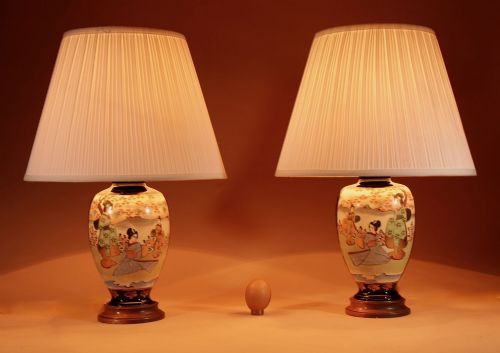
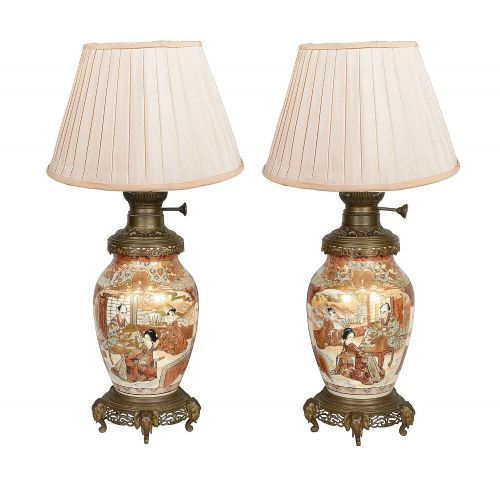
You are most likely to meet French and Asian creations on this page, ranging from gilt bronze maidens and cherubs to Japanese Satsuma and Chinese Famille Rose ceramics. Many of these pieces began life as vases, ginger jars, or torchères before conversion into lamps during subsequent decades.
The aesthetic vocabulary draws heavily from Neoclassical, Rococo, and Meiji period traditions. Whether cast in bronze or painted on porcelain, these matched pairs provide symmetrical focal points for mantelpieces, sideboards, and large tables.
How they were made
The construction relies on traditional foundry casting and ceramic shaping, utilising bronze, brass, marble, and porcelain. Metal figures were typically cast in sections, chased by hand to sharpen details like drapery and hair, and finished with gilding or dark patination.
Ceramic bodies originate from Chinese export kilns and Japanese workshops, featuring hand-painted enamel decoration and crackle glaze effects. These vessels and figures were later mounted onto brass, marble, or wooden bases to accommodate electrical wiring and fabric or silk shades.
Cherubs appear frequently on nineteenth-century brass bases, seemingly determined to hold up your lighting regardless of the century.
What varies in quality
Quality rests upon the crispness of the casting and the refinement of the hand-painted details. Finer bronze figures exhibit deep chiselling and balanced proportions, whereas simpler examples show softer contours and coarser assembly.
The integrity of the original ceramic or metal body dictates the upper tier of the range. Matched pairings that retain their original patination, undamaged glaze, and sturdy stone or metal bases command greater appreciation among collectors.
E Rousseau·H. Moreau
The Pair Figural Table Lamps Glossary
- Torchère
- A stand or support for a torch, adapted in these pieces into sculptural lamp standards modelled on classical light-bearers.
- Spelter
- A zinc alloy commonly used as a cost-effective alternative to bronze for figural castings in the nineteenth century.
- Famille Rose
- A palette of Chinese ceramic enamels dominated by opaque pink, introduced in the eighteenth century and continued through later periods.
- Satsuma
- Japanese earthenware featuring a crackled ivory glaze decorated with polychrome enamels and gilding.
- Chasing
- The manual finishing of a metal casting using small punches and hammers to refine surface textures and details.
Pair Figural Table Lamps: Frequently Asked Questions
Are these lamps wired for modern use?
Most antique lamps are adapted for contemporary electrical standards during their history. Buyers should inspect the wiring upon arrival to ensure it meets current safety requirements.
Rewiring is straightforward for a qualified electrician and allows you to retain the historic base and mountings.
How do I match shades to these lamps?
Selecting fabric or silk shades depends on the scale and period of the figural base. Neutral tones allow ornate bronze or Satsuma details to remain the primary focus.
Proportion is essential, ensuring the shade diameter complements the width of the figures without overwhelming the composition.
Can converted vases be returned to original vessels?
Conversion usually involves drilling a small hole through the base or ceramic body to pass the cord. Reverting the piece to a display vessel is therefore rarely practical.
Most collectors prefer to enjoy them in their converted state as functional lighting with historical charm.
How do I clean bronze and porcelain?
Bronze surfaces require only a gentle dusting with a soft dry cloth to preserve their patination. Avoid abrasive cleaners that strip the historic finish.
Porcelain and ceramic bodies tolerate a slightly damp cloth on glazed areas, but care must be taken around painted enamel details.