
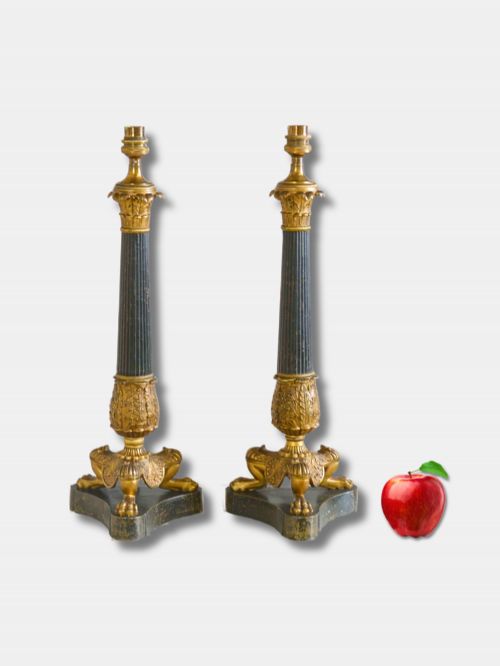


Pair Empire Bronze Lamps
These pair empire bronze lamps bring neoclassical symmetry and patinated metalwork to a room, offering the structured elegance collectors seek.
Pair Empire Bronze Lamps
When searching for pair empire bronze lamps, you encounter lighting fixtures shaped by nineteenth-century neoclassical tastes and French design influences. The selection spans table lamps, wall lights, and converted candlesticks that preserve classical forms.
Most examples originate from the nineteenth century, including Regency and 1800s periods, alongside later twentieth-century interpretations. Columnar silhouettes, urn shapes, and figural torchères dominate the forms available on this page.
French workshops and classical motifs define the grouping, often pairing dark metal bodies with bright gilded mountings. Buyers typically find matching pairs designed for symmetrical placement on sideboards, consoles, or mantels.
How these pair empire bronze lamps were made
Maker workshops combined cast bronze, patinated bronze, and brass to form the structural bodies of these lamps. Artisans applied chemical patination to darken portions of the metal, creating contrast against brighter elements.
Ormolu and gilt bronze details provide the characteristic golden highlights seen across the columns, bases, and mounts. These gilded elements were fire-gilt or gold-plated onto the bronze substrate, then chased to sharpen the surface detail.
Secondary materials such as marble, glass, and crystal occasionally integrate into the bases and columns to add weight and optical texture. Fabric shades complete the standard lighting configuration on surviving examples.
Watch for merman twin-arm candelabra lamps hiding among the classical columns.
What varies in quality
The crispness of the bronze casting and the depth of the subsequent chasing separate standard items from superior pieces. Sharp leaf motifs, clean fluting on columns, and well-defined figural elements indicate skilled metalwork.
The preservation of the original gilding and patination dictates the visual impact of the metal. Intact ormolu retains a warm, soft lustre rather than a bright, flat finish, while patinated bronze shows smooth, even dark tones.
The structural integration of components, such as marble plinths, lion paw feet, and heavy brass fittings, determines the overall stability and proportion of each lamp.
François-Christophe-Armand Toussaint
The Pair Empire Bronze Lamps Glossary
- Ormolu
- Gilded brass or bronze applied to decorative metalwork. This technique produces a rich golden surface finish popular in nineteenth-century French lighting.
- Patinated Bronze
- Bronze treated with chemicals to produce a darkened surface colour. This dark tone provides visual contrast against bright ormolu mounts.
- Neoclassical
- A stylistic movement drawing inspiration from classical antiquity. It introduces architectural columns, urns, and symmetrical arrangements to decorative arts.
- Torchère
- A tall ornamental stand or candlestick adapted for lighting. Examples often take figural forms holding light sources aloft.
- Candlestick Lamp
- A lighting base converted from an original candlestick. This adaptation retains the narrow profile of the original metal shaft while incorporating modern wiring.
Pair Empire Bronze Lamps: Frequently Asked Questions
Are these lamps wired for modern use?
Many antique lighting pieces have been adapted over time with modern electrical wiring to function safely in contemporary interiors.
Buyers should inspect the specific wiring details or consult a professional electrician regarding compatibility with current standards.
How do I identify French Empire style?
French Empire style relies heavily on classical symmetry, military motifs, and architectural references such as fluted columns and bronze mounts.
Ormolu highlights set against dark patinated bronze provide the signature visual contrast of this period.
Where should I place these lamps?
Due to their symmetrical nature, matching pairs suit placement on console tables, large sideboards, or mantelpieces.
Their substantial height and classical forms also make them effective as statement lighting on heavy wooden desks.
What is the difference between bronze and ormolu?
Bronze serves as the primary cast metal alloy for the body and structural elements of the lamp.
Ormolu refers specifically to the applied gold-gilt finish that decorates the mounts and highlights the design details.