
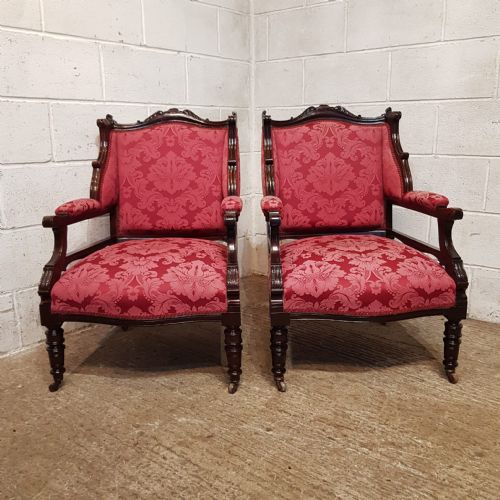


Pair Edwardian Easy Chairs
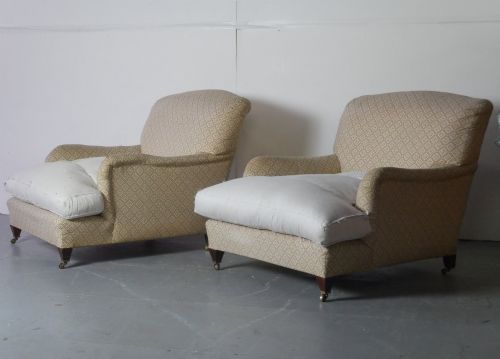
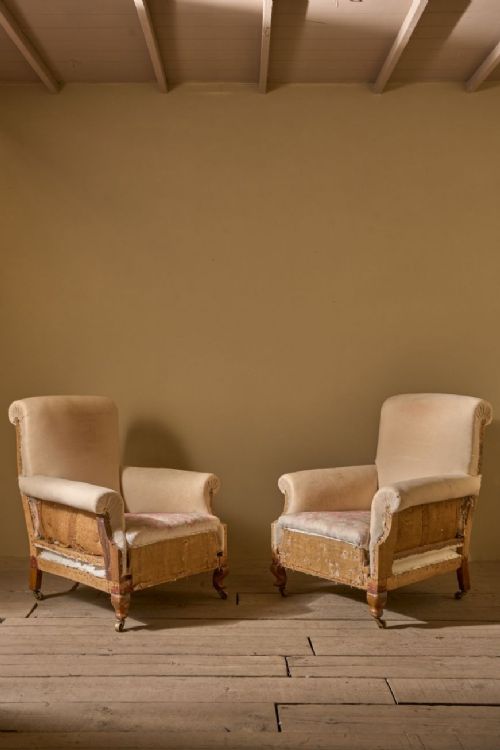
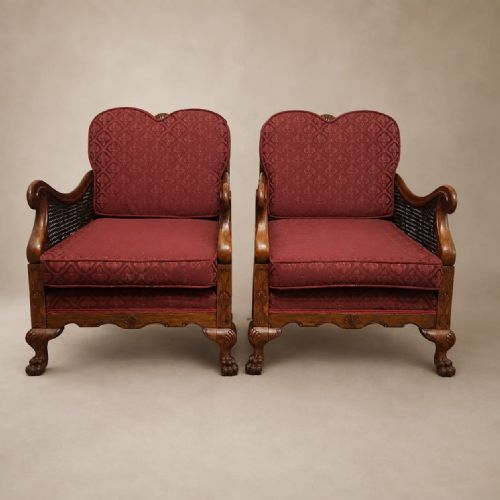
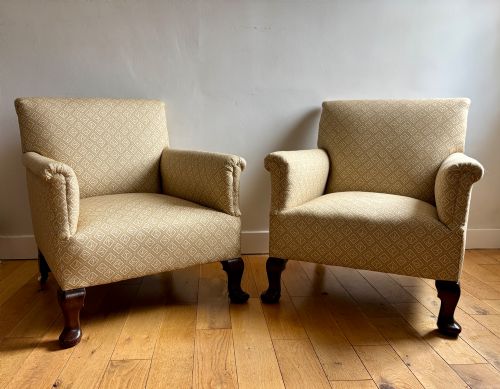
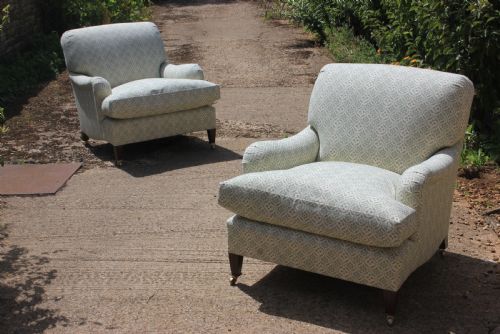
These pair edwardian easy chairs offer deep comfort and sturdy timber frames, forming the ideal seating ensemble for a traditional library or living room.
Pair Edwardian Easy Chairs
When searching for pair edwardian easy chairs, collectors encounter upholstered armchairs designed primarily for domestic comfort during the early twentieth century. The selection ranges from deep club chairs to scroll back armchairs and tub chairs originating from the Edwardian period and adjacent decades.
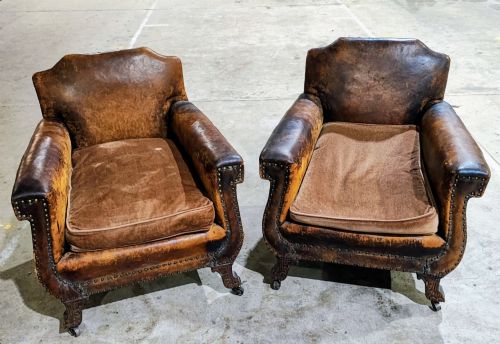
English country house examples dominate the offerings, often displaying generous proportions intended for relaxed lounging. These armchairs frequently appear paired with original or later coverings such as leather, velvet, and ticking fabric.
Materials and Construction
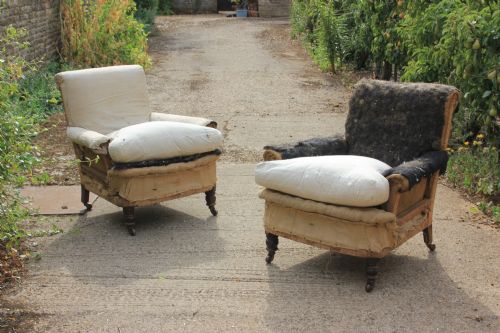
Makers utilised robust timbers like mahogany, walnut, oak, and general hardwood to construct the concealed interior frames of these seating pieces. Solid joinery supports heavy cushioning and deep springing systems designed for daily use.
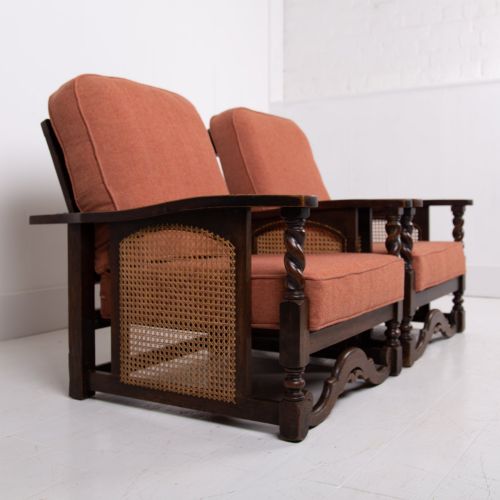
Exterior surfaces integrate tactile materials including brass castors, split cane panels, and supple leather alongside traditional textile upholstery. Each pair combines structural woodwork with layered stuffing to achieve lasting resilience.
Distinctions in Standard and Execution
Superior examples derive from notable workshops and retail furnishers, displaying refined proportions and careful attention to frame carving. Lesser pieces may feature simpler timber frames or later modifications to the original upholstery scheme.
The integrity of the underlying woodwork and the sympathetic nature of any recovered surfaces dictate the overall standing of an armchair pair. High quality manifests in substantial timber frames that retain their original structural firmness and supportive webbing.
Whytock & Reid·Howard and Sons·Harrods London
The Pair Edwardian Easy Chairs Glossary
- Bergere
- An enclosed armchair featuring cane work panels to the back and sides. This French-inspired form provides a lighter visual appearance while maintaining structural rigidity through wooden framing.
- Club chair
- A heavily upholstered low armchair designed for maximum relaxation. Originating in private gentlemen's clubs, these pieces prioritise deep padding and durable leather coverings.
- Scroll back
- A chair design where the top rail or arms curve outward in a tight scroll shape. This stylistic flourish characterises traditional English country house seating.
- Tub chair
- An armchair featuring a continuous curved back and arms that form a single semi-circular enclosure. This compact form wraps around the sitter for cosy support.
- Ticking
- A tightly woven heavy cotton or linen fabric traditionally used as a durable mattress or cushion lining. In period seating, stamped ticking often indicates maker authenticity.
Pair Edwardian Easy Chairs: Frequently Asked Questions
How do I identify genuine Edwardian frames?
Examine the interior timber construction and joinery methods underneath the upholstery webbing where accessible. Edwardian frames typically utilise solid hardwoods like oak, walnut, or mahogany joined with traditional pegged or screwed joints.
Look for signs of age in the wood grain and hardware such as brass castors. Secondary indicators include maker stamps or stamps on the ticking lining which confirm period origin.
Where should I place these armchairs?
These substantial chairs suit reception rooms, studies, and traditional libraries where deep seating enhances the space. Their generous proportions require adequate floor area to sit comfortably away from walls.
Pairing them with low wooden side tables creates a balanced reading corner. Ensure placement avoids direct sunlight to protect leather and fabric surfaces from fading.
How do I care for leather upholstery?
Apply specialised leather balms periodically to maintain suppleness and prevent the hide from drying out over time. Clean surfaces gently with a soft dry cloth to remove dust accumulation.
Keep leather chairs away from direct heat sources such as radiators to avoid cracking. Professional restoration is advisable for deep conditioning older patinated hides.
What defines the country house style?
The country house aesthetic emphasises comfortable, lived-in elegance through mismatched periods and relaxed upholstery. Pieces often display generous padding and functional durability rather than strict formal symmetry.
This style accommodates patinated leather, faded velvets, and floral ticking side by side. The focus remains on inviting hospitality and long-term utility.