





Pair Decorative Statuettes
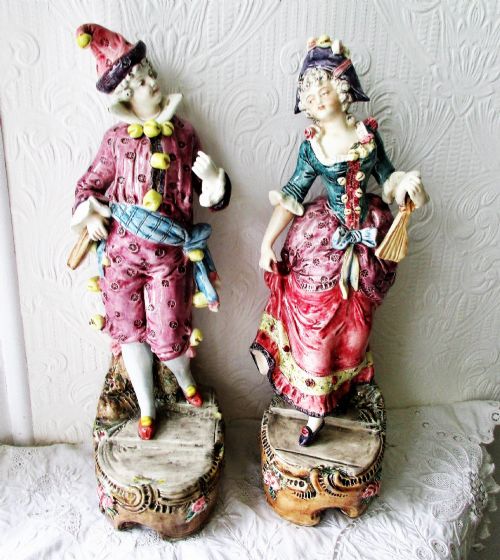
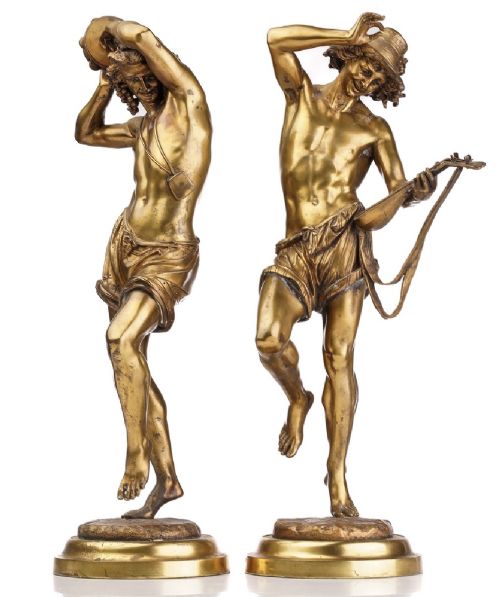
These pair decorative statuettes bring character to a mantelpiece, offering symmetry and finely observed detail from the nineteenth and early twentieth centuries.
Pair Decorative Statuettes
When you search for pair decorative statuettes, you encounter matched sets designed to sit in balance on a mantelpiece, sideboard, or console table. These dual objects often depict human figures, animals, or mythological subjects created to decorate domestic interiors.
On this page, you are most likely to meet nineteenth-century porcelain and bronze examples, including French and German figures alongside Staffordshire pottery. These pieces span historicist revivals and regional workshops, reflecting the decorative tastes of the Victorian era and the early twentieth century.
The pairings range from playful cherubs and putti to musicians, gardeners, and historical rulers like Sardanapalus. Each matched set retains its companion piece, preserving the intended visual harmony of the original display.
Materials and production methods
The listings record glazed and unglazed ceramics such as porcelain, earthenware, and bisque, alongside cast metals including bronze, gilt bronze, and spelter. Ceramic pieces often utilise detailed moulds, hand-painting, and enamel finishes, whilst metal sculptures rely on foundry casting and cold-painted decoration.
Many works combine media, mounting porcelain or bronze figures onto carved wooden bases such as olive wood. These construction techniques dictate the weight, surface texture, and visual impact of each statuette.
Pair Decorative Statuettes Retail Price Guide 2026
Typical asking prices for pair decorative statuettes among the pieces listed under this phrase on Sellingantiques today, from the lower quarter to the upper quarter. They describe what is for sale here now, not the wider market.
Even Assyrian royalty and goats find themselves immortalised in matched pairs across these antique sculptures.
Markers of quality
Quality reveals itself in the crispness of the modelling and the precision of the hand-finishing, whether in the fine feathering of a bronze cast or the delicate hand-painted expression on a porcelain face. Superior examples retain their original gilding, polychrome enamel, and cold-painted surface details without heavy rubbing.
The handling of anatomical form and drapery separates standard production pieces from masterworks by notable modellers and factories. The structural integrity of the base and the exact match between the paired figures also govern the overall desirability.
Valentino Besarel·Fabergé·Volkstedt·Edme Samson·Chantilly·P J Mene·Sitzendorf·Royal Worcester·Albert Ernest Carrier-Belleuse
The Pair Decorative Statuettes Glossary
- Bisque
- Unglazed white porcelain that has been fired once, producing a matte, marble-like surface often used for detailed figurative sculpture. It absorbs light softly and highlights the subtlety of the modeller's work.
- Spelter
- A zinc alloy commonly utilised in the nineteenth century as a cheaper alternative to bronze. It was frequently given a bronze-like finish to imitate more costly metalwork.
- Putto
- A chubby male child figure, often winged, derived from classical art and frequently seen in pairs holding grapes, musical instruments, or symbolic items. These figures add a lighthearted classical motif to decorative settings.
- Gilt Bronze
- Bronze metal that has been coated in a thin layer of gold or gold leaf to give a rich, reflective surface. It resists tarnishing and was favoured for high-status French decorative objects.
Pair Decorative Statuettes: Frequently Asked Questions
How were pair decorative statuettes displayed?
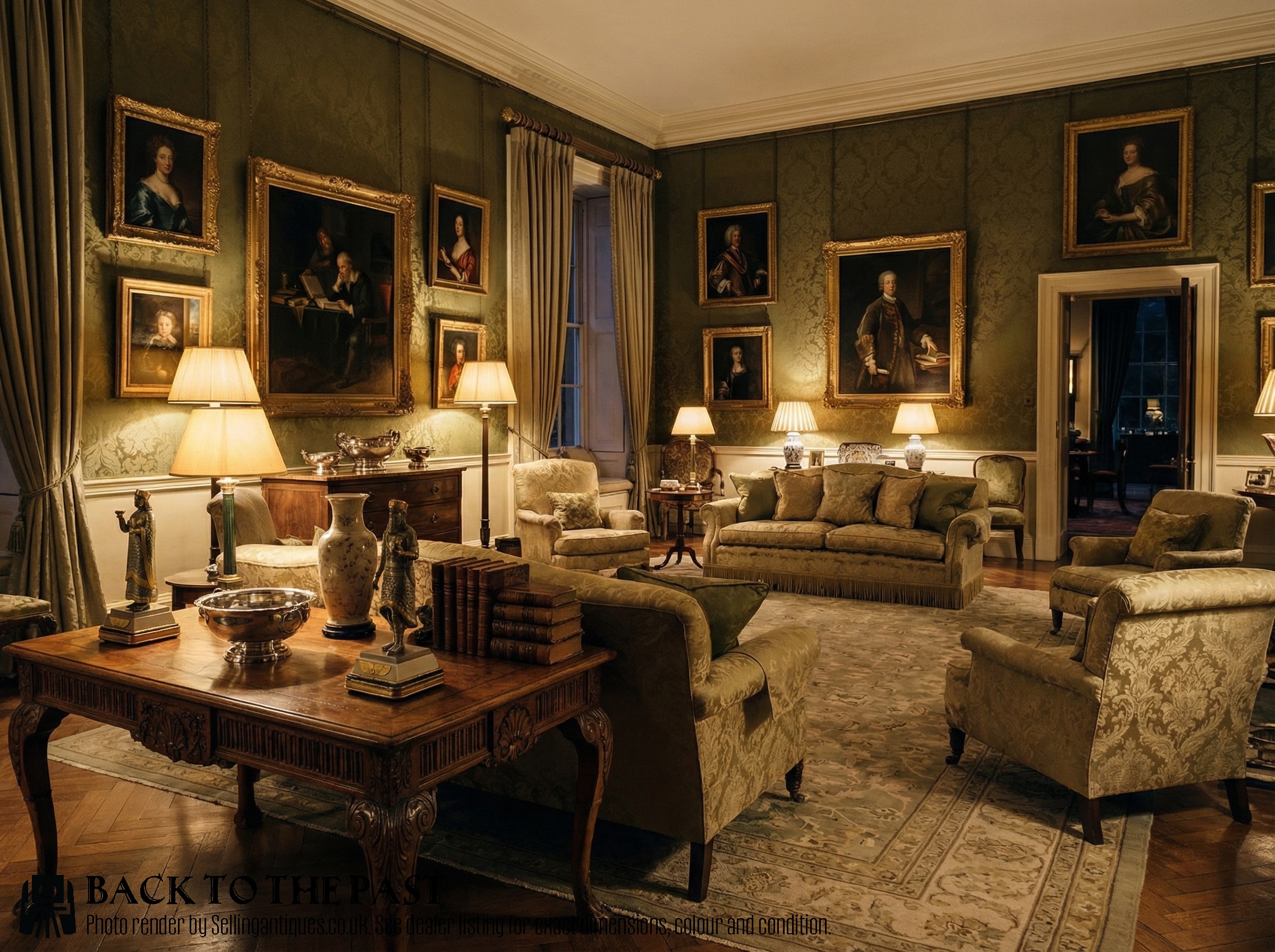
These matched sets were typically positioned symmetrically on either side of a clock on a mantelpiece or placed at opposing ends of a sideboard. Their dual nature provided visual balance within formal nineteenth-century rooms.
Collectors today often place them on side tables or brackets where both pieces can be viewed together as a unified composition.
How do I care for antique bronze figures?
Bronze statuettes require minimal intervention, needing only occasional dusting with a soft, dry brush to prevent dirt accumulation. Avoid using chemical polishes or modern cleaning agents, which can strip original patination and gilt surfaces.
Keeping them away from direct sunlight and damp environments helps preserve the stability of the metal and any attached wooden bases.
Are spelter figures less durable than bronze?
Spelter is a softer zinc-based alloy than bronze, making it more brittle and susceptible to bending or snapping under physical stress. Because of this, spelter figures require careful handling, particularly around delicate extremities like fingers or instruments.
Despite this difference in durability, period spelter pieces offer the same decorative presence as bronze when treated with care.