





Pair Decorative Earthenware Vases
Pair decorative earthenware vases bring symmetry and colour to a room, offering matched displays from Victorian, Edwardian and earlier periods.
Pair Decorative Earthenware Vases
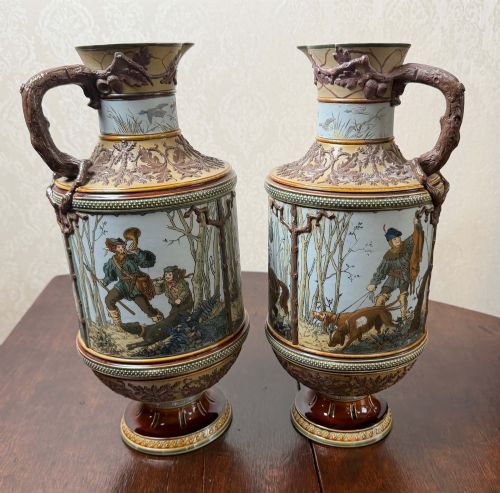
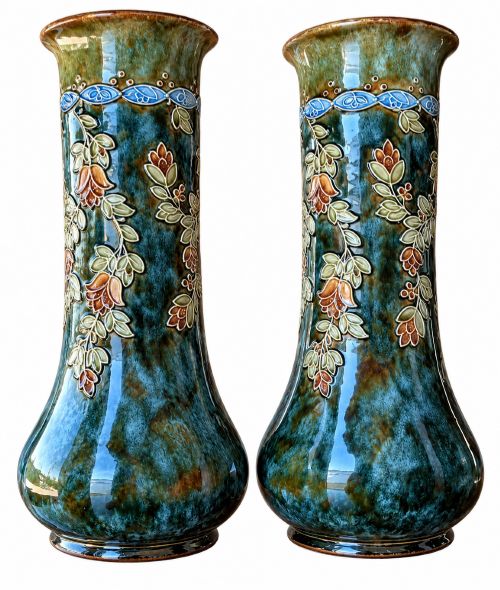
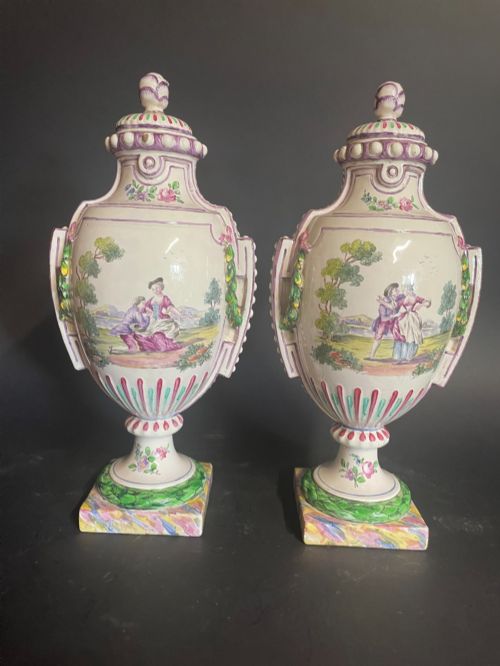
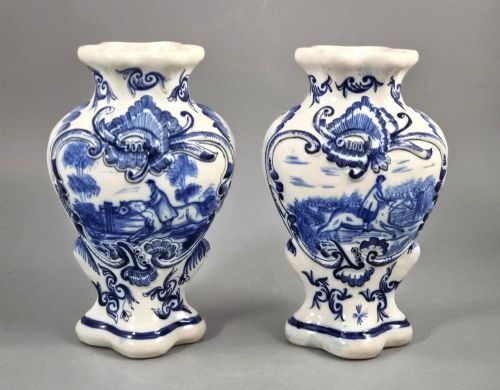
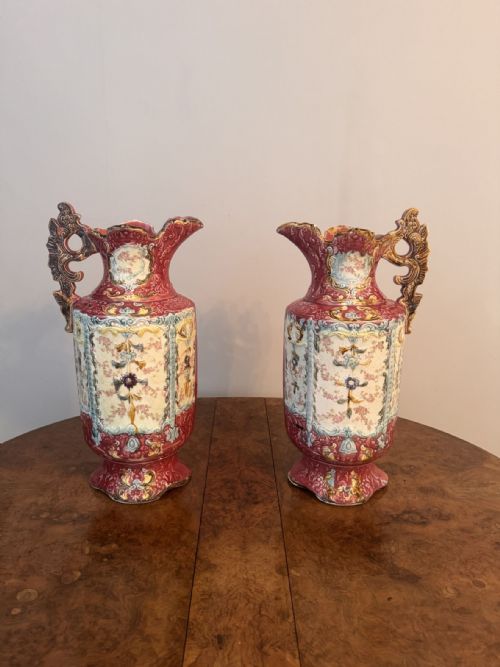
When you search for pair decorative earthenware vases, you encounter matched sets created for display across the nineteenth and twentieth centuries. These objects take the form of baluster vessels, urns, ewers and specific regional pottery shapes.
The selections span English potteries, French faience works, German stoneware and Japanese Satsuma production. Victorian examples sit alongside continental earthenware and earthenware decorated with enamels or metallic leaf.
Most entries reflect the Victorian and Edwardian enthusiasm for matched garnitures and mantel ornaments. Japanese export ceramics from the Meiji and Showa periods also feature prominently among these paired objects.
How they were made
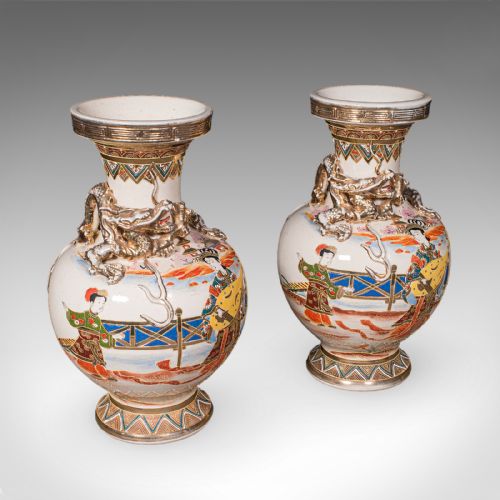
Potters shaped these vessels using earthenware and stoneware bodies, often applying tin glazes or coloured lead glazes to the clay surface. Many pieces incorporate hand-painted enamel details, while others rely on raised moriage decoration or applied slip.
Finishing techniques frequently involved the addition of gold leaf or gilt highlights to frame painted panels and borders. European potteries utilised specialised ceramic bodies and polychrome pigments, whereas Japanese workshops combined fine crackle glazes with intricate pictorial designs.
Pair Decorative Earthenware Vases Retail Price Guide 2026
Typical asking prices for pair decorative earthenware vases among the pieces listed under this phrase on Sellingantiques today, from the lower quarter to the upper quarter. They describe what is for sale here now, not the wider market.
Several Satsuma vases hide secret Shimazu family crests among their gardens.
What varies in quality
The standard of a pair depends upon the crispness of the moulding, the control of the glaze and the precision of the hand painting. Superior examples exhibit finely detailed brushwork, careful gilding and well-balanced forms that match closely in height and contour.
Greater artistic ambition distinguishes exhibition pieces from standard commercial output, particularly in the density of ornamentation and the complexity of figural or landscape panels. The harmony between the two vessels dictates the overall success of the matched set.
Fourmaintraux Courquin at Desvres·Sceaux Faience·Mettlach Pottery·Hakusan·Hododa·Pilkingtons Royal Lancastrian·Wedgwood·Carlton Ware·Charlotte Rhead·Doulton·Jules Vieillard
The Pair Decorative Earthenware Vases Glossary
- Earthenware
- Porous pottery fired at lower temperatures, requiring a glaze to hold liquids. It forms the base body for majolica, faience and many decorative vases.
- Faience
- Tin-glazed earthenware originating in Europe, known for its smooth opaque white surface suitable for painted decoration. French workshops produced notable examples in this technique.
- Moriage
- A Japanese ceramic technique using piped clay trailing to build up raised decorative motifs. This method creates tactile surfaces often accented with heavy gilding.
- Majolica
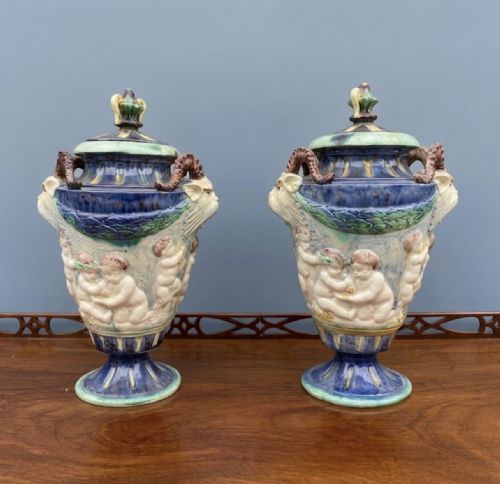
- Coloured lead-glazed earthenware with vibrant polychrome decoration, popular during the nineteenth century for bold sculptural vessels. The style draws on Renaissance traditions.
- Baluster
- A vase form characterised by a swelling lower body that tapers toward a narrow neck. This balanced silhouette appears frequently across multiple periods.
Pair Decorative Earthenware Vases: Frequently Asked Questions
How do I display a pair of vases safely?
Place them on stable surfaces away from high traffic areas and direct edges where they might be knocked. Ensure the supporting furniture is level to prevent tipping.
Keep them out of direct sunlight to protect enamel colours and gilt highlights from fading over time.
Were these vases meant to hold water?
Many decorative earthenware pieces function primarily as ornamental objects rather than functional vessels. Porous bodies and historical repair work mean modern liquid use is generally discouraged.
Dry floral arrangements or simply displaying them as matched pairs preserves the material integrity of older ceramic bodies.
How do I tell Japanese Satsuma from European earthenware?
Satsuma wares typically feature a characteristic cream-coloured crackle glaze combined with detailed Japanese motifs and extensive gilding. European earthenware often employs tin glazes, majolica colours or distinct regional registry marks.
Examining the foot ring and base clay helps clarify the geographic origin and manufacturing tradition of each piece.
What is the difference between an ewer and a vase?
An ewer incorporates a poured spout and a fitted handle, originating from historical forms designed for pouring liquids. Vases are closed-contour vessels intended strictly for display or holding stems.
Both forms appear frequently in nineteenth-century decorative ceramic pairings.