
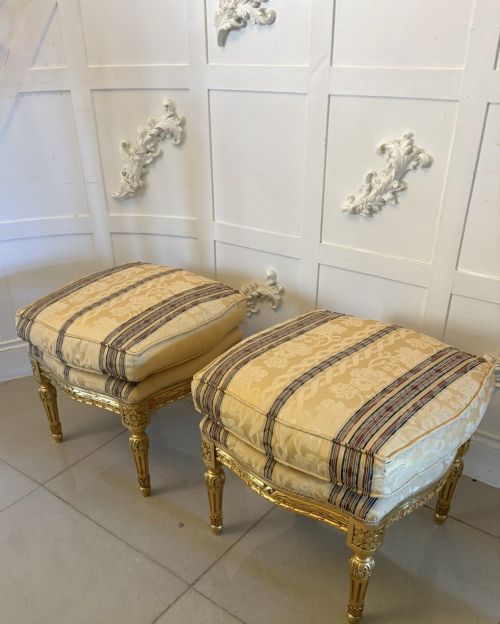
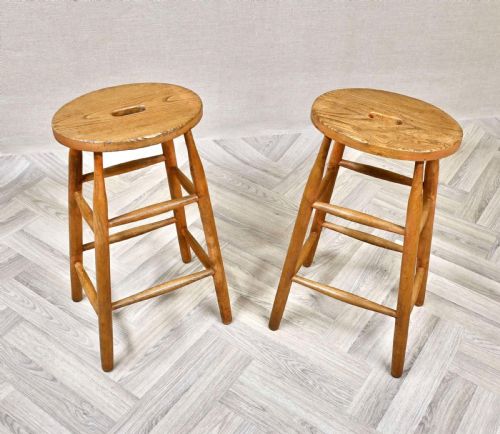
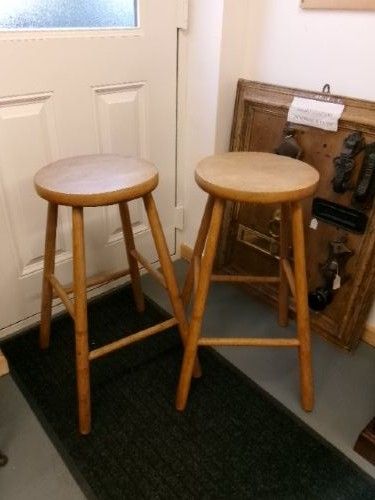
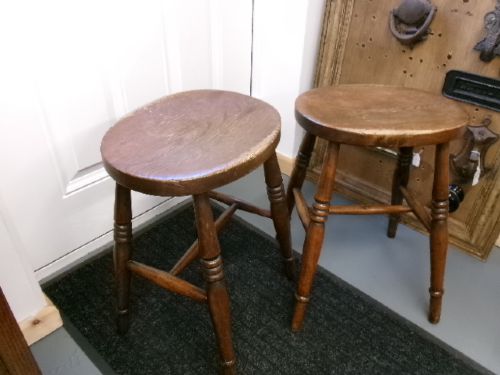
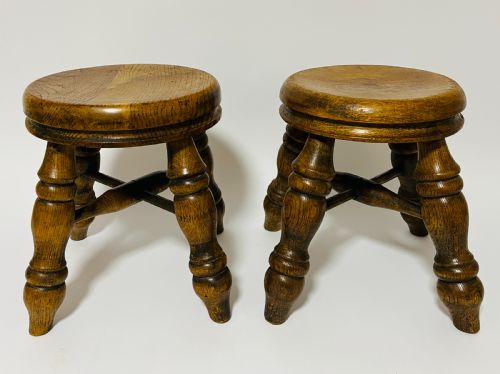


Pair Country Stools
Pair country stools bring straightforward utility and honest vernacular charm to domestic spaces, combining robust construction with time-worn character.
Pair Country Stools
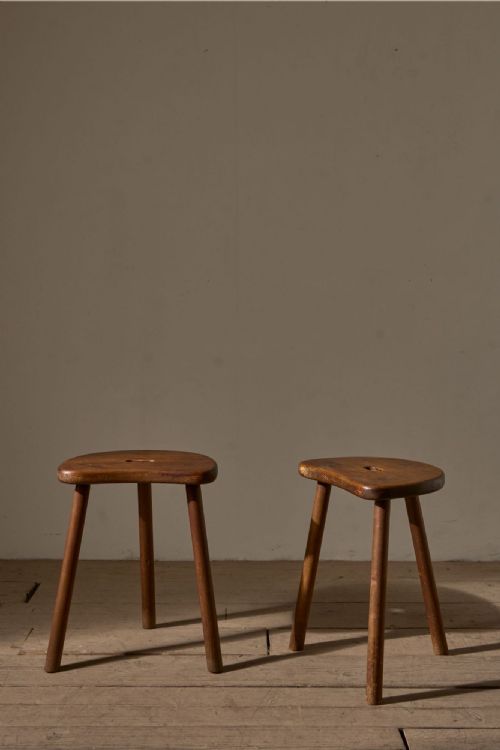
When you search for pair country stools, you encounter matching sets designed for everyday domestic tasks rather than formal display. These pieces range from simple kitchen seating to tavern stools and low footstools.
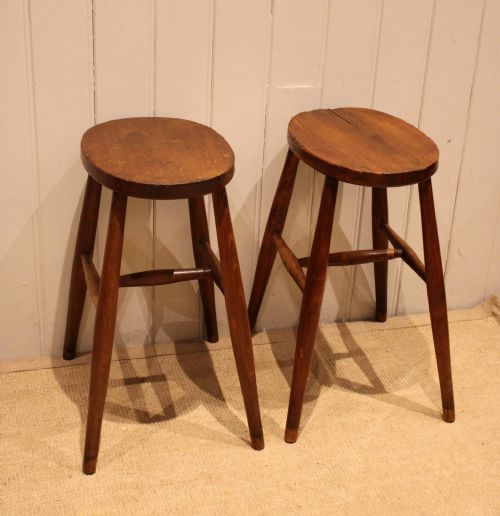
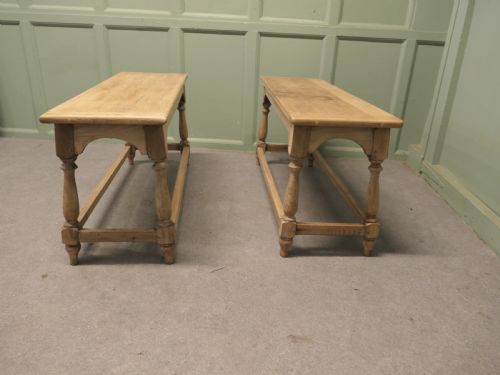
The selections span various eras from the nineteenth century into the twentieth century, reflecting rural traditions across British, Swedish, French, and English workshops. Forms include bar stools, joint benches, and dished-top tavern variants.
Most examples rely on sturdy timbers and unpretentious designs intended for practical utility. Buyers often find matching sets featuring elm tops, painted pine surfaces, or sturdy oak frames.
Materials and construction methods
Maker traditions relied heavily on native hardwoods such as elm, oak, ash, and yew wood for strength and durability. Seats were frequently carved or dished from single timber slabs to provide comfort.
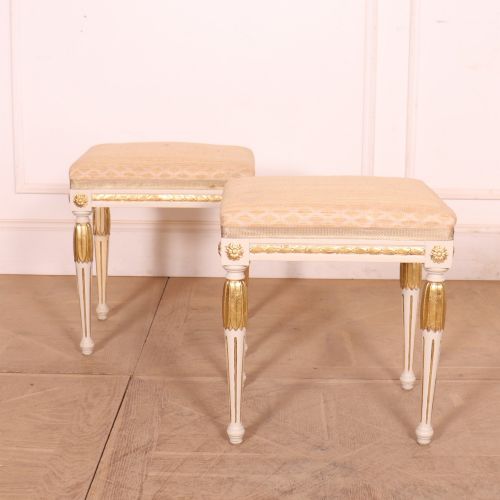
Joinery techniques like traditional pegging and joint construction kept frames stable under heavy daily use. Surface treatments varied from plain waxed finishes to painted wood and gold leaf accents.
Listings feature timbers including elm, oak, yew wood, pine, beech, mahogany, and cherry wood across various historical styles.
Evaluating craftsmanship and condition
The distinction between standard utility items and superior examples lies in the selection of timber and the integrity of the joinery. Sound construction without excessive replacement parts preserves the structural honesty of the set.
Subtle details such as hand-carved edges, original painted surfaces, or nicely figured wood grain elevate certain pairs above basic workshop output. Patina accumulated from decades of use adds considerable character when the underlying structure remains sound.
The Pair Country Stools Glossary
- Vernacular
- Everyday objects made by local craftspeople using regional materials without grand architectural pretension. These pieces prioritize function over academic design styles.
- Joint stool
- A sturdy wooden stool constructed with mortise and tenon joints pegged together. They served versatile seating and utility purposes in domestic interiors.
- Dished top
- A seat surface hollowed out into a shallow concave shape for comfort. This technique appears frequently on heavy timber stools.
- Gustavian
- A Swedish aesthetic style popularised under King Gustav III featuring light painted finishes and neoclassical restraint. It combines French elegance with Nordic simplicity.
- Rush seat
- Seating woven from marsh rushes twisted into cords. This traditional method provides a resilient and slightly yielding surface.
Pair Country Stools: Frequently Asked Questions
How were pair country stools used?
These dual sets served practical roles around the farmhouse, kitchen, or tavern. People sat on them for daily meals, reached high shelves, or rested tired feet.
Their sturdy builds allowed them to double as impromptu side tables or washstand supports when extra surface space was needed.
Are these stools comfortable to sit on?
Many examples feature ergonomically carved dished wooden tops or woven rush seats designed for extended sitting periods. While lacking deep upholstery, their shapes support natural posture.
Adding small loose cushions or squabs can easily increase softness for daily seating around a kitchen table.
How do I style them at home?
These matching sets work well tucked beneath a rustic dining table, placed flanking a fireplace, or used as bedside stands. Their understated forms complement both traditional and modern minimalist interiors.
Pairing them with neutral textiles or placing plants on top helps integrate their aged wood tones into contemporary rooms.
How do I identify Swedish painted examples?
Swedish pieces often display pale original paint finishes, sometimes layered over time, reflecting regional Nordic design traditions. Carved details tend to show restrained geometric or neoclassical motifs.
Their lighter colour palettes distinguish them visually from darker native oak and elm vernacular seating.