





Pair Ceramic Desk Lamps
These pair ceramic desk lamps bring useful light and centuries of ornament to a room.
Pair Ceramic Desk Lamps
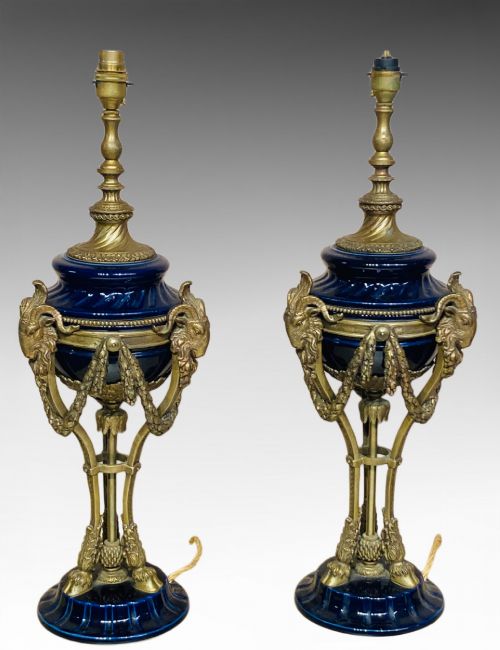
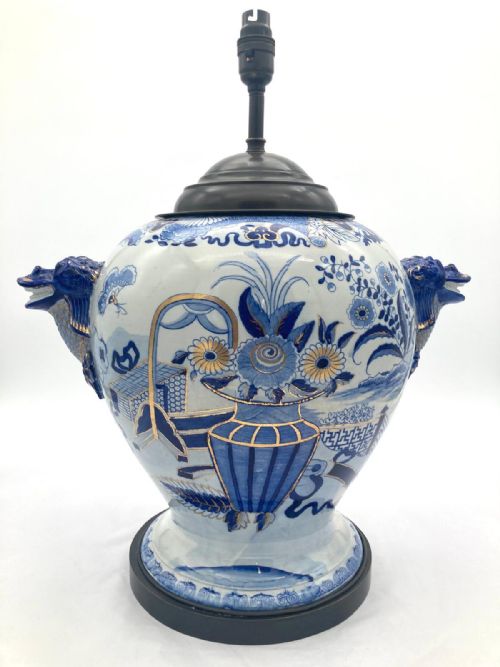
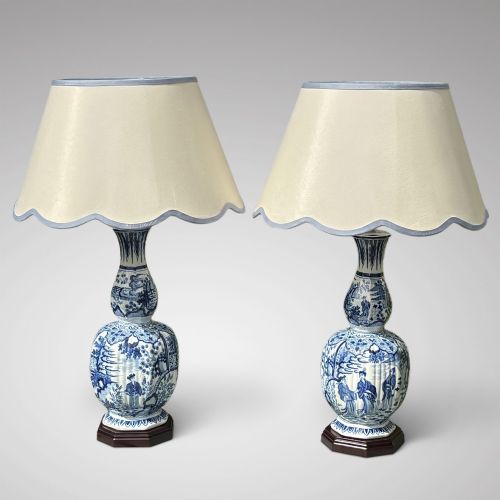
A buyer seeking pair ceramic desk lamps encounters matching sets of vessels, jars, and vases transformed into lighting. These pieces span centuries of production, originating largely from Chinese and Japanese export kilns alongside European factories.
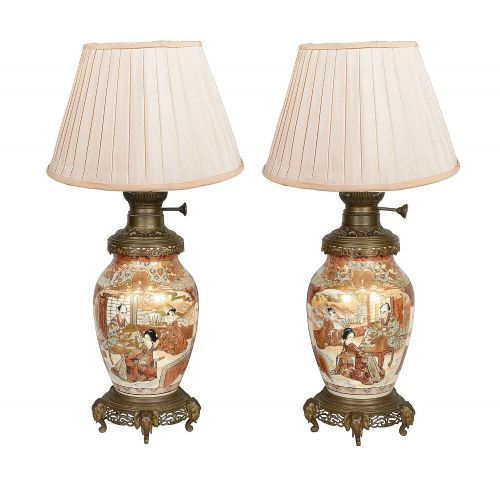
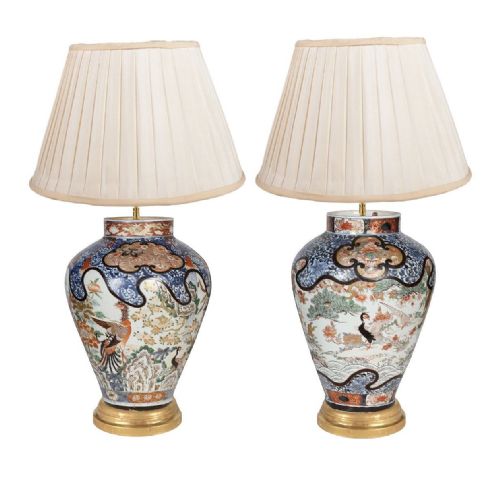
The most frequent form on this page pairs Chinese ginger jars or Japanese Satsuma and Kutani vases with fitted electrical wiring and fabric shades. Many items began life as decorative porcelain or earthenware vessels before later conversion into table lamps.
Periods represented stretch from seventeenth-century Arita wares through nineteenth-century blue and white ceramics into early twentieth-century creations. The selection captures diverse styles including Chinoiserie, Delftware, and Louis XVI Neoclassical influence.
Materials and construction methods
The foundation rests on earthenware, ironstone, and porcelain bodies shaped by hand or wheel before glazing and firing. Makers applied intricate hand-painted enamel palettes, famille rose pigments, and deep blue cobalt glazes directly onto the ceramic surface.
Metal mounts in brass, gilt, and ormolu often secure the base or collar, anchoring the porcelain body to support the lamp hardware. Handmade silk and fabric shades frequently crown the top, completing the conversion from original vessel to functional desk lamp.
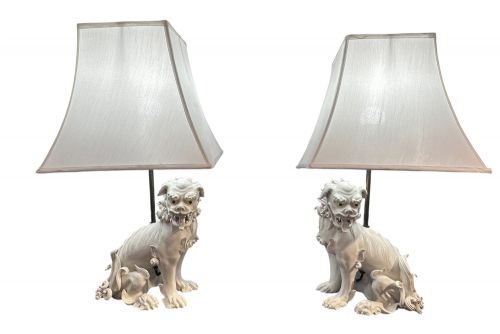
Several fierce Foo dogs and Shi lions stand guard at the base, ready to illuminate the desk.
Assessing quality in ceramic lamps
Quality reveals itself in the crispness of the hand-painted detail and the depth of the ceramic glaze, whether crackleware, turquoise, or famille verte. Superior examples display balanced proportions between the converted vase body and its supporting metal mounts.
The integrity of the original vessel dictates much of the standing, particularly when early vases are adapted for modern electrical components. Harmony between the paired pieces, matching height, and sympathetic conversion work distinguish the finest specimens.
Hicks and Meigh·Sèvres
The Pair Ceramic Desk Lamps Glossary
- Ormolu
- Gilded bronze mounted to the base or collar of a lamp. This decorative metalwork adds weight and structural framing to the porcelain body.
- Imari
- Japanese export porcelain decorated in underglaze blue, iron red, and gold. The style originated in the seventeenth century and remained popular across later periods.
- Famille Rose
- A palette of opaque pink and rose enamels introduced to Chinese porcelain decoration. It defines numerous nineteenth-century ginger jars and vases seen on this page.
- Ginger Jar
- A wide-mouthed ceramic vessel originally designed for spices or storage. These sturdy forms frequently serve as the main body for table lamps.
- Celadon
- A pale green jade-like glaze applied to porcelain and stoneware. The subtle colour relies on iron oxide reacting within the kiln atmosphere.
Pair Ceramic Desk Lamps: Frequently Asked Questions
Are these original lamps?
Most pieces started life as decorative vases, ginger jars, or vessels before undergoing later conversion into functional lighting.
Wiring and lamp fittings are added subsequently to transform the antique ceramics into usable desk lamps.
How do I match lamp shades?
Consider the height and girth of the ceramic base when selecting fabric or silk shades to maintain visual balance.
Neutral or handmade shades allow the painted details of Satsuma, Kutani, and blue and white porcelain to remain the primary focus.
How do I date these ceramics?
Dating relies on stylistic clues within the glaze, hand-painted motifs, and the characteristics of the earthenware or porcelain body.
Periods range from seventeenth-century Arita traditions through nineteenth-century Canton and Famille Rose production to early twentieth-century Satsuma wares.
Where should I place these lamps?
These lamps suit desks, side tables, and chests where a matching pair creates symmetry and warm illumination.
Their decorative porcelain bodies provide a focal point even when unlit during daylight hours.