

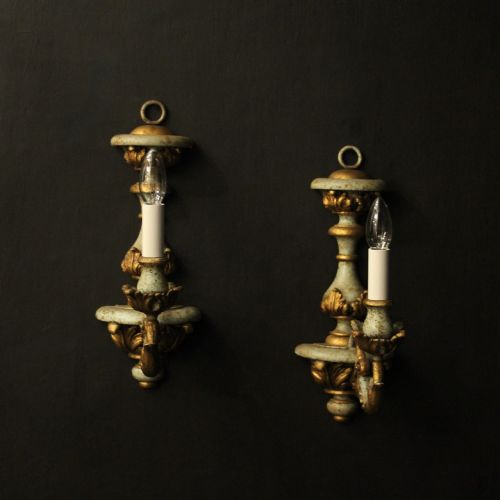
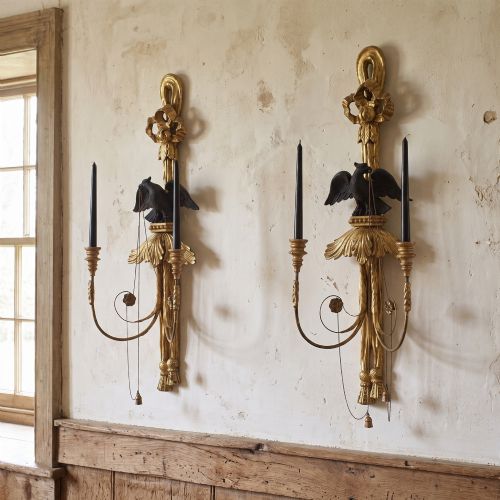


Pair Carved Wooden Appliques
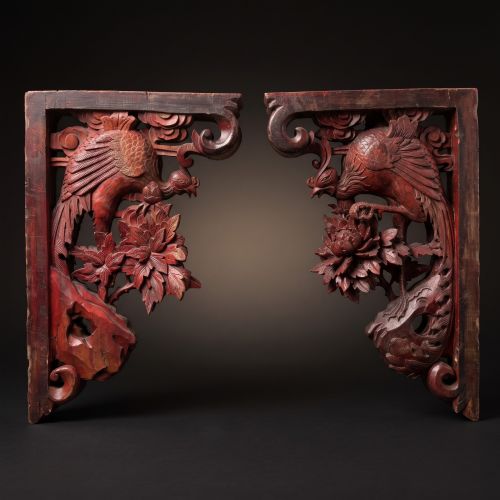
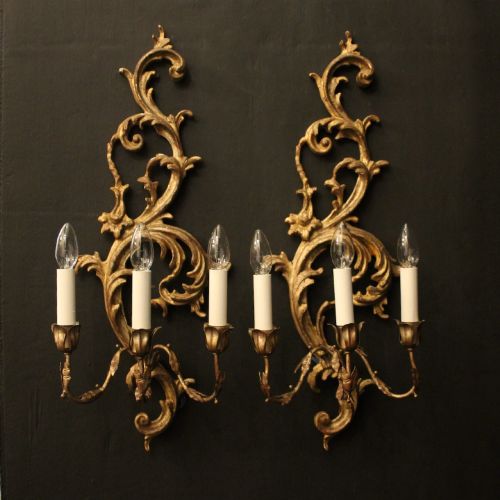
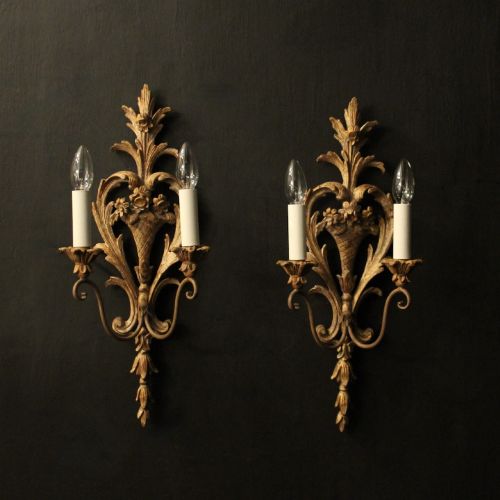
Pair carved wooden appliques bring architectural weight and rich surface texture to a room, functioning as sculptural ornaments or functional candle holders.
Pair Carved Wooden Appliques
When you search for pair carved wooden appliques, you are looking at symmetrical pairs of wooden ornaments designed for wall mounting, ranging from architectural brackets and carved panels to fully wired or candle-lit wall lights and sconces. The examples here span from the eighteenth century through to the early twentieth century, taking the form of wall brackets, terminals, and multi-armed wall lights.
The aesthetic vocabulary leans heavily towards continental European design traditions, featuring French Rococo, Baroque revival, and Florentine styles alongside George III and Chinoiserie interpretations. You will frequently encounter gilded wood, polychrome finishes, and red lacquer applied to limewood, oak, and general carved timber.
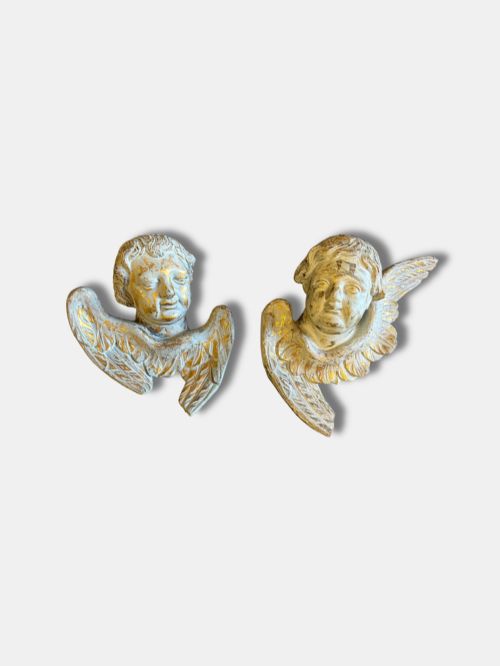
Functionally, these pieces serve as both structural supports and decorative focal points, often incorporating motifs such as putti, cherubs, eagles, and griffins. The assortment reflects a rich mix of regional craftsmanship, primarily originating from French and Italian workshops.
How they were made
The foundation of these pieces lies in traditional timber carving, utilising woods such as limewood, oak, and pine that allow for deep, undercut relief and crisp botanical or figurative detail. Master carvers worked the timber by hand, shaping scrolls, foliage, and anatomical figures before applying surface treatments.
Once carved, many pieces received layers of gesso to smooth the wood grain and provide a crisp bed for subsequent gilding with gold leaf, silver leaf, or liquid gilt. Other examples relied on polychrome paintwork and red lacquer finishes, sealing the wood while adding vibrant colour and decorative depth.
Pair Carved Wooden Appliques Retail Price Guide 2026
Typical asking prices for pair carved wooden appliques among the pieces listed under this phrase on Sellingantiques today, from the lower quarter to the upper quarter. They describe what is for sale here now, not the wider market.
Materials represented across these wall fixtures include giltwood, silver leaf, gesso, polychrome paint, and red lacquer applied to oak, limewood, and general timber.
What varies in quality
Quality in these carvings is defined by the depth and confidence of the hand tool work, where superior examples exhibit sharp undercutting, spirited animal or human forms, and naturalistic foliage rather than shallow, mechanical stamping. The vitality of figures like putti, eagles, or griffins dictates the artistic merit of the piece.
The integrity of the surface finish also separates standard items from exceptional ones, particularly the fineness of the gold or silver leaf application over gesso, or the preservation of original polychrome and red lacquer details. Heavier, more substantial timber forms command attention through their architectural presence and balanced symmetry.
The Pair Carved Wooden Appliques Glossary
- Giltwood
- Wood that has been decorated with gold leaf applied over a prepared gesso ground. This technique creates a luminous, reflective surface that catches candle or natural light.
- Gesso
- A plaster-like mixture applied to wood as a smooth base for gilding or painting. It allows carvers to achieve sharp, refined details that wood alone cannot hold.
- Putti
- Depictions of plump, winged infant figures, often resembling cherubs. They appear frequently in Rococo and Baroque decorative schemes.
- Wall Bracket
- A projecting architectural support or shelf attached to a wall. These items often display ornate carving and were designed to hold porcelain, busts, or lighting.
- Polychrome
- Decorated in multiple colours. This finish is commonly found on Italian and continental decorative woodwork from various periods.
Pair Carved Wooden Appliques: Frequently Asked Questions
Where were pair carved wooden appliques traditionally placed?
These pieces were positioned symmetrically in formal rooms such as salons, dining rooms, and hallways, often flanking mirrors, large paintings, or fireplaces. Their mirrored placement created visual balance and enhanced the room's architectural grandeur.
In period interiors, matching pairs provided a sense of order and reflected candlelight to brighten dark panelled spaces.
How do I date a carved wooden wall light?
Dating relies on stylistic clues, the type of wood, and the preparation of the surface finishes like gesso and gilding. Eighteenth-century pieces often show looser, more organic hand-carved details in limewood, while later revivals adopt denser timbers and specific regional traits.
Hardware, screw types, and wiring channels also offer physical evidence of a piece's age and subsequent alterations.
How should I care for antique gilded wood?
Antique gilded surfaces require gentle maintenance using a soft, dry ostrich feather duster to remove surface dust. Water, chemical cleaners, and abrasive cloths must be avoided, as they can strip the delicate gold leaf and underlying gesso.
Placing the pieces away from direct sunlight and excessive humidity helps preserve the timber and prevents the gesso from cracking.