
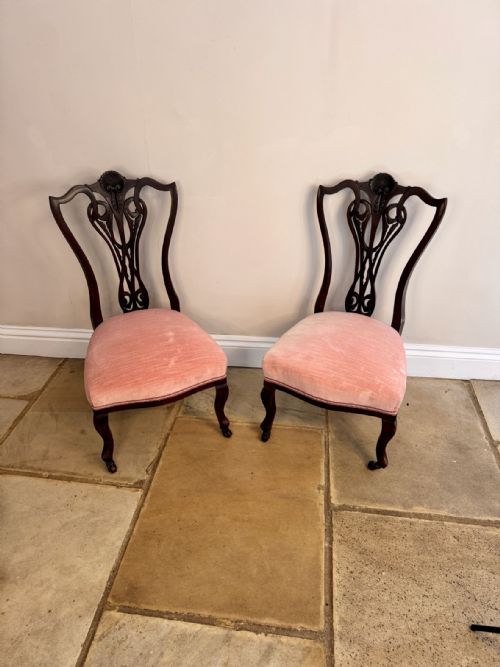
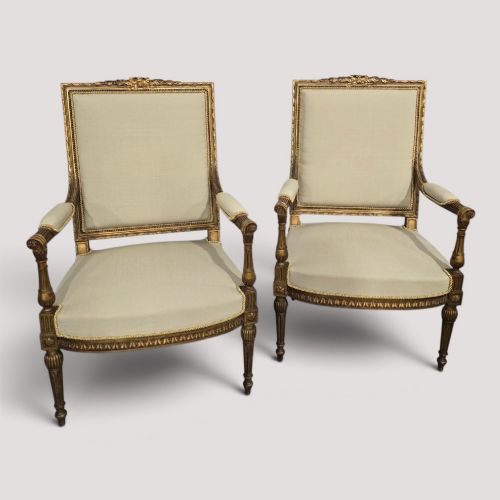
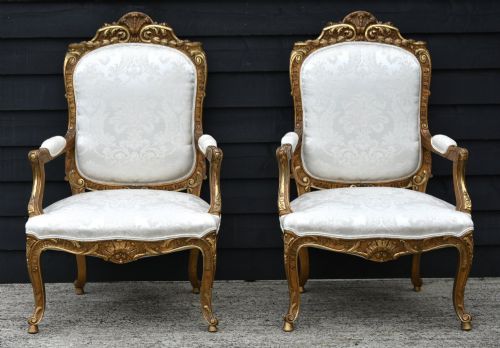
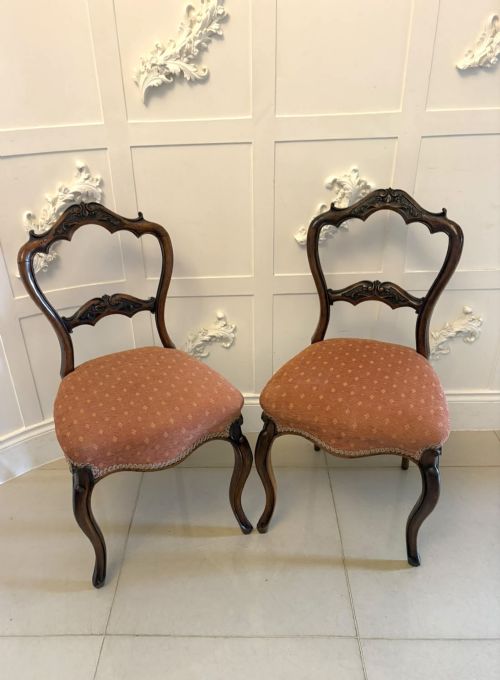
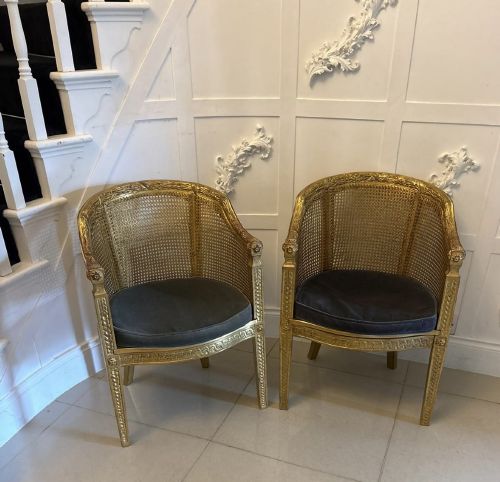
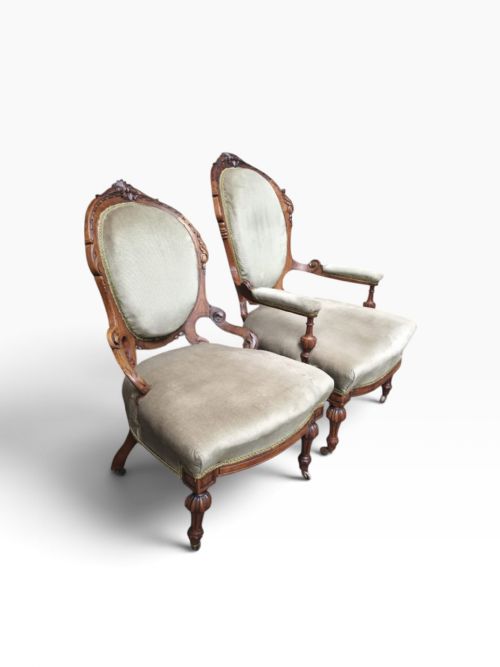
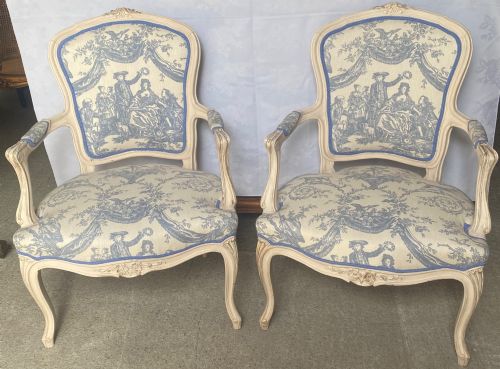
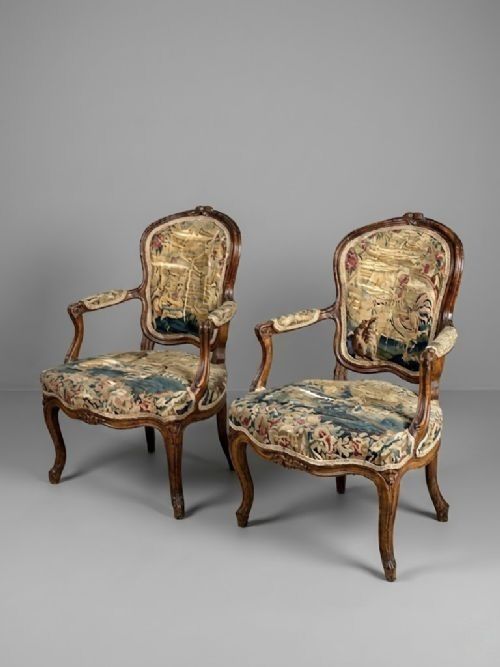
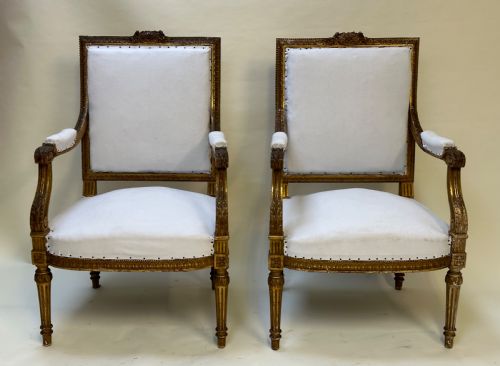
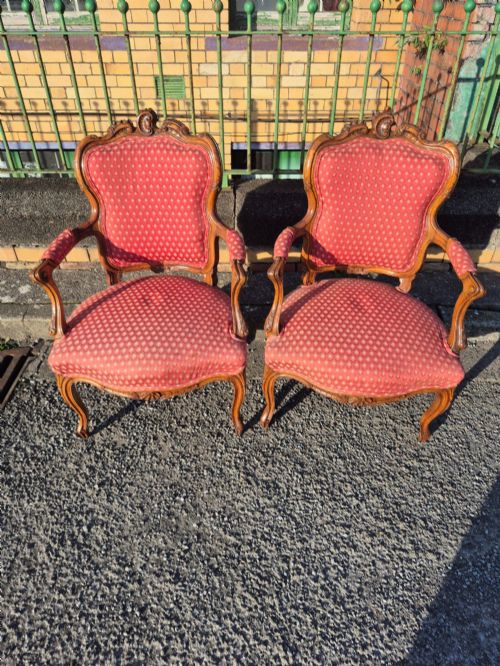
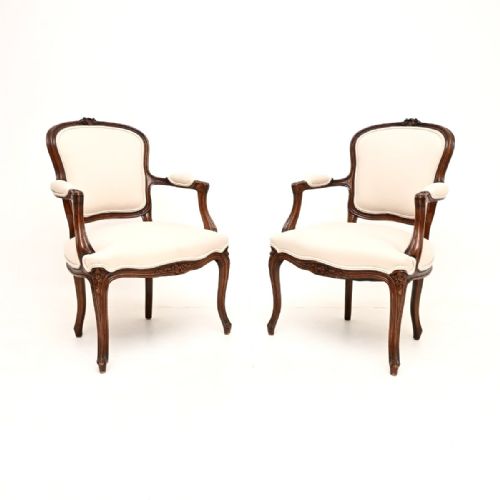
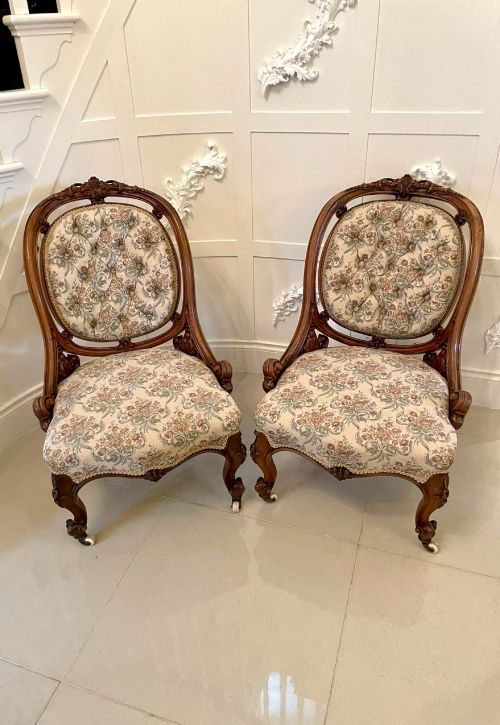
Pair Carved Salon Chairs
Pair carved salon chairs bring formal French and Victorian elegance into a room, offering matching seats designed for reception spaces and entertaining.
Pair Carved Salon Chairs
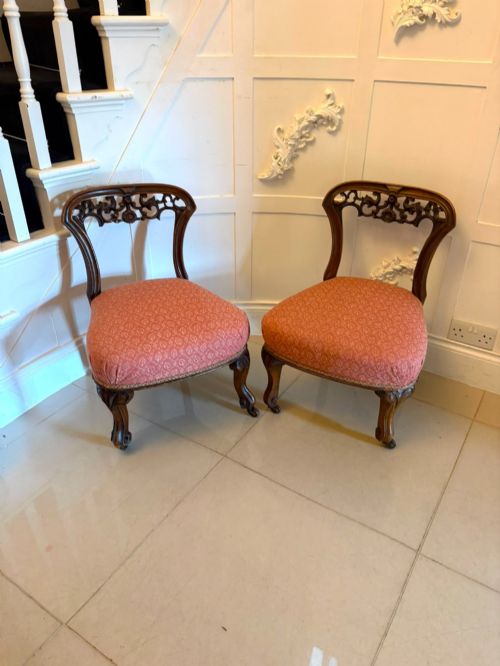
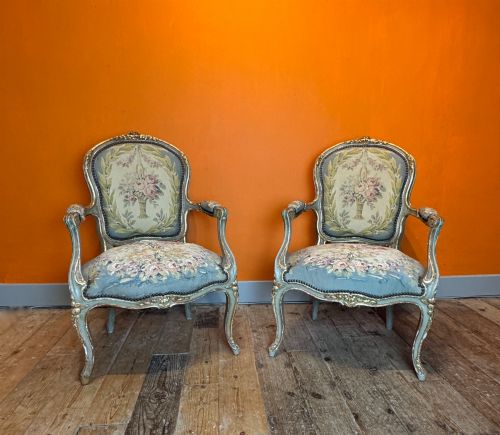
When searching for pair carved salon chairs, buyers encounter seating designed primarily for reception rooms and formal parlours during the nineteenth and early twentieth centuries. These matching seats divide broadly between British Victorian walnut or mahogany examples and continental French designs influenced by earlier royal aesthetics.
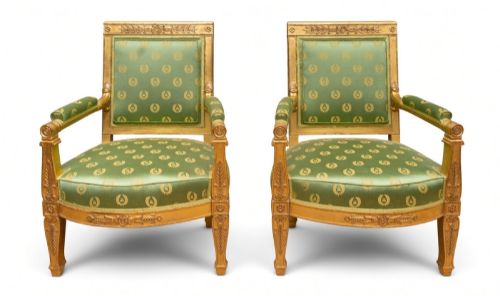
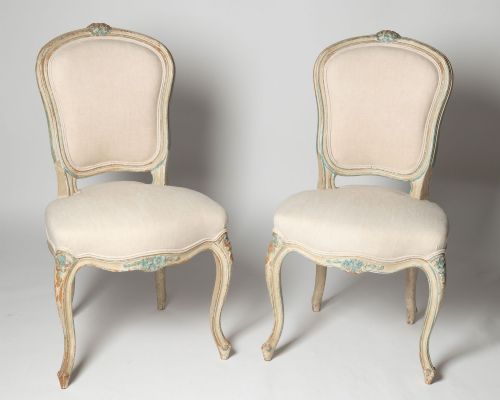
The English tradition leans towards balloon backs, spoon backs, and side chairs framed in rich dark timbers, while continental pieces frequently display giltwood, painted surfaces, and revival styles such as Louis XV and Louis XVI. Both origins share decorative carved wooden frames intended to project social standing.
Most entries span from the mid-nineteenth century through the Edwardian era, incorporating armchairs, open armchairs, and side chairs often upholstered in silk, velvet, needlepoint, or tapestry fabrics.
Construction and Materials
Cabinetmakers shaped the structural frames using dense timbers like walnut, mahogany, rosewood, oak, and beech, which permitted intricate hand-carving along the crest rails, arms, and cabriole legs. Giltwood surfaces were achieved by applying fine gold leaf over prepared gesso on wood bases, whereas painted finishes utilised layered pigments on beech or softwoods.
Upholstery techniques involved traditional webbing, springs, and stuffing layered beneath decorative textiles secured with brass tacks. Silk, velvet, tapestry, and needlepoint coverings completed the pieces, frequently installed during later restorations using historic textiles.
His and hers salon chairs offered matched seating scaled specifically to nineteenth-century gentleman and lady parlour customs.
Assessing Quality and Execution
The distinction between ordinary and superior pairs rests in the crispness of the hand-carving and the choice of primary timber. Finer examples display deep, undercut floral or scrollwork executed by skilled carvers, whilst lesser versions rely on shallow mouldings or simpler machine shaping.
Proportion and structural harmony also dictate worth, as master workshops maintained balanced lines across both matching chairs. The integrity of the original joints, the weight of the timber used in the frame, and the selection of high-grade upholstery fabrics separate standard seating from exceptional collector pieces.
Jacob-Desmalter
The Pair Carved Salon Chairs Glossary
- Fauteuil
- An open-armed upholstered armchair with exposed wooden framing, typical of French seating design. These chairs feature padded armrests and integrated backrests.
- Giltwood
- Timber coated with a thin layer of gold leaf over a prepared base. This material creates a brilliant decorative finish popular in formal nineteenth-century salons.
- Cabriole leg
- A furniture leg that curves outward in a convex arc and tapers inward in a concave arc, ending in a pad or foot. The design mimics animal limbs and appears frequently on revival seating.
- Balloon back
- A rounded, continuous backrest shaped like a balloon, commonly found on mid-Victorian side and armchairs. This profile provides ergonomic support while presenting an elegant silhouette.
- Needlepoint
- Hand-stitched canvas embroidery utilising wool or silk yarn, frequently employed as durable upholstery for historic parlour chairs. These covers often display floral or geometric patterns.
Pair Carved Salon Chairs: Frequently Asked Questions
What is a salon chair?
A salon chair is a light, decorative seat designed for entertaining guests in a formal reception room or parlour rather than for heavy daily lounging.
These pieces prioritise aesthetic appeal, featuring carved wooden frames, exposed timber, and refined upholstery suited to social gatherings.
How do I tell Victorian from French styles?
Victorian chairs typically utilise dark British timbers like walnut and mahogany with button backs, spoon backs, or balloon shapes.
French pieces lean towards giltwood, painted finishes, and Louis-style revival curves with exposed carved arms and tapestry or silk coverings.
Were these always sold as pairs?
Many chairs were manufactured in sets or matching pairs to flank a fireplace, window, or console table in a drawing-room.
Matching pairs allowed nineteenth-century hosts to maintain symmetrical interior decoration across their primary entertaining spaces.
How should I care for antique upholstery?
Historic fabrics and delicate gilt frames require gentle dusting with a soft brush and protection from direct sunlight to prevent fading.
Professional conservation cleaning is recommended for antique silk, velvet, or needlepoint to preserve the original fibres and stitching.