


Pair Bronze Dogs
Pair bronze dogs bring heavy character to a room, shifting from grand French hearths to small desk ornaments.
Pair Bronze Dogs
When you search for pair bronze dogs, you encounter metal sculptures, fireplace chenets, and desk accessories created across the nineteenth and early twentieth centuries. These pieces range from monumental hearth furnishings designed to support logs to delicate cold painted animal figurines and lidded containers.
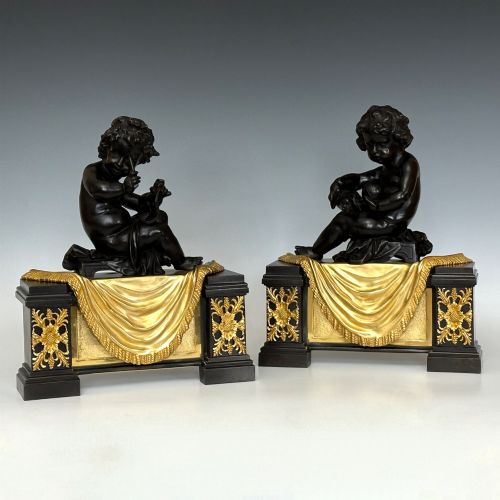
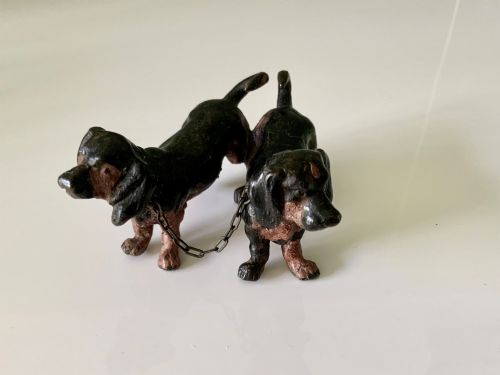
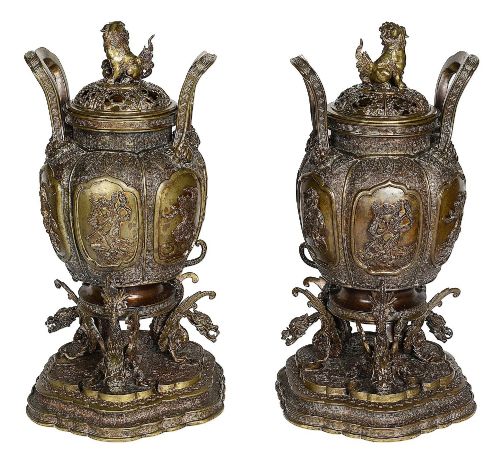
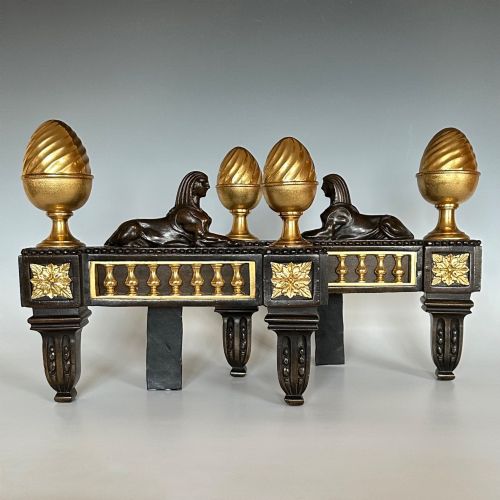
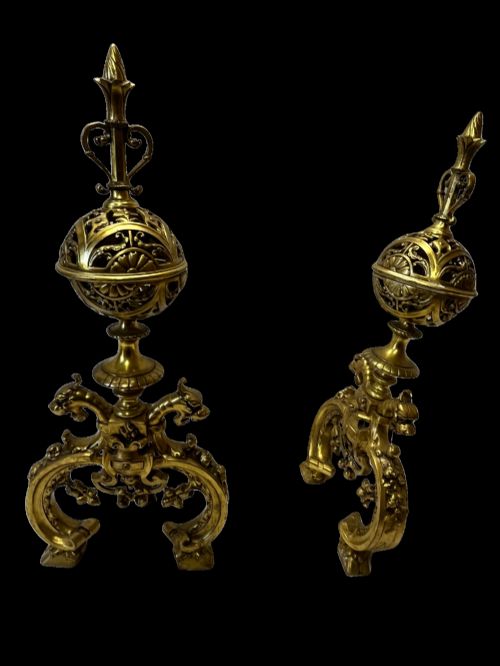
The most common form on this page is the fireplace chenet or fire dog, often paired with ormolu mounts in French Rococo, Regency, and Renaissance Revival styles. Alongside these hearth pieces, you find animalier sculptures of hounds, poodles, and dachshunds, as well as Asian temple lions and Foo dogs.
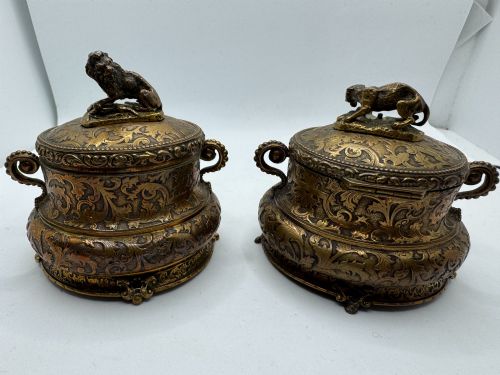
Origins stretch across France, Italy, Austria, and Asia, reflecting diverse nineteenth-century tastes for domestic pets, hunting scenes, and mythical guardians. Makers and foundries utilised traditional casting methods to produce everything from utility hearth irons to decorative bookends and jewellery caskets.
How they were made
Foundries utilised traditional bronze casting methods, often combining cast bronze with hand-chiselled ormolu and gilt-metal mounts to create contrasting surface textures. Iron and wrought iron appear in utilitarian and structural pieces like heavy andirons, while marble frequently provides a stable base for sculptural pairs.
Surface finishing involved cold painting, patination, and gilding, with Austrian pieces often showing meticulous polychrome enamel work over bronze. Details such as hound fur, temple lion manes, and rococo scrollwork were refined by hand after the initial cast cooled.
Listings feature periods spanning the Regency era through the late nineteenth century and into the 1920s.
What varies in quality
Quality rests in the crispness of the chase work and the subtlety of the surface patination, where skilled hands defined muscle, hair, and ornamentation after casting. Heavy, solid bronze or fire-gilt ormolu distinguishes superior French hearth pieces from lighter brass or cast iron alternatives.
The articulation of expression and anatomical accuracy set animalier studies and cold painted figures apart, separating mass production from works modelled by known sculptors and leading foundries.
Louis Riche·Karl Hagenauer·P.J. Mêne·Alfred Dubucand
The Pair Bronze Dogs Glossary
- Chenet
- A horizontal metal bar or firedog placed in a fireplace to support logs, often featuring decorative figural fronts.
- Ormolu
- Gilt bronze created by applying a mercury and gold amalgam to a bronze object and heating it.
- Animalier
- A nineteenth-century artistic genre focusing on the realistic portrayal of animals, particularly dogs and horses.
- Cold painted
- A technique where bronze figures are painted with cold enamel paints that are not fired in a kiln.
Pair Bronze Dogs: Frequently Asked Questions
What are pair bronze dogs used for?
Many of these pieces served practical roles on nineteenth-century hearths as fire dogs or chenets, supporting logs and holding tools while protecting the fireplace masonry. Others functioned purely as decorative sculptures, bookends, lidded incense burners, or jewellery caskets.
Smaller cold painted or cast figures were designed for desks, mantelpieces, and cabinets to display naturalistic animal studies. Across different cultures, large temple lions acted as protective guardians flanking doorways or altars.
How do I identify French rococo chenets?
French rococo chenets feature asymmetrical scrollwork, C-scrolls, floral motifs, and shell shapes executed in gilt bronze or ormolu. They often incorporate animal figures, hounds, or putti integrated into the ornate hearth furniture.
These pieces typically date from the nineteenth-century revival periods, drawing inspiration from earlier Louis XIV and Louis XV designs found in grand European interiors.
What is the difference between fire dogs and andirons?
Fire dogs and andirons are essentially the same heavy metal supports used in open hearths to elevate logs for better airflow. The term chenet is the French equivalent commonly used for more decorative gilt bronze hearth pieces.
In marketplace listings, these items may also be referred to simply as dog irons or fire tool rests depending on their specific configuration.
How should I clean antique bronze figures?
Antique bronze requires gentle dusting with a soft, dry brush to prevent accumulation in crevices and chased details. Avoid harsh chemical cleaners or polishes that strip away the original historical patina and age-related surface tones.
If the piece has delicate cold painting, moisture should be kept away entirely to preserve the fragile enamel finish applied over the metal.