

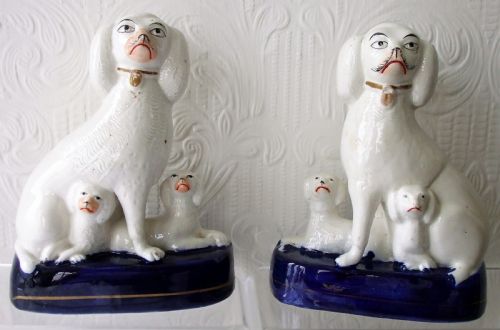


Pair Poodle Figurines
Pair poodle figurines bring enduring character to a room, offering the charming companionship of Victorian ceramic and bronze models.
Pair Poodle Figurines
When you search for pair poodle figurines, you encounter decorative sculptures designed as symmetric pairs originating mostly in the nineteenth century. These ornamental animals often depict adult dogs accompanied by pups or resting upon cushions, reflecting domestic Victorian tastes.
The pieces appearing on this page span several decades of the nineteenth century, including specific dates around eighteen forty-five and eighteen sixty, as well as nineteen hundred. Miniature forms frequently appear alongside larger pottery models, giving buyers a choice of scale for mantelpieces or side tables.
Makers and regional potteries in England produced these decorative objects using traditional ceramic methods. Styles range from simple Regency influences to elaborate Victorian modelling adorned with detailed surface textures.
How they were made
Potters shaped these earthenware and ceramic figures using moulds before applying coloured glaze and enamel details by hand. Many examples feature distinctive surface treatments such as gold leaf or gilt highlights, adding brightness to the fired clay.
Certain models incorporate specialised textured elements, such as applied clay work imitating woolly fur, which required careful individual manipulation before glazing. Alternative material choices in the evidence include cast bronze, providing heavier sculptural weight and metallic patination.
Pair Poodle Figurines Retail Price Guide 2026
Typical asking prices for pair poodle figurines among the pieces listed under this phrase on Sellingantiques today, from the lower quarter to the upper quarter. They describe what is for sale here now, not the wider market.
Listings feature earthenware, ceramic, and bronze materials, finished with glaze, enamel, and gold leaf.
What varies in quality
The complexity of the composition also separates standard production from finer work, particularly where pups, cushions, or textured woolly coats are integrated into the sculptural form. Consistency between the two individual dogs determines how well the pair matches as a decorative set.
James Dudson
The Pair Poodle Figurines Glossary
- Earthenware
- A porous type of pottery fired at lower temperatures, commonly used for nineteenth century Staffordshire figures. It forms the solid body beneath the glazed and enamelled surface.
- Enamel
- Opaque vitreous material fused to the ceramic surface during secondary firing to supply colour. It provides the distinct markings and facial details on the pottery dogs.
- Gilt
- A thin covering of gold applied to accentuate moulded details like collars or cushion trim. This finish enhances the decorative appeal of the Victorian ornaments.
- Encrusting
- The application of small, separate pieces of clay to the surface to simulate texture, such as curly fur or floral elements. It requires skilled manual work prior to glazing.
- Regency
- An architectural and decorative style period preceding the Victorian era, characterised by classical elegance. Elements of this style occasionally influence the proportions of early figures.
Pair Poodle Figurines: Frequently Asked Questions
What periods do these poodles come from?
These figures date primarily from the nineteenth century, encompassing the Victorian era with specific examples spanning from the eighteen forties through to nineteen hundred.
Pottery and bronze production during this time reflects changing tastes in domestic ornamentation across England.
How were these figures displayed originally?
Victorian households typically placed pair figures symmetrically on mantelpieces, sideboards, or chests of drawers in the main living spaces.
Their matched nature meant they were designed to sit at either end of a decorative arrangement.
What materials make up these sculptures?
The majority of pieces utilise earthenware or ceramic as a base, finished with colourful glazes and hand-painted enamel details.
Some examples also feature gold leaf or gilt highlights, while rarer variants are cast in bronze.
Why do some poodles have pups?
Companion puppies were added by potters to increase the narrative charm and sentimental appeal of the domestic animal subjects.
These supplementary figures help collectors date the style and evaluate the complexity of the original ceramic modelling.