
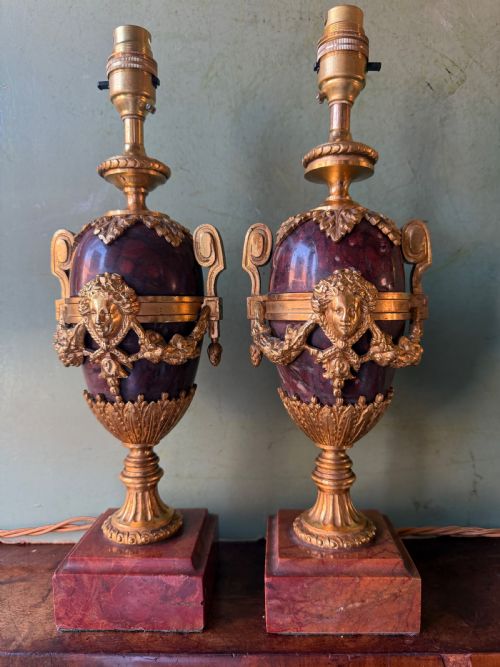


Pair Bronze Bedside Lights
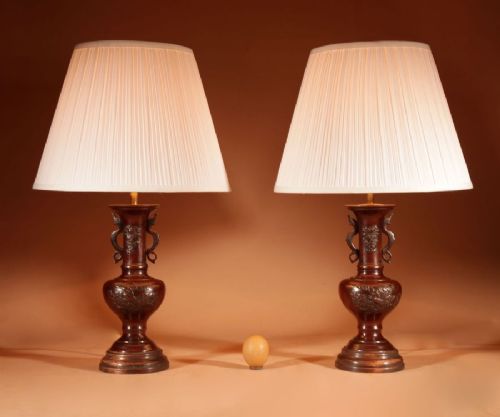
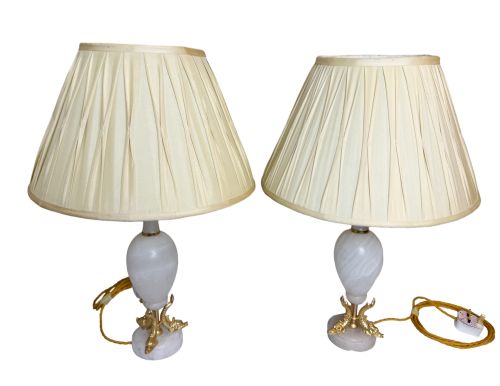
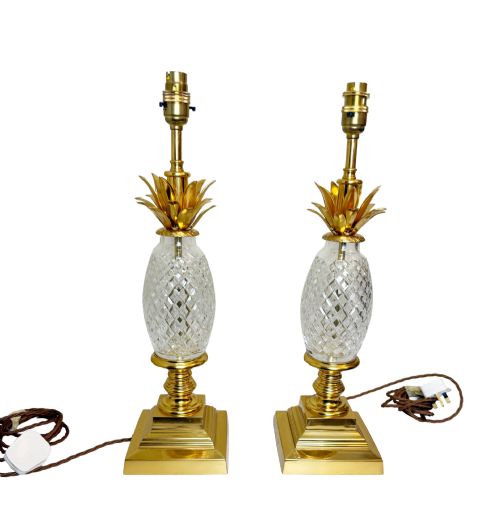
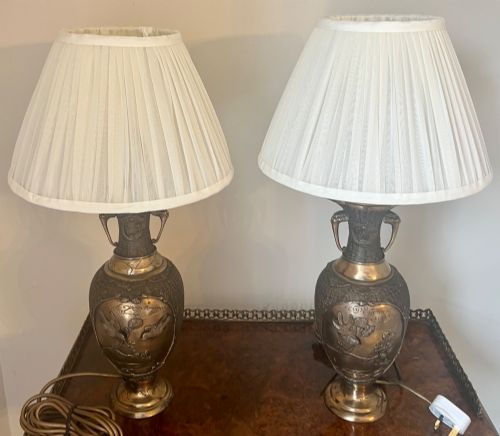
Pair bronze bedside lights bring substantial weight and classical form to a dressing table, combining cast metal with marble, porcelain, or crystal.
Pair Bronze Bedside Lights
When searching for pair bronze bedside lights, collectors encounter table lamps spanning the nineteenth century through the interwar decades, with French Neoclassical, Louis XVI, and Empire styles predominating. These pieces often adapt earlier forms, transforming nineteenth-century urns, ewers, cassolettes, and candelabra into functional illumination.
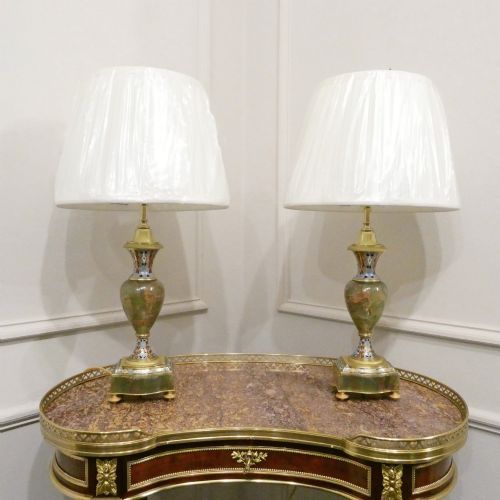
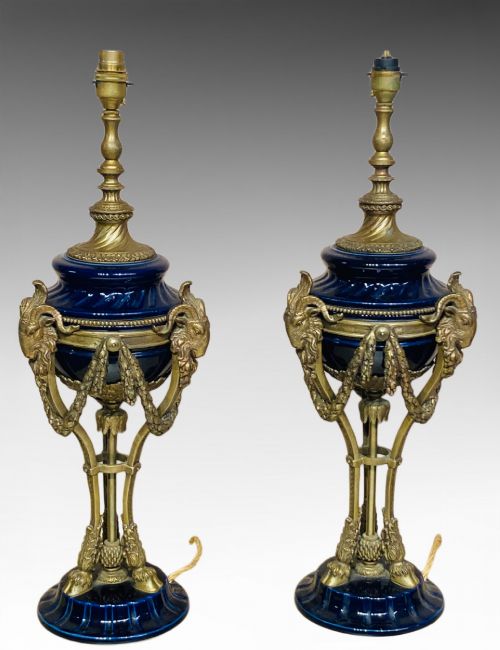
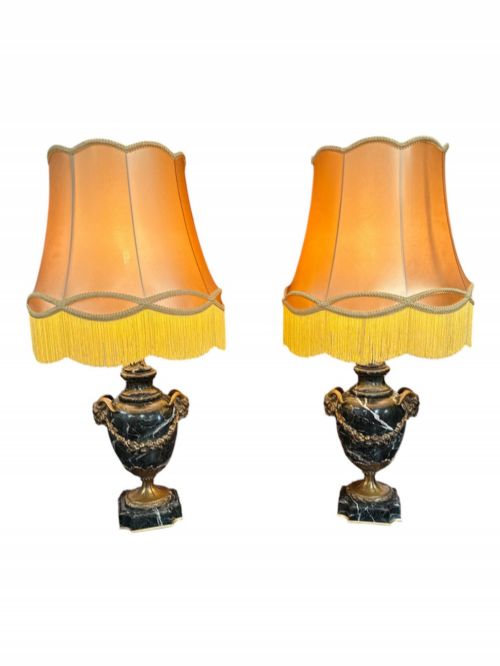
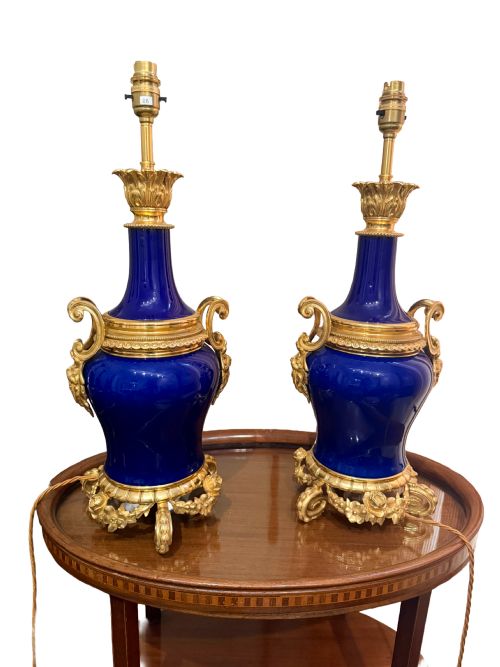
The materials paired with bronze shape the character of each pair, incorporating white, rouge, siena, and green marble bases, alongside onyx, crystal, and champlevé or cloisonné enamel. Many examples merge cast bronze or ormolu mounts with blue porcelain bodies or hand-painted cobalt ceramic reservoirs.
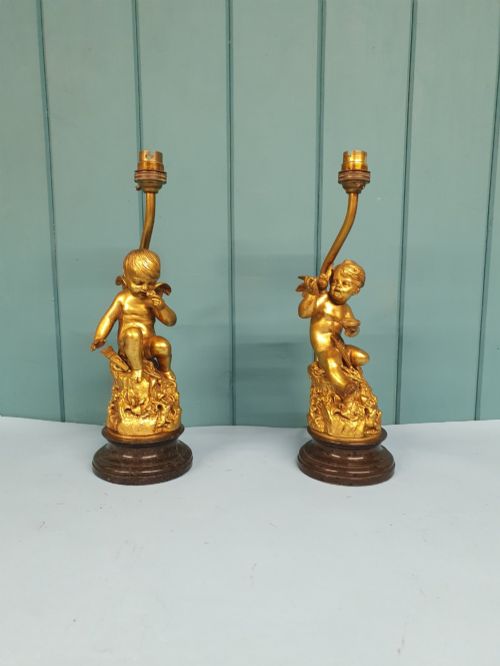
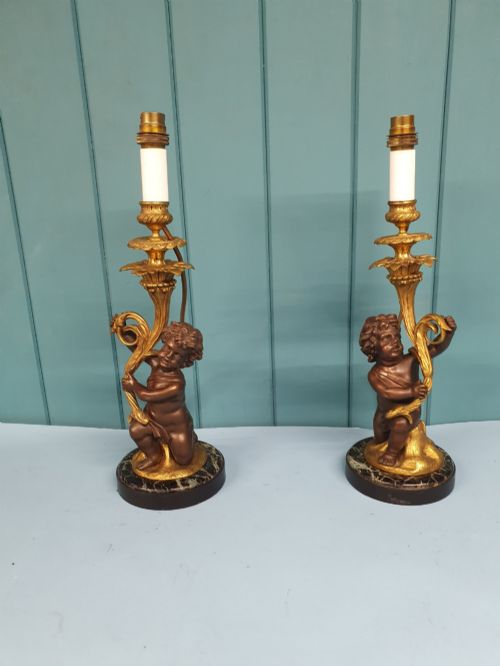
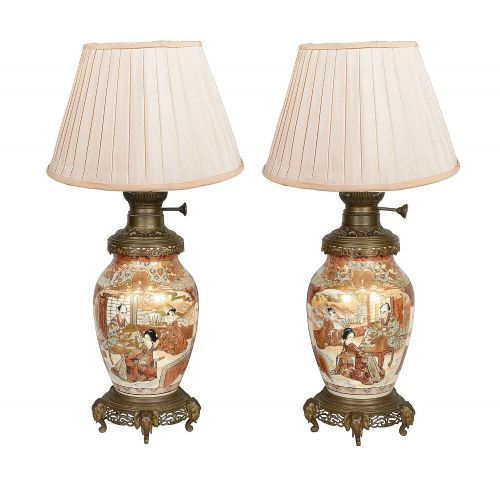
Originating largely from French workshops and continental foundries, alongside Japanese Meiji period exports and Chinese cloisonné, these dual lamps offer symmetrical presence. They range from compact candlestick conversions to monumental figural and cherub designs.
Materials and construction
Foundries utilised lost-wax or sand-casting techniques to shape bronze and brass components, producing crisp architectural details, floral motifs, and figural ornaments. These metal elements frequently received fire-gilding to create ormolu finishes, or chemical patination to achieve dark bronze tones.
Stonemasons turned and polished natural materials like marble and onyx to form solid pedestals and urn bodies that anchor the weight of the metalwork. Artisans then joined the stone, ceramic, and metal tiers using threaded rods, brass bezels, and bolted collars.
Cherubs occasionally hold up the light source, supervising your bedtime reading with cheerful indifference.
Assessing quality and execution
Material selection dictates distinction, where solid natural marble bases and heavy cast bronze components replace lighter spelter and composite substitutes. The integration of fine porcelain, such as Gien ceramics or cobalt blue glazed bodies, further separates standard production from exceptional decorative works.
E Rousseau
The Pair Bronze Bedside Lights Glossary
- Ormolu
- Gilt bronze produced by applying a mercury and gold amalgam to cast bronze before firing. The technique creates a rich, durable golden surface seen on French Neoclassical mounts.
- Cassolette
- A decorative vessel shaped like a lidded urn, often featuring reversible tops that alternate between a solid lid and a incense burner. These are frequently mounted in ormolu and converted to table lighting.
- Champlevé
- An enamelling technique where troughs are dug into the surface of a metal object and filled with vitreous paste before firing. This colourful decoration appears on brass and bronze lamp bodies.
- Spelter
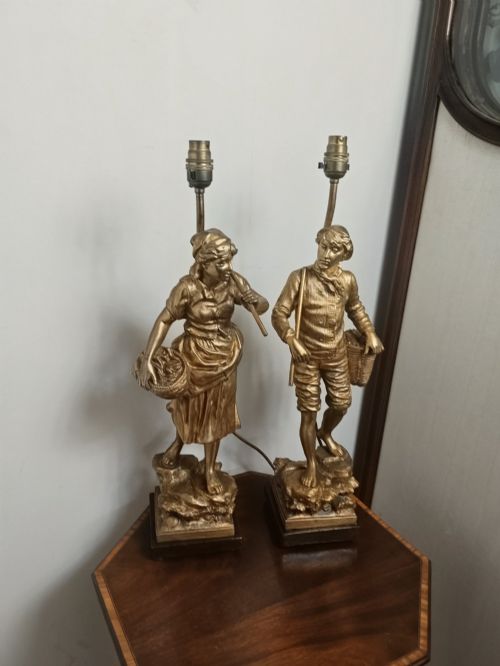
- An alloy of zinc and lead used as a cheaper substitute for bronze in nineteenth-century casting. It accepts patination and paint well, though it lacks the weight and tensile strength of true bronze.
- Cloisonné
- Metalwork decorated by soldering thin wire compartments to a base and filling the cells with enamel paste. Examples from the Meiji period utilise this technique for intricate floral patterns.
Pair Bronze Bedside Lights: Frequently Asked Questions
Were these always electric lamps?
Most pieces began life as candlesticks, oil lamps, urns, or decorative ewers before later conversion to electricity during the twentieth century.
Wiring methods and internal hardware vary according to the decade of conversion, often preserving the original metal bodies intact.
How do I identify French Louis XVI style?
This style relies on classical symmetry, straight tapering columns, and restrained ornamentation such as beaded borders and acanthus leaves.
Materials typically combine ormolu mounts with white marble bases and gilt bronze detailing.
What is the difference between bronze and spelter?
Bronze is a durable copper alloy with significant weight and a deep resonant quality when cast into decorative shapes.
Spelter is a softer, lighter zinc alloy that was common in Victorian decorative objects and requires careful handling.
Can I use modern lamp shades?
Standard shade fittings attach to modern harp mechanisms or bridge adapters placed over the bulb holder.
Selecting proportions that complement the heavy stone and metal bases ensures a balanced appearance on a bedside table.