

Pair Brass Table Lights
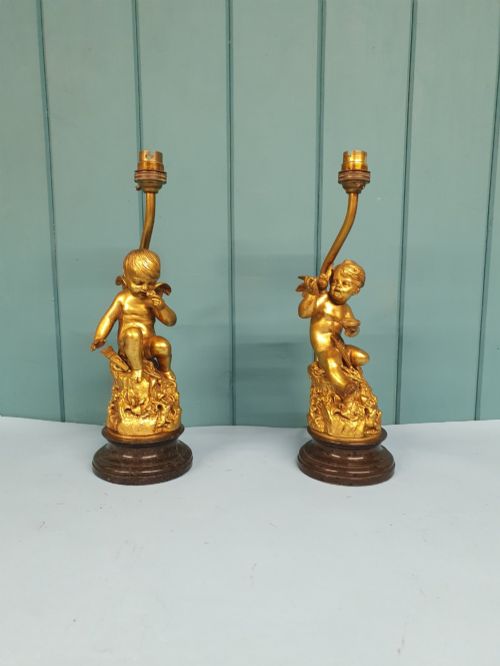
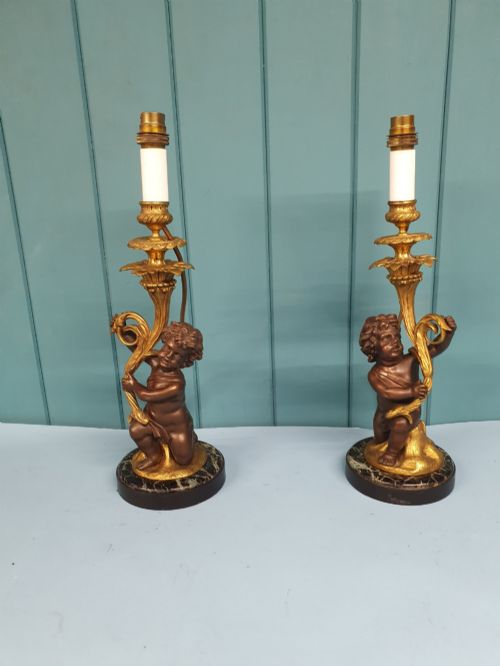
Pair brass table lights illuminate a room with dual symmetry, offering steady light through cast and turned metal forms rooted in centuries of domestic design.
Pair Brass Table Lights
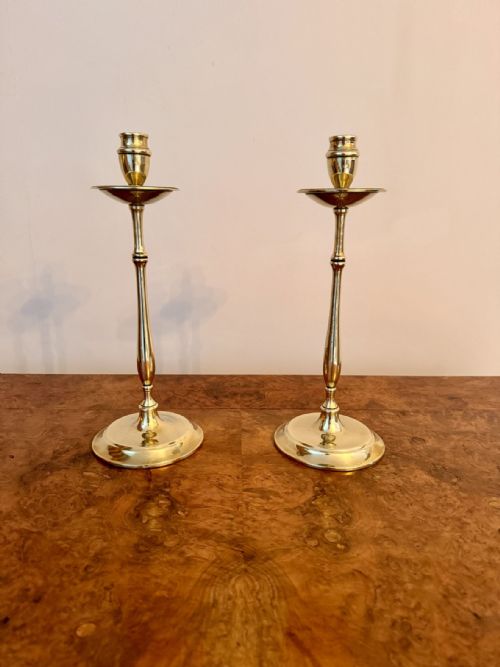
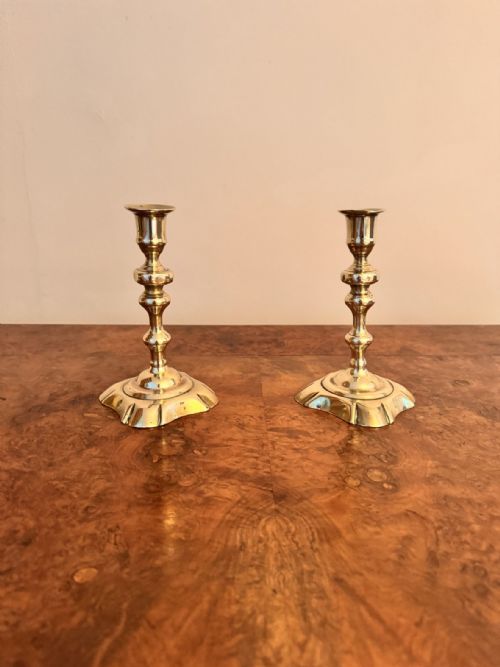
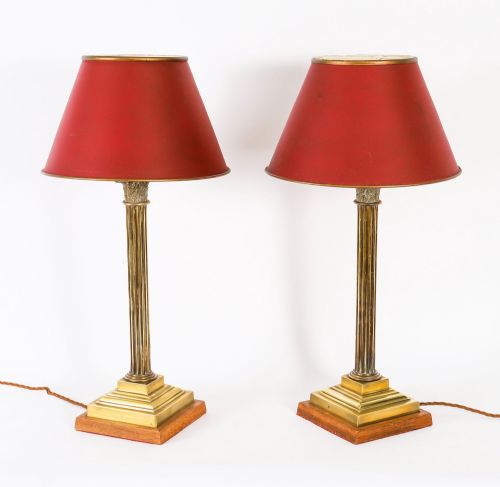
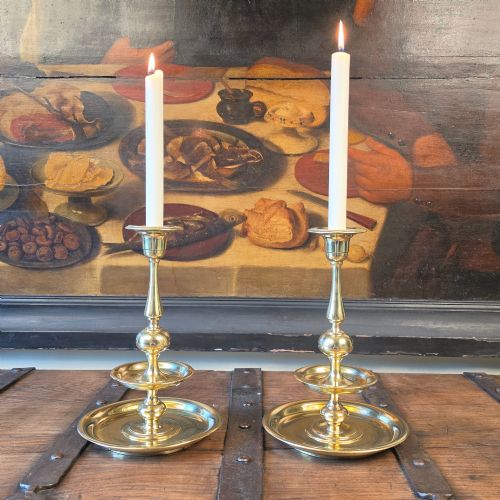
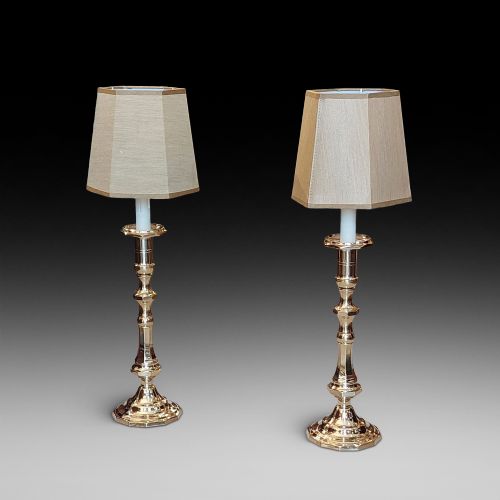
A search for pair brass table lights brings up matching luminaires and converted lighting fixtures dating from the eighteenth century to the twentieth. Buyers meet Georgian seamed candlesticks, Victorian column lamps, and early twentieth-century examples adapted from oil lamps or candelabra.
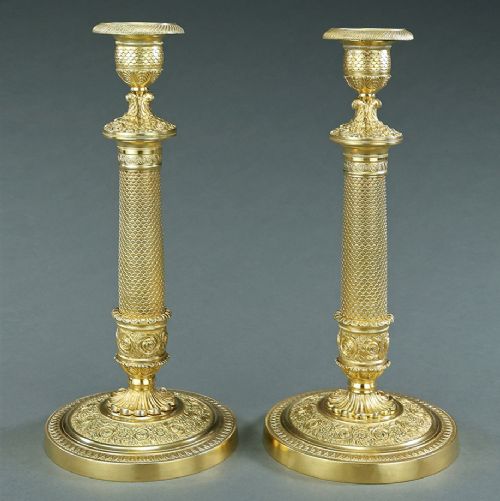
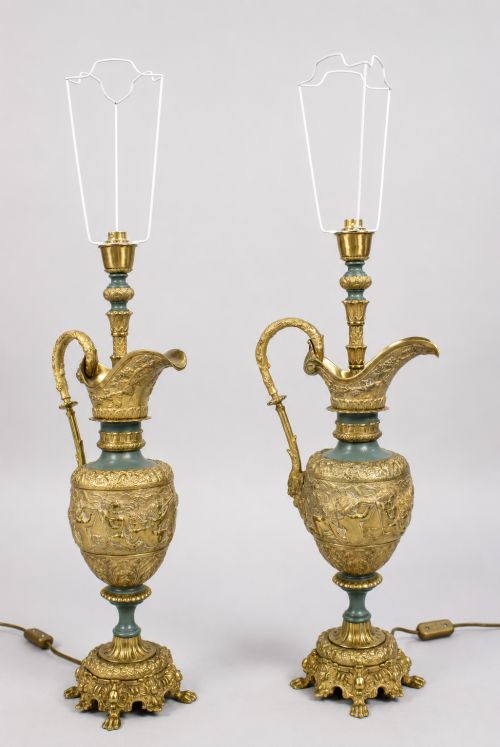
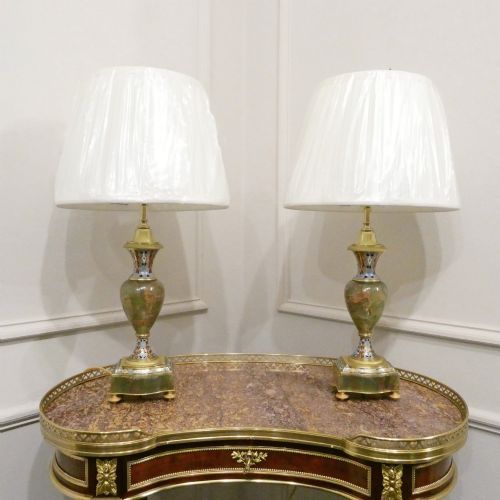
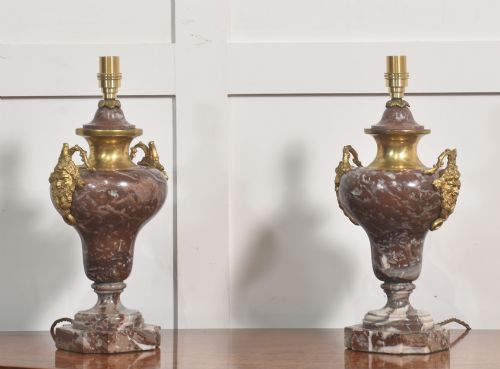
The objects span diverse aesthetic revivals, including French Rococo, Gothic, and Empire styles. Many items incorporate subsidiary materials such as marble, onyx, glass, and fabric shades alongside the primary metal framework.
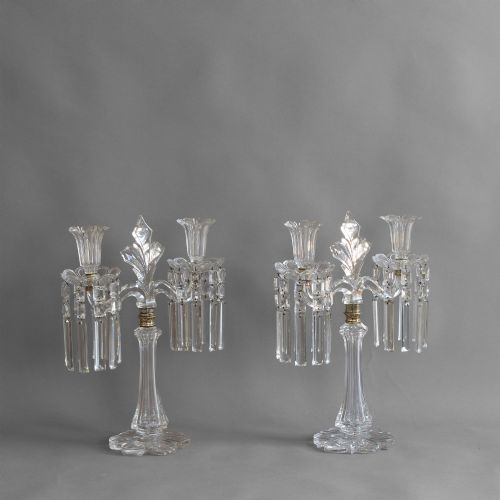
Forms range from simple domestic candlesticks fitted for electricity to monumental sculptural lamps and ornate four-arm candelabra. English and French workshops dominate the origin points across these periods.
What varies in quality
The refinement of the casting and the crispness of the chased ornamentation distinguish finer pieces from standard production. Heavier gauge metal and integrated components rather than soldered joints denote superior craftsmanship in period lighting.
Original surface patination and the retention of matching elements, such as paired shades or matching marble plinths, elevate the desirability of a matching set. Alterations made during electrification also influence the integrity of the surviving structure.
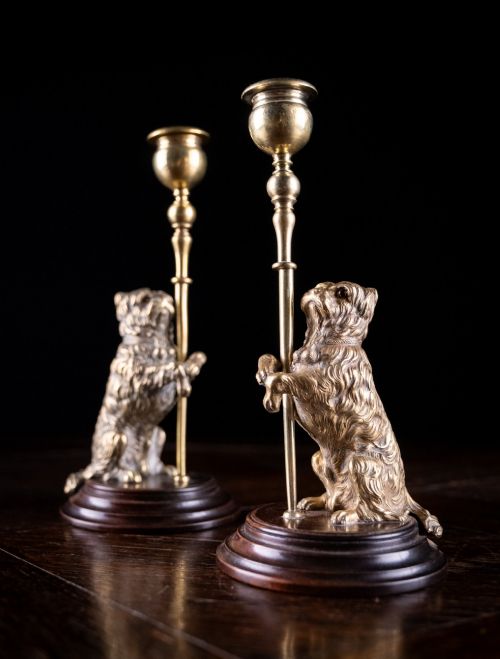
Cast brass terrier dogs stand at attention on period candlesticks, holding light sources aloft with canine loyalty.
W.A.S. Benson·Angelo Brotto for Esperia·J.T. & Co
The Pair Brass Table Lights Glossary
- Ormolu
- Gilded bronze utilised for decorative mounts and figural bases, popular in French neoclassical design. The technique involves applying a mercury and gold amalgam to a bronze base before firing.
- Champlevé
- An enamelling technique where troughs are gouged into the metal surface and filled with vitreous enamel powder before being fired. This method creates colourful geometric or pictorial patterns on the metal body.
- Seamed brass
- Sheet brass rolled into a cylinder and joined with a visible vertical seam, common in eighteenth-century candlestick production. These pieces often feature filled bases for added weight.
- Corinthian column
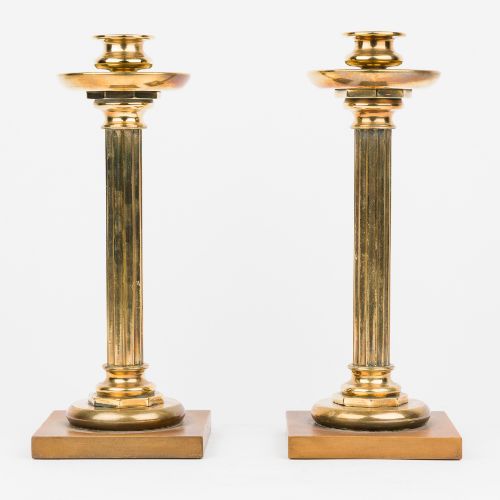
- An architectural column form adapted for lamp standards, featuring elaborate acanthus leaves on the capital. This classical revival style appeared frequently in late nineteenth-century desk and table lighting.
- Ejector candlestick
- A domestic lighting device containing an internal sliding mechanism to push out the remaining wax stub. This practical nineteenth-century invention is often found in brass.
Pair Brass Table Lights: Frequently Asked Questions
How do I distinguish Georgian from Victorian brass?
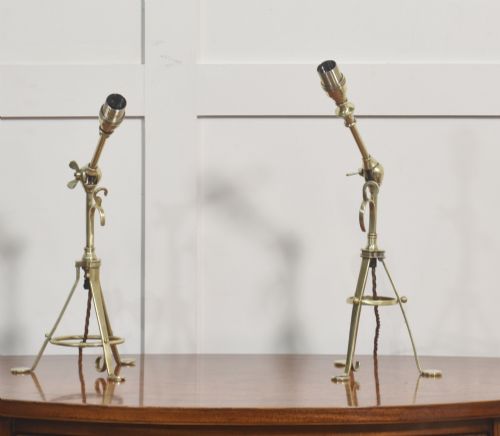
Georgian pieces often display seamed construction and simpler cast profiles, reflecting eighteenth-century manufacturing methods. Victorian examples tend to be heavier, incorporating elaborate ornamentation and mechanical adjustments.
Later nineteenth-century pieces also embrace historical revivals like Gothic and Rococo, whereas Georgian designs adhere to stricter classical proportions.
Were these always electric lamps?
Most older examples started life as oil lamps, candelabra, or candlesticks before conversion to electricity in the twentieth century. Component parts like burners and candlesleeves were swapped out to accommodate wiring.
Converted pieces retain their original weight and hand-finished patination, bridging historical lighting formats with modern interior requirements.
What materials accompany the brass?
Manufacturers frequently combined brass with natural stone bases such as rouge marble and onyx to add weight and colour contrast. Glass shades, crystal drops, and champlevé enamel also appear across nineteenth and twentieth-century designs.
These mixed-media pieces reflect the eclectic tastes of the Edwardian and late Victorian periods, moving beyond plain metal.
How should I place a matching pair?
Symmetrical placement on sideboards, mantels, or bedside tables balances a room by echoing the dual nature of the fixtures. Their vertical silhouettes suit narrow console surfaces where height is required without a wide footprint.
Matching proportions ensure the pair anchors a focal point successfully when illuminated.