
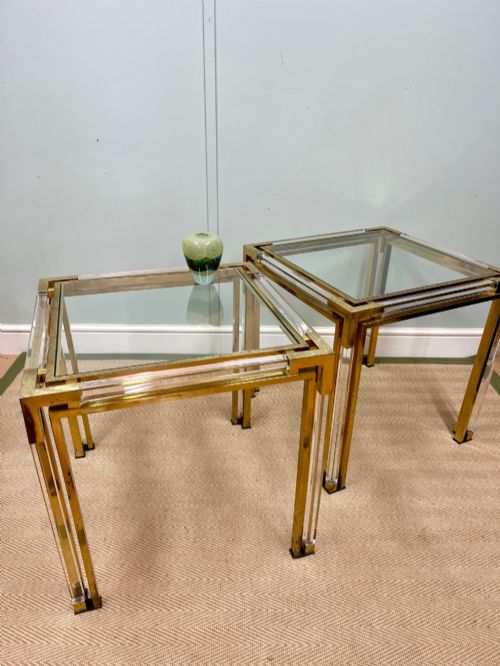


Pair Brass End Tables
Pair brass end tables bring dual symmetry and metallic warmth to a room, serving as functional surfaces with distinct period character.
Pair Brass End Tables
When you search for pair brass end tables, you encounter matching small surfaces designed for flanking upholstery or beds, heavily represented by early twentieth-century designs and earlier antique iterations. These pieces function as lamp tables, etageres, and occasional stands rather than primary dining furniture, though modular console formats also appear.
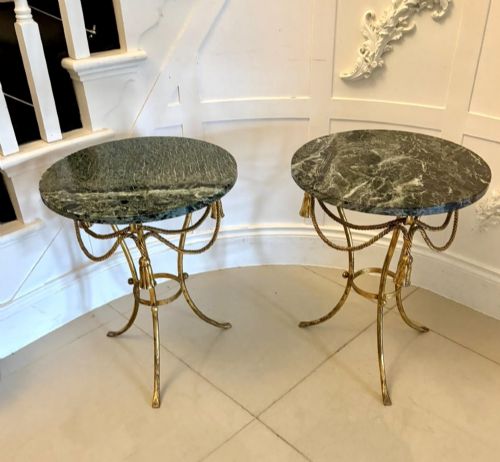
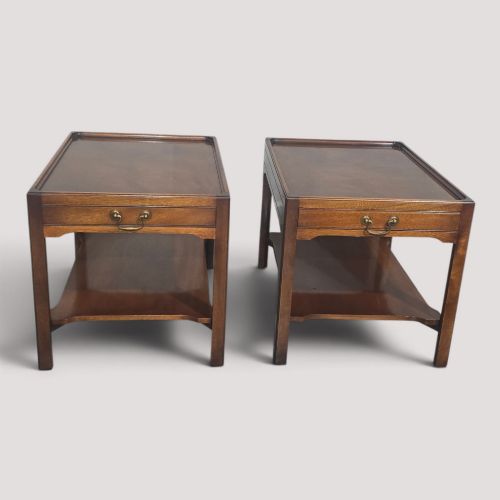
The materials paired with the metal define the visual weight of each pair. Mahogany, satinwood, kingwood, and marble frequently form the primary surfaces, supported or trimmed by brass, gilt metal, or ormolu mounts.
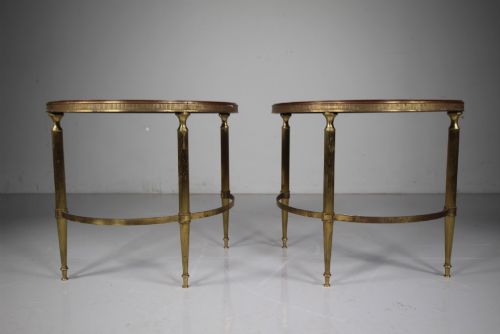
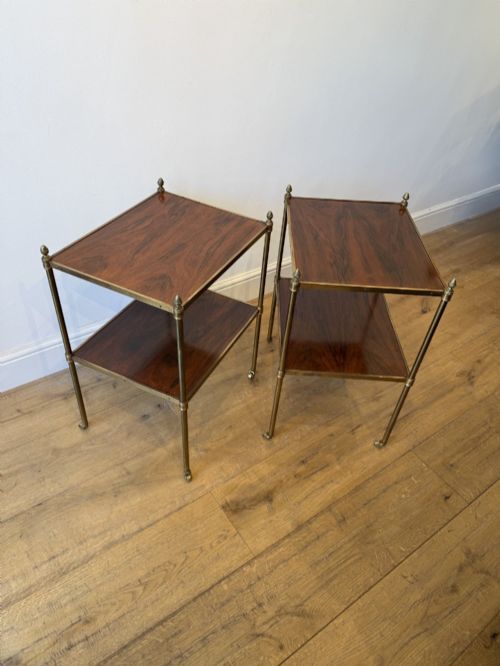
Origins stretch from English Georgian and Regency workshops to French nineteenth-century interpretations and Italian decorative arts. The forms span demi-lune shapes, kidney bean bedside tables, and two-tier etageres.
How they were made
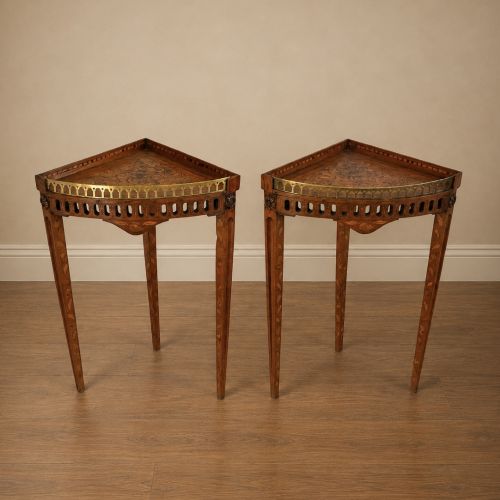
Construction relies on timber frames combined with cast or sheet brass components, often featuring galleries, mounts, or structural framing. Cabinetmakers utilised fine hardwoods like mahogany and exotic veneers such as kingwood and satinwood for the tabletops and carcases.
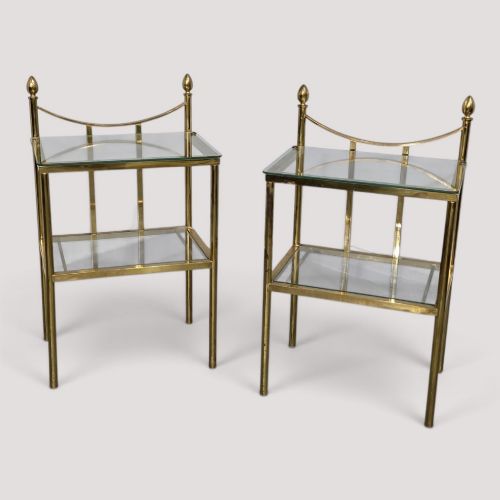
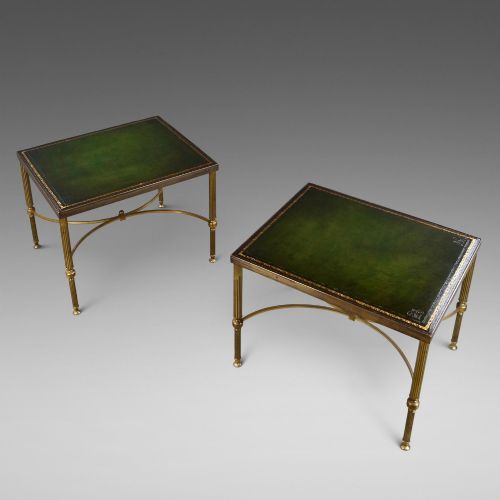
Surface decoration involved marquetry inlay, lacquer work, and ormolu mounts applied to the metalwork. Glass inserts and verde marble slabs provide the functional tops on several twentieth-century examples, secured within metal frames.
Kidney bean bedside tables offer a curved embrace that makes standard rectangular nightstands look rather stiff by comparison.
What varies in quality
The refinement of the cast brass mounts and the precision of the timber marquetry distinguish finer examples from standard production. Heavier gauge metalwork and genuine marble tops indicate superior construction compared to lighter plated alternatives.
Proportion and matching symmetry between the two pieces determine the success of a pair. Subtle details such as pierced brass galleries, quarter-veneered tops, and integrated secondary tiers elevate the status of the furniture.
Mallett·Charles Topino
The Pair Brass End Tables Glossary
- Ormolu
- Gilded bronze or brass applied as decorative mounts on furniture. It provides a bright metallic contrast to dark woods like mahogany and kingwood.
- Etagere
- A set of open shelves for displaying small objects or lamps. These tiered tables offer multiple surfaces within a compact footprint.
- Marquetry
- Decorative veneer patterns arranged in pictorial or geometric designs on a wooden surface. Craftsmen used contrasting timbers to create complex motifs.
- Gallery
- A low raised rim of metal or wood around the edge of a tabletop. This feature prevents items from sliding off the surface.
- Demi-lune
- Half-moon shape used for tables designed to sit flat against a wall or flank a sofa. The curved front softens the profile of a room.
Pair Brass End Tables: Frequently Asked Questions
Where should I place pair brass end tables?
These tables find their natural home flanking a sofa, bed, or fireplace where symmetrical surfaces are required. Their compact proportions allow them to fit into tight spaces without overwhelming the room.
They serve effectively as lamp tables, bedside stands, or display surfaces for decorative objects. The metallic finish reflects ambient light, brightening darker corners.
How do I date a pair of brass tables?
Dating relies on examining the construction methods, wood types, and decorative styles visible on the piece. Georgian and Regency pieces show traditional joinery and native timbers, while twentieth-century examples often incorporate glass and lighter frames.
Stylistic cues such as Neoclassical motifs, Louis XVI revival lines, or Art Deco geometry help narrow down the decade of production. Examining the patina of the brass and the wear on the timber provides further clues to age.
Are brass end tables fragile?
The structural stability depends on the underlying timber frame and the thickness of the brass components used. Solid mahogany or kingwood carcases offer robust support, while etageres with glass inserts require more careful handling.
Routine maintenance involves keeping the metal clean and protecting wooden surfaces from moisture. Regular polishing maintains the lustre of the brass without wearing down the underlying metal.
What styles are available?
The selection spans several distinct historical revivals and periods, including Georgian, Regency, and Art Deco. French Chateau and Hollywood Regency aesthetics also appear frequently among the listings.
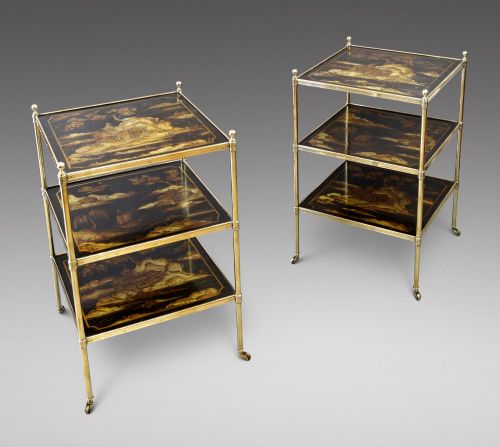
Neoclassical and Louis XVI style pieces bring classical symmetry and refined mounts to the design. Oriental lacquer finishes provide an alternative decorative texture.