
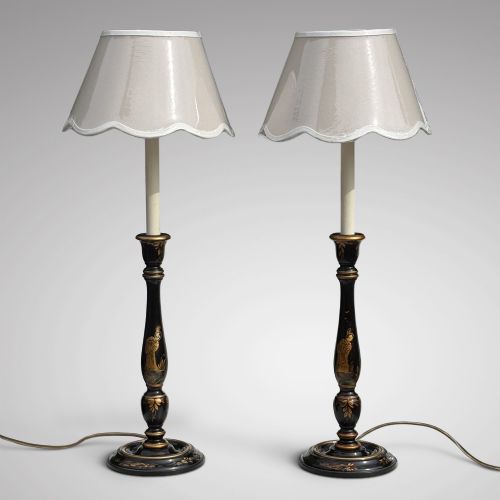
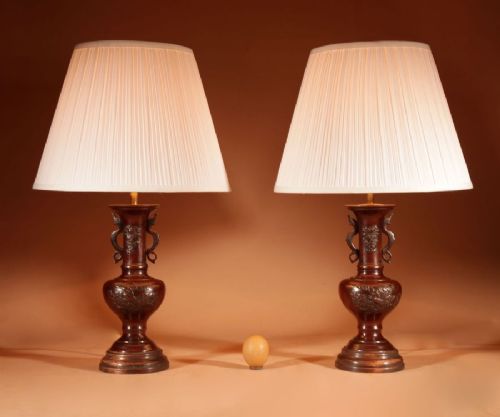
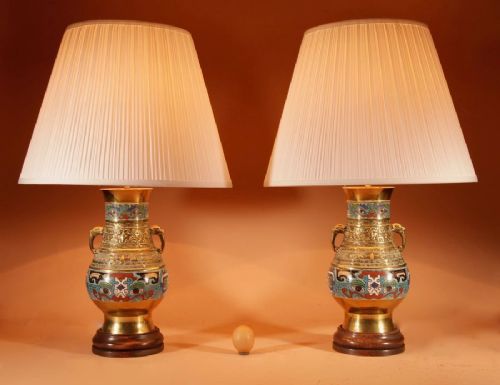

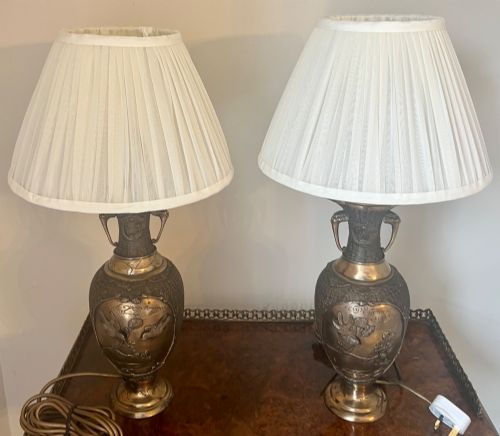



Pair Asian Table Lamps
Pair asian table lamps bring distinct form and cultural history into a room, uniting decorative vessels with interior lighting.
Pair Asian Table Lamps
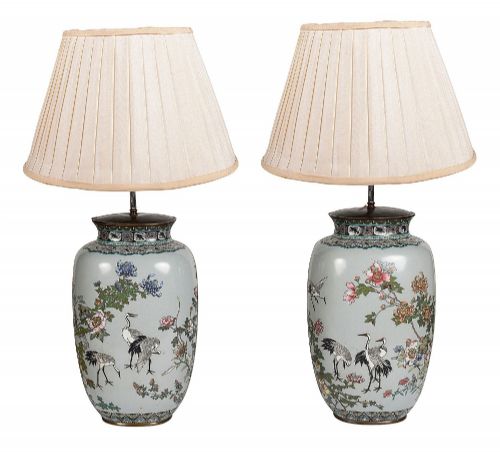
Pair asian table lamps include decorative objects converted for illumination, drawing primarily from Chinese and Japanese traditions across the nineteenth and early twentieth centuries.
The selections on this page centre on matched pairs created from porcelain, bronze, brass, cloisonné enamel, and lacquered wood.
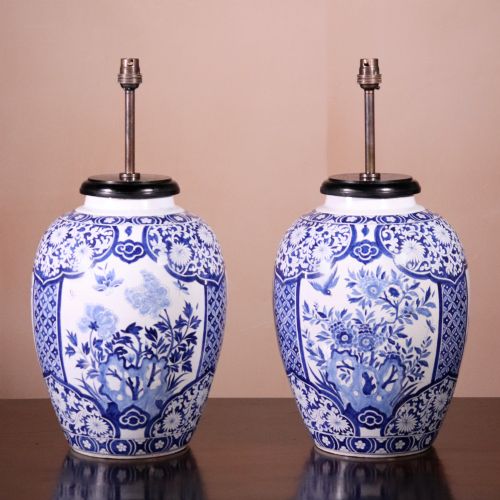
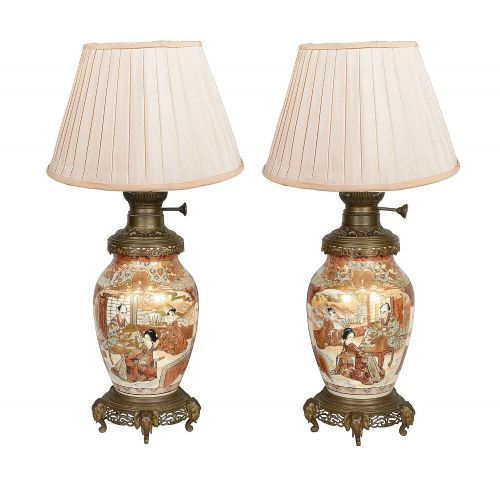
Forms span from blue and white jars and Satsuma pottery to bronze vessels and carved hardwood occasional furniture adapted for domestic placement.
How they were made
Makers utilised traditional eastern craftsmanship, shaping porcelain bodies, casting bronze and brass, and applying intricate cloisonné and champlevé enamel work.
Many items originated as decorative vases or jars before receiving later electrical fittings, while other pieces integrate carved huali and other hardwoods.
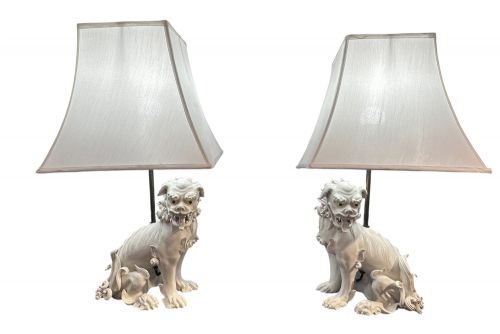
Watch for vigilant Foo dogs guarding the living room from atop their porcelain bases.
What varies in quality
Quality rests in the precision of the hand-painted porcelain decoration, the weight and casting finish of bronze and brass elements, and the preservation of enamel work.
Matched pairs demonstrate greater harmony when both vessels share identical dimensions, glaze depth, and colour saturation from the original period.
The Pair Asian Table Lamps Glossary
- Cloisonne
- Enamel work created by soldering wire compartments onto a metal base before filling them with coloured paste and firing. This technique produces intricate geometric and floral surface patterns.
- Satsuma
- Japanese pottery featuring a crackle-glaze earthenware body decorated with polychrome enamels and gilding. These wares often depict traditional figures, landscapes, and floral motifs.
- Imari
- Japanese porcelain decorated in underglaze blue, iron red, and gold, originating in the Edo period. This style gained extensive popularity for export to European markets.
- Champleve
- Enamel technique where troughs or cells are carved directly into a thick metal surface to hold the vitreous enamel. The resulting metal outlines frame the coloured design areas.
- Blanc de Chine
- White porcelain produced in Dehua, China, known for a milky glaze that merges smoothly with the clay body. Figures and vessels in this material display a uniform tone without painted decoration.
Pair Asian Table Lamps: Frequently Asked Questions
Are these lamps originally wired for electricity?
Most antique lighting from these periods started life as decorative vases, jars, or temple vessels before receiving electrical components in the twentieth century.
Buyers often find that conversion work happened at different times, meaning wiring specifications vary across individual pairs.
How do I identify Satsuma ware?
Satsuma pottery displays a characteristic cream-coloured, finely cracked earthenware glaze beneath detailed enamel paintings and raised gold accents.
Pieces usually feature traditional Japanese figural scenes or dense floral patterns executed by skilled studio painters.
What is Meiji period metalwork?
Meiji period metalwork refers to bronze, brass, and mixed-metal items produced in Japan between eighteen sixty-eight and nineteen twelve.
Craftsmen during this era achieved international renown for their advanced casting, patination, and champlevé enamelling techniques.
How do I care for antique porcelain lamps?
Maintenance requires gentle dusting with a soft, dry cloth to protect fragile painted surfaces and older gilding from unnecessary wear.
Avoiding harsh chemical cleaners ensures the original glazes and enamel details remain stable over time.