
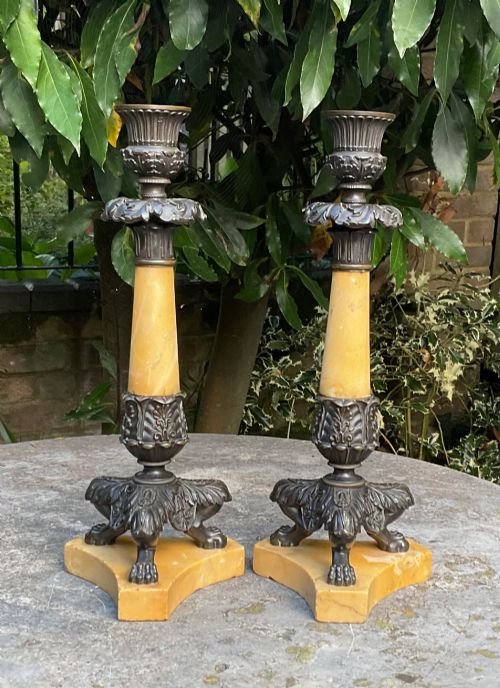
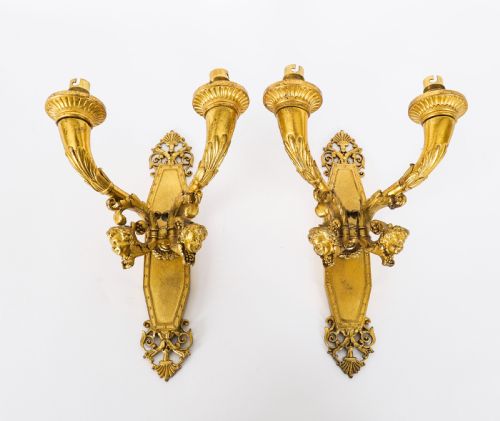
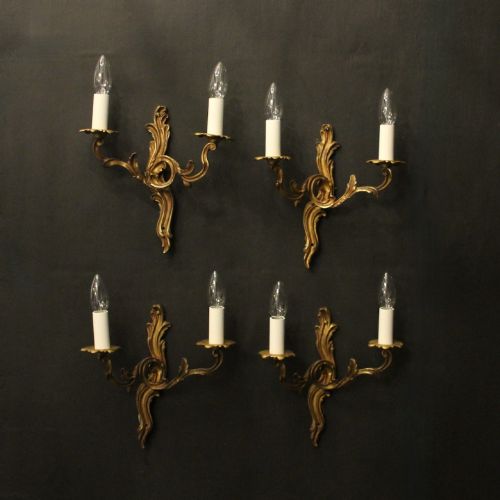


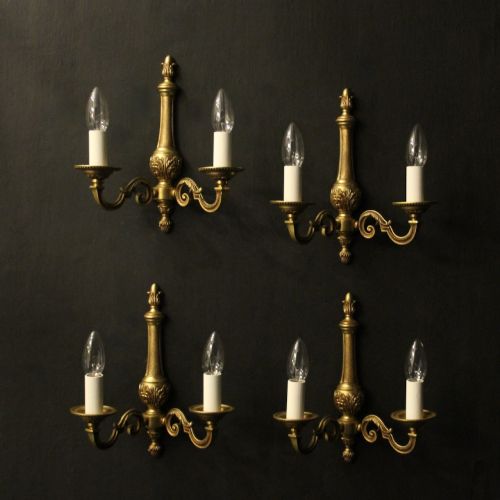
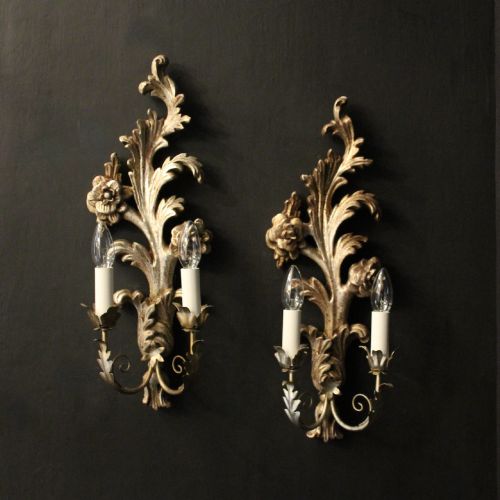
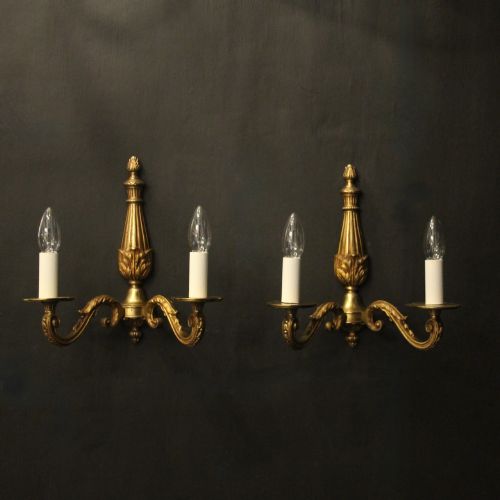
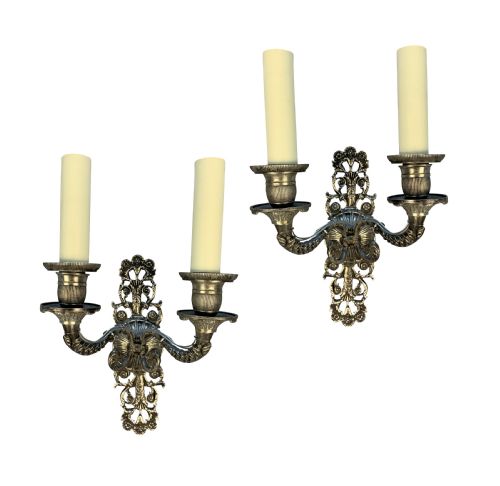
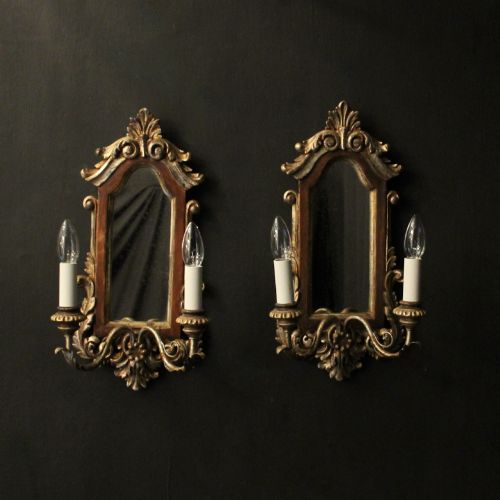
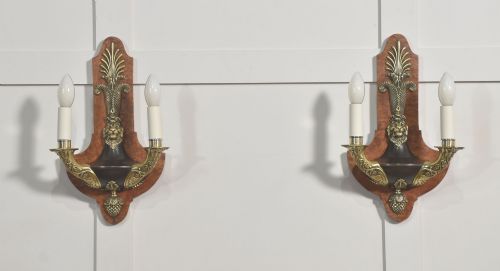
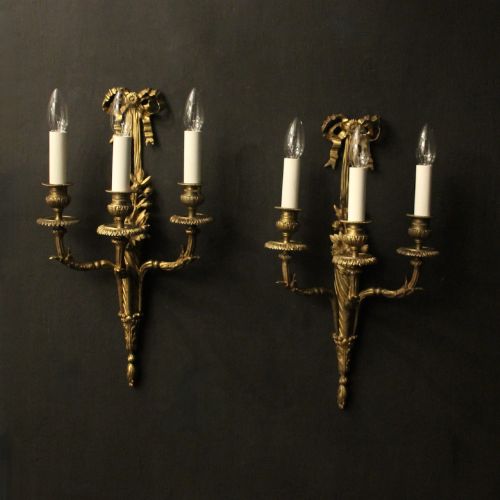
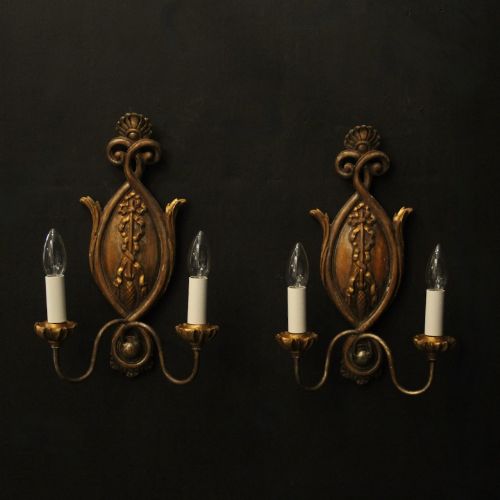
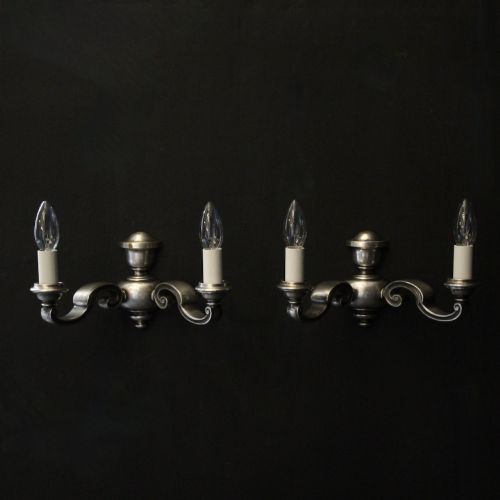
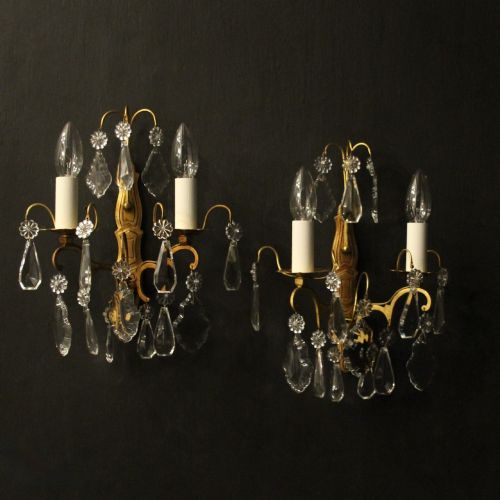
Pair Sconces
These pair antique sconces bring dual points of illumination and period character to a wall.

What pair antique sconces are
When you search for pair antique sconces, you encounter matched sets of wall-mounted light fittings designed to flank a mirror, fireplace or architectural feature. The versions most commonly met on this page span the eighteenth century to the early twentieth century, originating primarily from French and Italian workshops.
The objects take the form of wall lights and wall sconces featuring single, twin or triple branches for candles or wired bulbs. Materials range from cast bronze and giltwood to carved wood, iron and silver plate, often styled after Rococo, Louis XVI or classical designs.
How they were made
Makers utilised metalworking techniques such as casting bronze and brass, applying gold leaf, silver gilding or ormolu to create reflective metallic surfaces. Bronze elements frequently received a patinated or gilt finish to highlight cast details.
Carved wood and gesso formed the basis for wooden and giltwood examples, shaped by hand with floral, scroll and cherub motifs. Ceramic components, crystal drops and porcelain plaques occasionally integrated into the metal frames.
Retail Price Guide 2026
Typical UK retail prices for pair sconces, calculated from the Sellingantiques database of over a million retail prices indexed since 2003. This retail price guide relies exclusively on Sellingantiques data; no external sources or auction records are used, so the figures do not describe the wider market.
What varies in quality
The refinement of the casting and carving sets apart the top tier of wall lights from simpler production. Crisp chiselling on bronze mounts and deeply undercut foliage on carved giltwood indicate superior craftsmanship by skilled hands.
The integrity of the original surface finish, whether patinated bronze, gold leaf or polychrome paint, dictates the visual authority of the piece. Matching components within the pair ensure a balanced appearance when mounted on either side of a room's focal point.
Casier·Milliet & Cie Creil Montereau
The Pair Sconces Glossary
- Gilt Bronze
- Bronze that has been coated with a layer of gold, often referred to as ormolu when mercury gilded. This finish provides a bright metallic sheen resistant to tarnishing.
- Giltwood
- Wood, typically lime or pine, that has been carved and coated with a thin layer of gold leaf over a gesso ground. It captures candlelight effectively in period interiors.
- Patinated Bronze
- Bronze left to age naturally or treated chemically to produce a dark, uniform surface tone. This contrasts with gilded highlights on decorative mounts.
- Gesso
- A plaster mixture applied to carved wood as a smooth base for gilding and paint. It allows for crisp detail work before the gold leaf is laid down.
- Twin Arm
- A wall light configuration featuring two candle branches extending from a central backplate. Such fixtures balance symmetry with ample illumination.
Frequently Asked Questions
How were pair antique sconces used?
These fixtures served to illuminate rooms by holding tallow candles or wax tapers, positioned in pairs to reflect light off mirrors and wood panelling.
Placed along hallways and reception rooms, they provided ambient lighting before the arrival of electricity.
How do I install antique wall lights?
Many surviving examples are converted from candle use to accept modern electrical wiring, requiring professional mounting to wall studs and junction boxes.
Original backplates and fixing points guide the secure attachment of heavy metal and giltwood frames to the wall surface.
How do I tell periods apart?
Eighteenth-century examples display fluid Rococo asymmetry and hand-carved giltwood surfaces, whereas nineteenth-century pieces often utilise heavier cast bronze.
Twentieth-century iterations incorporate polychrome paints and silver gilding alongside traditional Louis XVI motifs.
Can I mix different styles on one wall?
Matching pairs function best when kept together to preserve symmetry, though different rooms can host contrasting regional styles.
Italian Rococo flourishes suit different interior schemes compared to restrained French Louis XVI designs.