
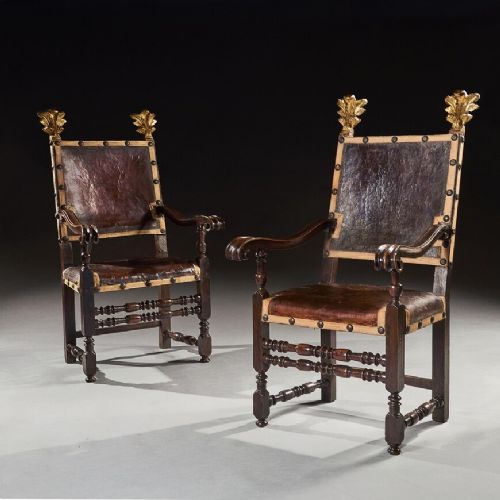
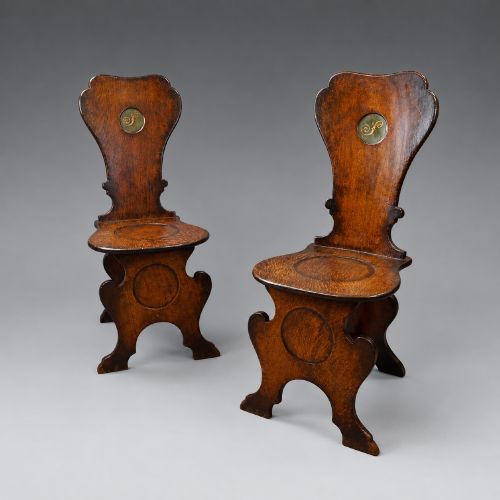
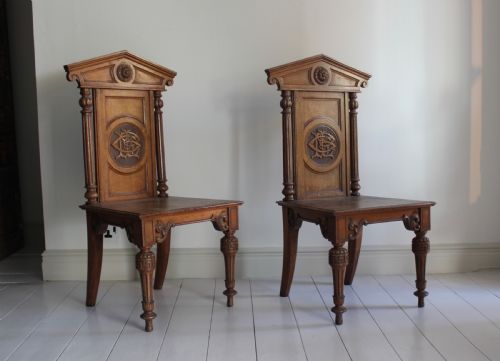


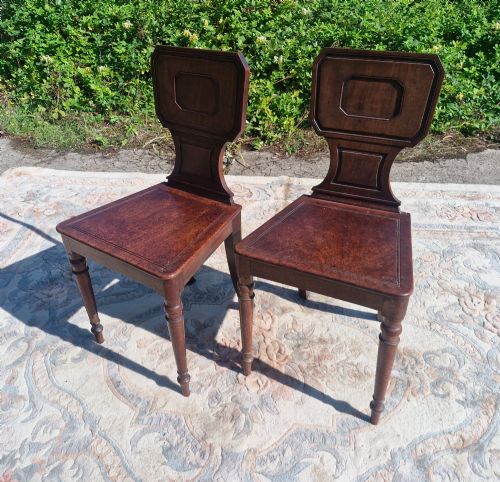
Pair Hall Chairs
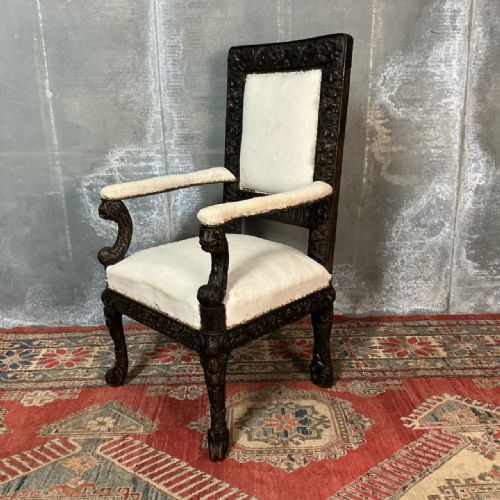
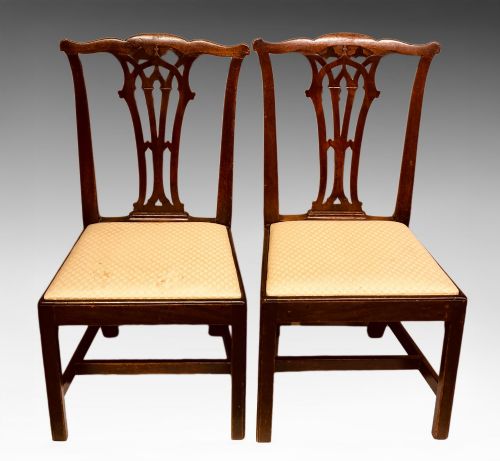
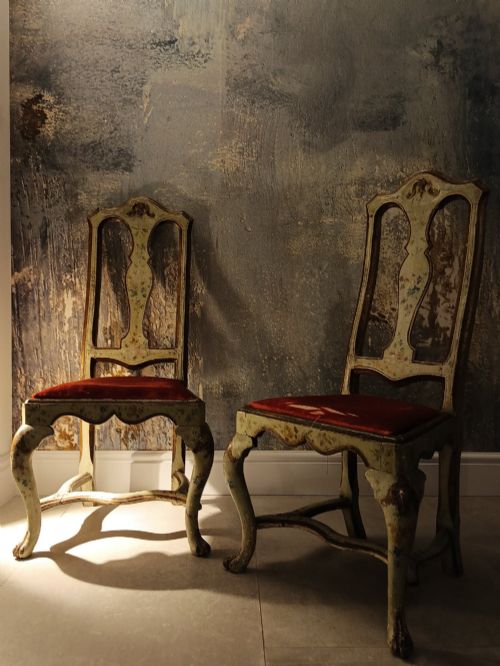
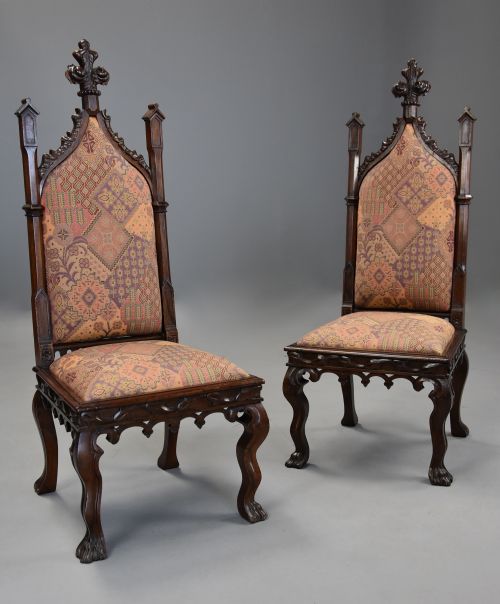
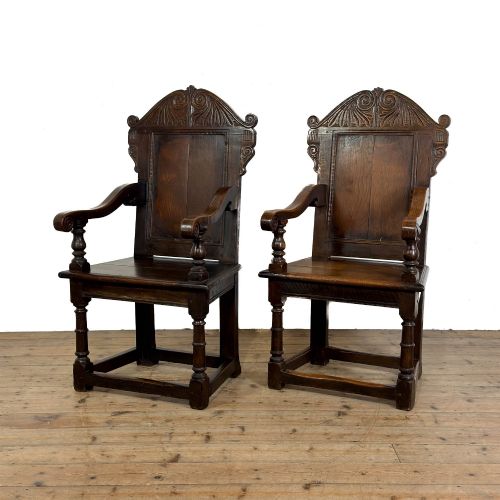
These pair antique hall chairs stand ready for an entranceway, offering robust timber construction and carved detail for daily domestic use.
Identifying pair antique hall chairs
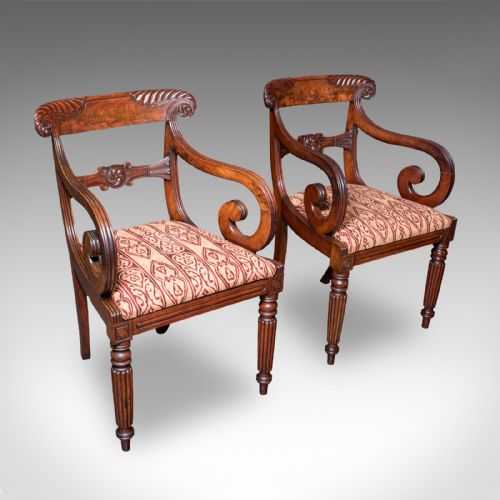
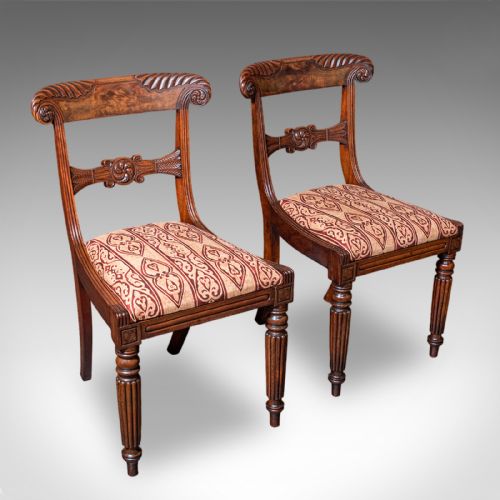
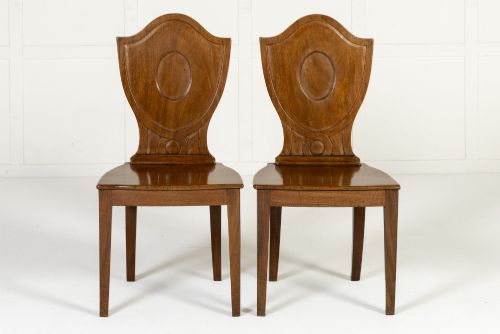
Pair antique hall chairs serve primarily as formal seating for entranceways, corridors, and reception rooms, designed to impress visitors rather than provide lounging comfort. You will encounter these wooden seats most frequently in mahogany or oak, often bearing carved crests, shields, or shell motifs upon solid panel backs.
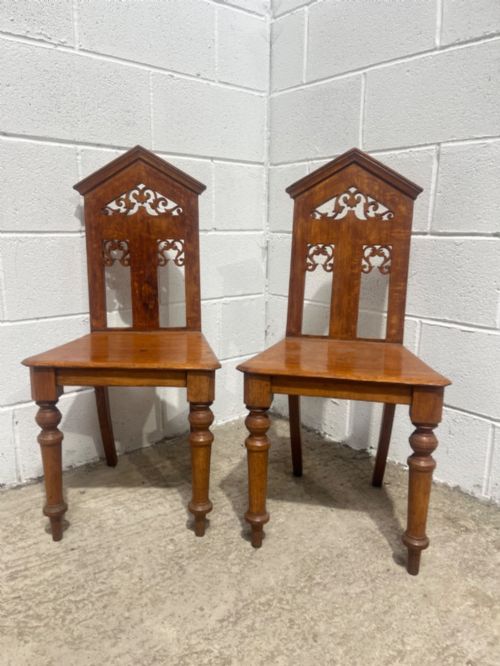
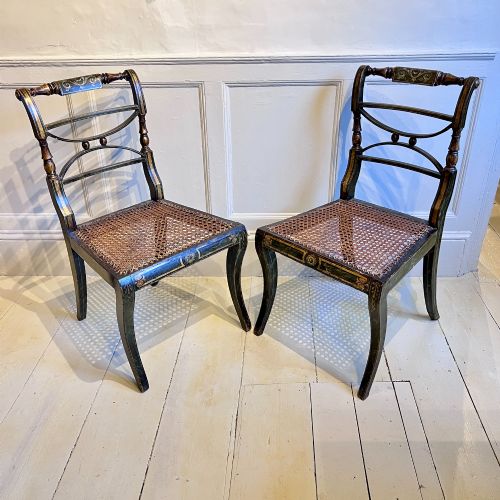
The pieces on this page span the eighteenth and nineteenth centuries, taking forms from Regency elegance to Victorian Gothic Revival and Georgian country styles. Most examples feature rigid timber seats and upright postures suited to their historic placement in grand houses.
Materials and construction methods
Cabinetmakers constructed pair antique hall chairs using durable timbers such as mahogany, oak, elm, and walnut, selecting dense woods capable of enduring heavy traffic. Joinery relies on traditional methods like mortise and tenon joints to maintain rigidity across upright frames.
Carving and marquetry decoration appear across many surfaces, utilising hand chisels to shape shell backs, scrolls, and heraldic crests into solid wood. Some regional variants incorporate rush seating or turned spindle backs built by local joiners.
Retail Price Guide 2026
Typical UK retail prices for pair hall chairs, calculated from the Sellingantiques database of over a million retail prices indexed since 2003. This retail price guide relies exclusively on Sellingantiques data; no external sources or auction records are used, so the figures do not describe the wider market.
Listings feature mahogany, oak, elm, walnut, and pitch pine across styles from the Georgian, Regency, and Victorian periods.
Distinctions in quality
The upper tier of pair antique hall chairs displays deeply carved figuration, crisply defined heraldic crests, and dense figured mahogany or richly patinated oak selected by skilled makers. Lesser examples exhibit simpler turned legs and flat timber panels with minimal ornament.
Structural integrity and timber selection dictate the standing of each piece, where heavy, well-seasoned wood maintains its original joints without excessive movement or repair. Refinement in the proportion of the backrest and the sharpness of the hand-carved details separate standard utility pieces from high-status commissions.
Gillows
The Pair Hall Chairs Glossary
- Shell back
- A carved motif resembling a scalloped seashell, frequently found on the wooden backrest of formal hall seating.
- Curule
- An ancient Roman shape forming an X-frame structure, seen on revival armchairs in the selection.
- Marquetry
- Inlaid patterns of contrasting wood veneers applied to decorative surfaces, seen on walnut variants.
- Shield back
- A chair back shaped like a heraldic shield, popular during the Georgian and Victorian periods.
- Bar back
- A horizontal wooden splat across the upper backrest, common on dining and hall chairs.
Frequently Asked Questions
Where were pair antique hall chairs placed?
These seats stood primarily in entrance halls, corridors, and grand reception spaces of large houses. Their upright form discouraged lingering, serving visitors while they waited.
They were intended to make an immediate impression on guests entering the home rather than to provide long-term comfort.
Are these chairs comfortable for daily sitting?
Historical hall seating prioritises rigidity and formal posture over ergonomic comfort. Most examples feature solid wooden seats without upholstery.
Consequently, they function best as decorative accent pieces or occasional seats rather than primary lounge chairs.
How do I date a pair of hall chairs?
Dating relies on observing the timber, the style of the carved motifs, and construction techniques. Georgian pieces often display restrained mahogany lines, while Victorian examples lean towards heavier oak and Gothic revival details.
Matching the turned elements and backrest shapes to known design periods helps establish the approximate decade of manufacture.
What woods were used for hall chairs?
Cabinetmakers utilised dense hardwoods capable of withstanding heavy daily use in busy corridors. Mahogany and oak dominate the selection, alongside elm, walnut, and pitch pine.
Regional country pieces occasionally incorporate rush and softer woods suited to local workshop traditions.