

Pair Chests
When furnishing a bedroom with symmetry in mind, pair antique chests offer matching storage through bedside cabinets, commodes, and small drawer units.
Pair Chests
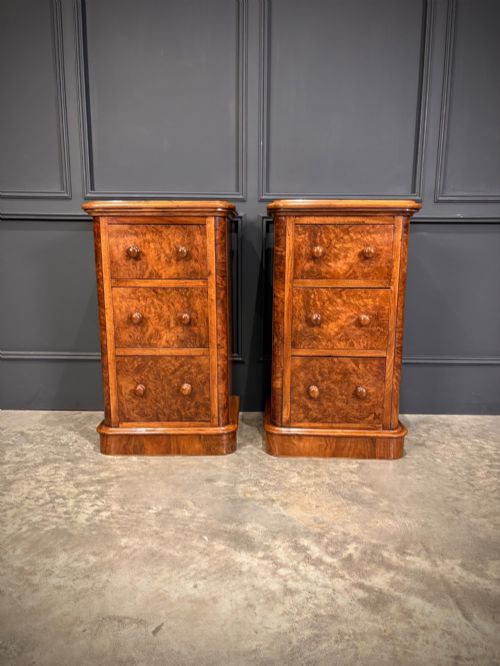
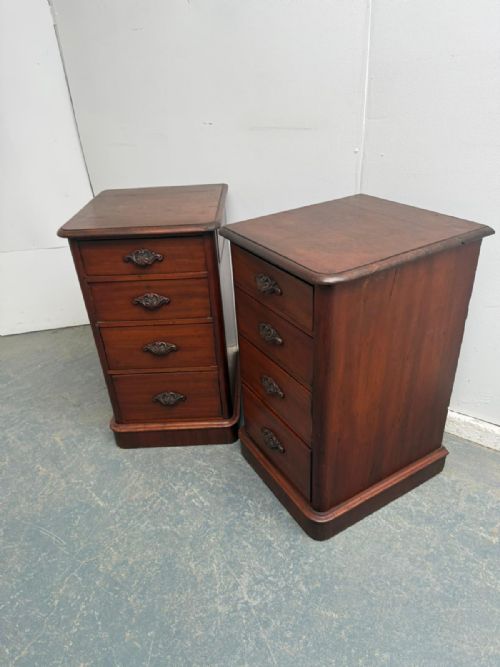
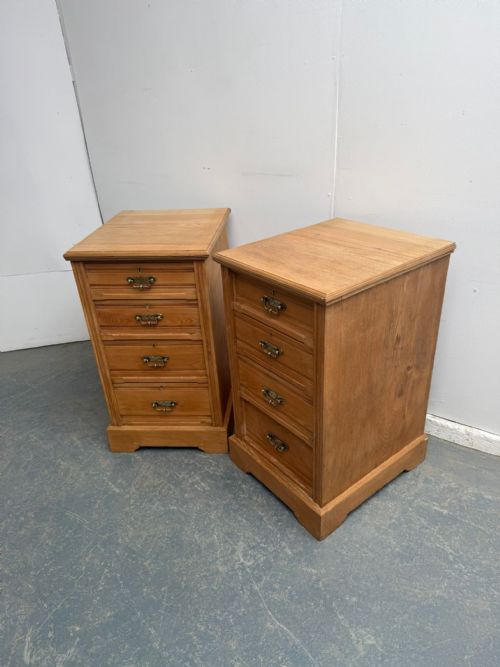
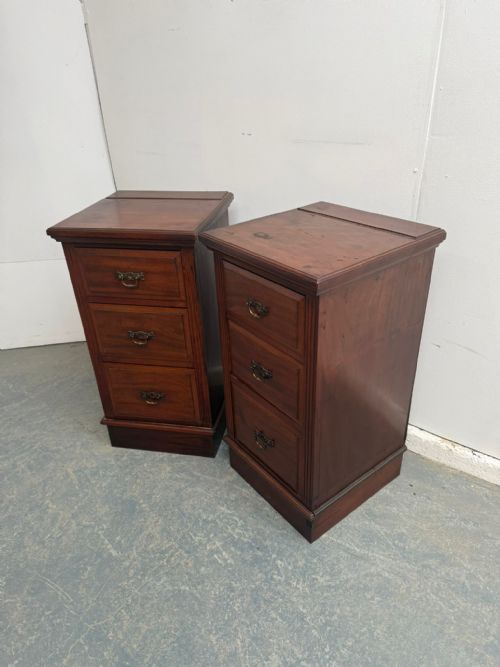
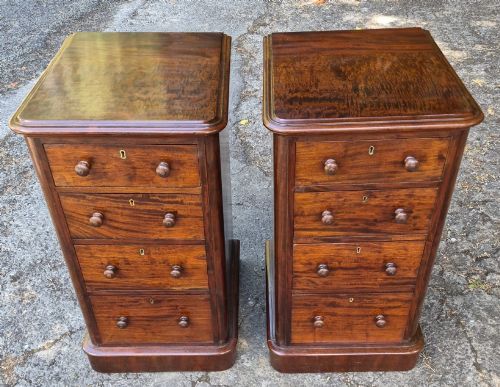
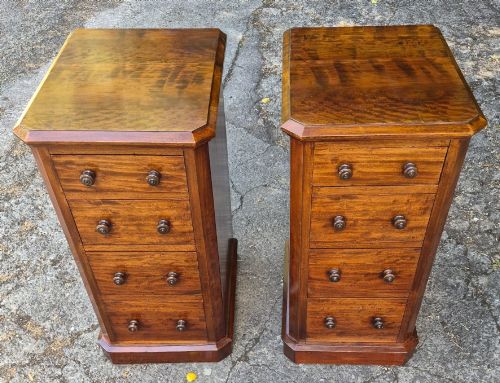
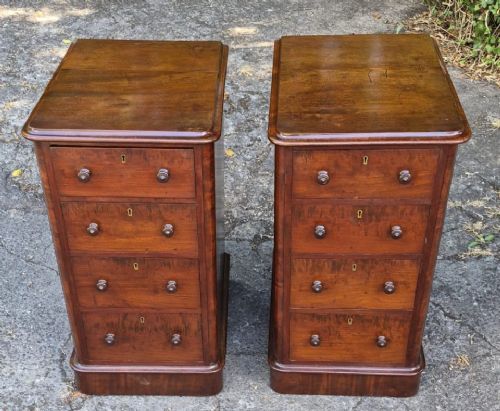
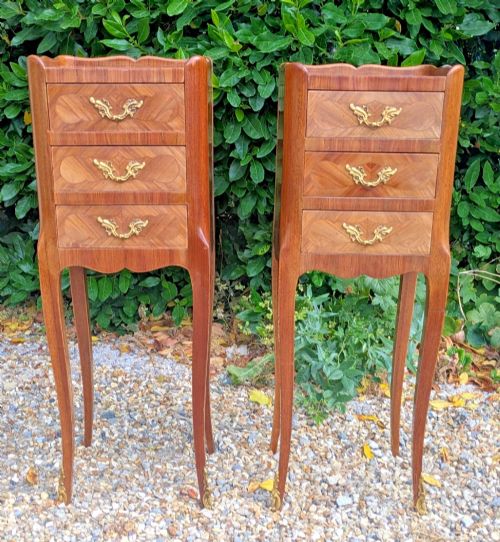
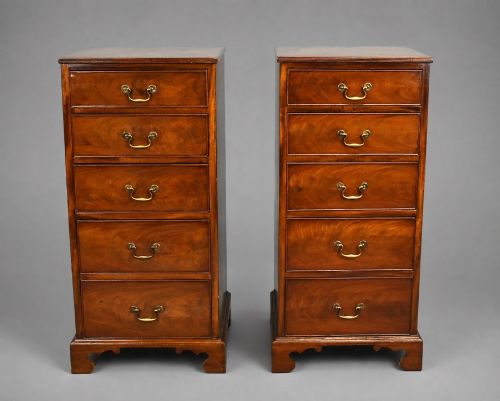
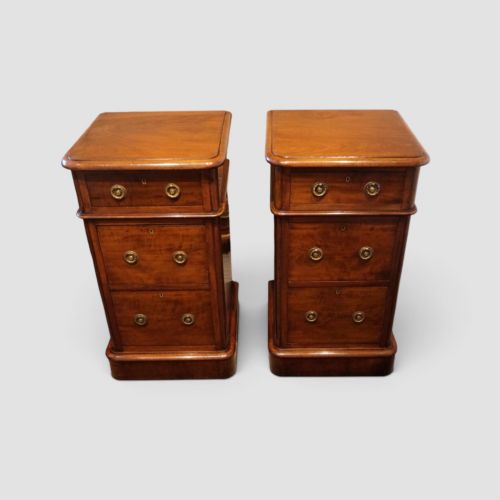
When searching for pair antique chests, buyers encounter matching sets of small storage furniture designed primarily for bedside use, flanking a bed or positioned as lamp tables. The most common form on this page is the Victorian or Edwardian bedside chest in mahogany or burr walnut, featuring three or four small drawers.
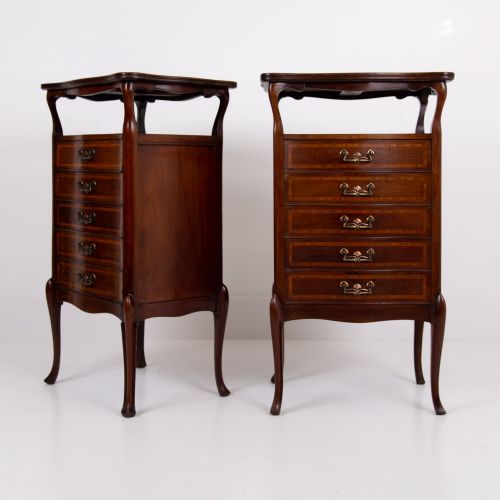
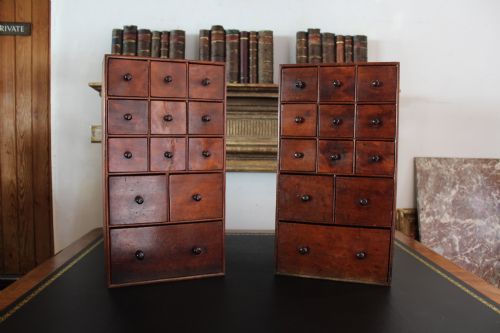
Beyond standard bedroom chests, the selection includes French commodes, bombe cabinets, and specialised forms such as apothecary drawers, military campaign chests, and tabletop pieces. These items bridge decorative intent and practical storage, appearing in revivals spanning Georgian through Art Deco styles.
How they were made
Timber selection dictated the construction, with solid mahogany, walnut, and oak forming the robust carcases of British pieces, while French examples frequently utilise exotic veneers like kingwood and satinwood. Marquetry and parquetry inlay add geometric or floral patterns across drawer fronts and tops.
Surface finishing relies on traditional waxing or French polishing to highlight the grain of flame mahogany and burr walnut. Metal mounts in brass or ormolu provide structural reinforcement and decorative accent, particularly on French commodes and campaign styles.
Apothecary chests once stored dried herbs and pills, ready to cure nineteenth-century ailments right beside the bed.
What varies in quality
The standard of timber preparation and matching defines the upper tier of these pieces, particularly where book-matched burr walnut or intricate marquetry grain flows symmetrically across both items in a pair. Lesser examples rely on plain secondary timbers with less disciplined veneer work.
Hardware integration and drawer construction reveal the maker's hand, distinguishing finely dovetailed joints and original brass handles from later adaptations or replacements. Marble tops on French commodes vary from simple slabs to thick, figured marble shaped to serpentine or bombe carcases.
Warings Liverpool·Heals·E. Kahn
The Pair Chests Glossary
- Bombe
- A swelling, outwardly convex shape found on cabinet sides and drawer fronts, popular in continental furniture designs.
- Ormolu
- Gilded bronze used for decorative mounts, handles, and feet on finer cabinets and commodes.
- Marquetry
- Decorative patterns formed by inserting pieces of contrasting veneer into a wood foundation.
- Wellington chest
- A tall, narrow chest of drawers secured by a hinged locking stile that fastens with a key.
- Campaign chest
- Modular furniture built in sections with recessed brass handles, designed for easy transport by military officers.
Pair Chests: Frequently Asked Questions
How do I match different wood tones?
Matching wood tones relies on identifying the primary timber, such as mahogany or walnut, rather than expecting identical colouration across centuries. Natural ageing and previous polishing create variations that harmonize when placed on opposite sides of a bed.
Secondary details like brass hardware or inlay styles often bridge minor discrepancies in timber shade. Embracing the natural patina ensures a cohesive appearance without requiring identical finishes.
Are these chests suitable for modern beds?
Many historical bedside chests sit lower than contemporary mattress heights, making proportion an important consideration before purchase. Checking the specific height dimensions ensures comfortable access to the surface from a modern bed.
Compact footprints allow these pieces to fit into tight bedroom layouts where standard bedside tables might feel bulky. Their multiple drawers provide hidden storage that open bedside surfaces lack.
How do I distinguish French from English styles?
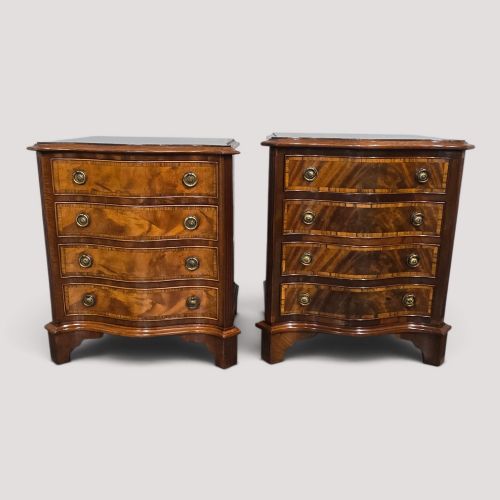
French commodes and bedside cabinets frequently feature serpentine or bombe shaping, intricate kingwood veneer, and marble tops. These designs prioritize decorative curves and elaborate ormolu mounts over rectilinear forms.
English pieces tend to emphasise structural timber grains like flame mahogany or burr walnut with cleaner lines. Georgian and Victorian English chests often use traditional bracket feet or plinth bases rather than elaborate cabriole legs.
What is the difference between a commode and a chest?
Historically, commodes referred to low decorative cabinets with doors or drawers, often featuring shaped fronts and marble surfaces in French designs. In modern usage, the term frequently overlaps with decorative bedside chests of drawers.
Standard chests focus purely on stacked drawer storage without the serpentine curves or specialised top slabs typical of continental commodes. Both forms serve similar functional roles in a bedroom setting.