
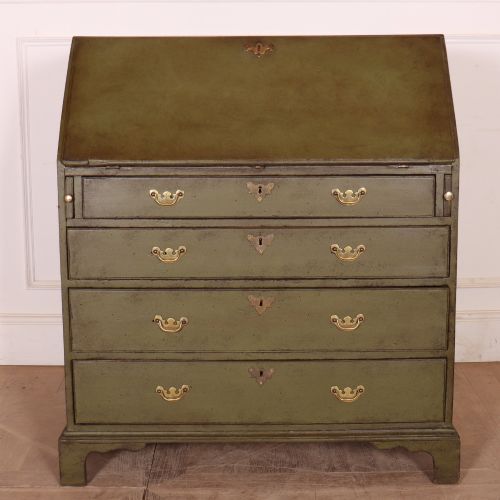
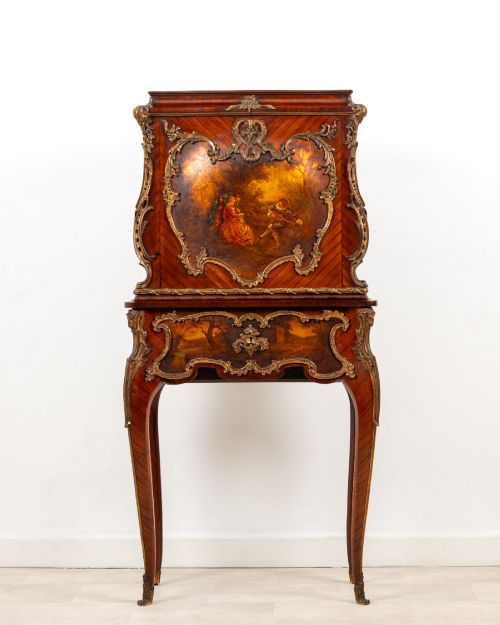
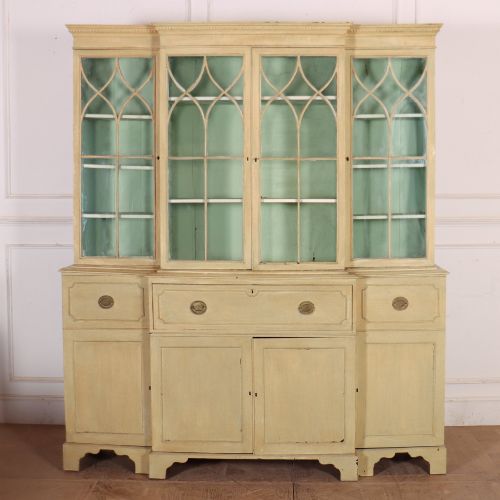


Painted Writing Desk Cabinet
These painted writing desk cabinet pieces combine fitted writing surfaces with concealed compartments and decorated exteriors, offering both a functional workspace and a striking decorative presence.
Painted Writing Desk Cabinet
A painted writing desk cabinet brings together a practical writing surface with enclosed storage, ranging from compact bonheur du jour examples to tall bureau bookcases. You are most likely to encounter 18th century English and continental European forms featuring decorative paintwork, lacquer, or vernis martin panels.
The category spans diverse regional traditions, from English satinwood and country pieces to French kingwood secretaires and Scandinavian painted bureaus. These items were designed for domestic writing and correspondence, utilising drop-front writing flaps, pigeonholes, and small drawers.
Makers utilised various decorative schemes on these desks, including Chinoiserie motifs, floral painting, and black lacquer finishes. Selecting a piece involves examining how the writing compartment integrates with the upper cabinet or bookshelf structure.
Factors influencing quality
The finesse of the painted decoration or lacquerwork separates ordinary items from superior examples, with hand-painted details showing greater depth and precision than simpler surface decoration. The choice of underlying timber, such as figured satinwood or kingwood, dictates the base merit of the furniture.
Quality also rests in the execution of the hardware, including chased ormolu mounts, operational secret drawers, and well-fitted interior compartments. The structural integrity of the drop-front flap and the original condition of the painted surfaces remain central to the integrity of each desk.
Materials recorded across the selection include brass, ormolu, glass, kingwood, marble, and painted wood.
The Painted Writing Desk Cabinet Glossary
- Vernis Martin
- A simulated lacquer technique developed in eighteenth-century France by the Martin brothers, using multiple coats of varnish to create glossy, decorative panels.
- Bonheur du Jour
- A light lady's writing desk featuring a small cabinet or set of shelves on top, popular during the eighteenth and nineteenth centuries.
- Secretaire à abattant
- A tall vertical cabinet with a drop-front writing flap that conceals a fitted interior of small drawers and pigeonholes.
- Chinoiserie
- European theatrical interpretations of Chinese and East Asian artistic motifs, frequently applied in lacquer or paint to furniture surfaces.
- Ormolu
- Gilded bronze used for decorative mounts, feet, and keyhole escutcheons on fine furniture, particularly of French origin.
Painted Writing Desk Cabinet: Frequently Asked Questions
What is a bonheur du jour?
A bonheur du jour is a small, light writing desk for women that includes a raised cabinet or bookcase section on top. These pieces typically feature delicate painted surfaces and were used for writing letters or keeping small personal papers.
They emerged during the eighteenth century and continued in various revival styles into the Victorian and Edwardian periods, prioritising elegance alongside utility.
How do I identify a secretaire à abattant?
A secretaire à abattant is a tall, upright cabinet featuring a hinged fall-front panel that pulls down to serve as a writing desk. Behind this flap lie numerous small drawers and pigeonholes for correspondence.
This form allowed makers to conceal a workspace within a compact floor footprint while providing substantial storage space in the upper and lower cupboards.
Where were painted writing cabinets made?
These items were produced across England, France, Sweden, Denmark, and Austria, with distinct regional styles defining their appearance. English workshops favoured satinwood and country pine, while French makers utilised kingwood with ormolu mounts and vernis martin panels.
Scandinavian and continental pieces often display distinctive local folk paintwork or elaborate Chinoiserie decoration influenced by trade with Asia.
How should I care for a painted surface?
Painted and lacquered surfaces require protection from direct sunlight and extreme humidity fluctuations to prevent cracking or fading of the delicate pigments. Dusting should be done gently with a dry, soft cloth without the use of harsh chemical polishes or modern cleaning sprays.
Maintaining stable indoor environmental conditions preserves both the underlying wood and the fragile decorative layers applied by the original maker.