


Painted Writing Cabinet
A painted writing cabinet brings charm and a functional workspace to a room, uniting decorative surface art with practical domestic storage.
Painted Writing Cabinet
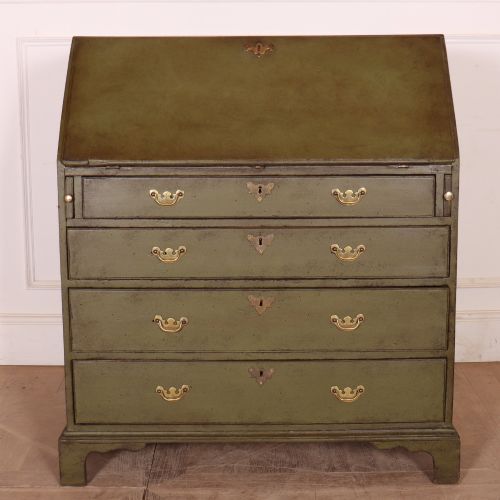
A painted writing cabinet serves as a dual-purpose piece for storage and correspondence, uniting a writing surface with compartments or drawers. When you search for a painted writing cabinet, you encounter diverse forms ranging from compact satinwood bonheur du jour desks to larger bureau bookcases and upright secrétaires. These pieces draw from eighteenth-century Georgian traditions, nineteenth-century revival aesthetics, and Scandinavian or English country workshops.
The construction typically incorporates a drop-front writing flap or pull-down abattant that conceals pigeonholes and small drawers. Examples on this page span several centuries, including eighteenth-century English and Danish painted bureaux alongside nineteenth-century French and Chinese lacquered variants. Each form adapts the basic writing cabinet architecture to suit the changing decorative tastes of its period.
Materials and construction methods
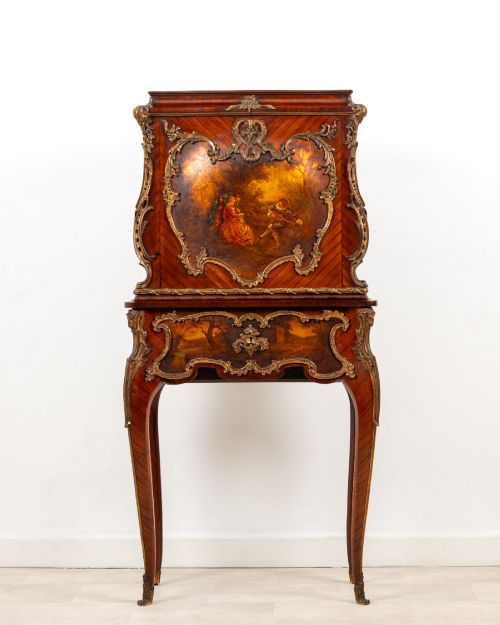
Cabinetmakers utilised timber carcasses built from mahogany, satinwood, kingwood, or general painted wood, often applying decorative layers of paint, lacquer, or Vernis Martin panels. Surface decoration frequently involved hand-painted motifs, Chinoiserie scenes, or gilt details executed across wood panels.
Structural embellishments relied on brass hardware, ormolu mounts, marble tops, and occasionally glass doors for upper bookcase sections. These materials combined structural timbers with decorative finishes to create visually striking yet practical items of furniture.
Some nineteenth-century writing cabinets conceal secret drawers operated by hidden wooden springs for storing private correspondence.
Evaluating craftsmanship and condition
Quality in these pieces rests upon the precision of the cabinetwork and the execution of the painted or lacquered surface. Superior examples demonstrate refined proportions, tightly fitted internal drawers, and hand-painted details that retain their clarity and depth across the wood or lacquer.
The integration of decorative elements, such as ormolu mounts, marble tops, and brass fittings, also distinguishes finer pieces from simpler utilitarian versions. Original painted surfaces or well-executed period restorations hold greater aesthetic coherence than later, unsympathetic repainting.
The Painted Writing Cabinet Glossary
- Secrétaire à abattant
- A tall writing cabinet featuring a hinged fall-front panel that drops down to create a horizontal writing surface. This form typically conceals an arrangement of small interior drawers and pigeonholes.
- Bonheur du jour
- A light, elegant lady's writing desk originating in the eighteenth century, usually featuring a small cabinet or set of shelves upon the upper surface. These desks are frequently decorated with satinwood or fine paintwork.
- Vernis Martin
- A type of translucent, lustrous varnish developed in eighteenth-century France to imitate Asian lacquer. Artisans applied it over painted or metallic leaf decorations on furniture panels.
- Chinoiserie
- European decorative style reflecting Chinese artistic influences, popular during the eighteenth and nineteenth centuries. It appears on cabinets through painted landscapes, figures, and motifs in gold and black lacquer.
- Bureau bookcase
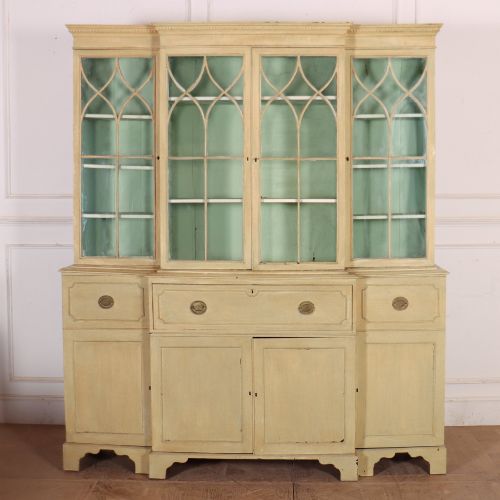
- A dual-purpose furniture form combining a lower writing bureau with an upper glazed or panelled bookcase section. These large pieces provide both workspace and display storage.
Painted Writing Cabinet: Frequently Asked Questions
What is a bonheur du jour?
A bonheur du jour is a small, light lady's writing desk developed in France during the eighteenth century. It typically includes a tiered upper section with shelves or a small cabinet above the writing surface.
These pieces were designed for informal correspondence and boudoir use, often standing on slender legs and showcasing delicate satinwood or painted finishes.
How do I identify Vernis Martin?
Vernis Martin refers to a specialised resin varnish used by French cabinetmakers to replicate the depth and sheen of Asian lacquer. It creates a smooth, glossy surface over painted pastoral or Chinoiserie scenes.
Examining the surface under natural light reveals the layered translucent quality characteristic of this eighteenth-century technique, which was later revived during the nineteenth century.
Where were bureau bookcases used?
Bureau bookcases served as primary administrative and storage hubs in domestic interiors, placed in parlours, studies, or libraries. The upper section accommodated books or display items, while the lower bureau provided a private writing desk.
They allowed households to consolidate stationery storage and reading materials within a single upright piece of furniture.
Are Chinoiserie cabinets antique?
Chinoiserie cabinets span multiple eras, encompassing eighteenth-century originals as well as nineteenth-century revival pieces decorated with orientalist motifs. The style involves painted or lacquered scenes featuring figures, pavilions, and natural elements.
Dating relies on assessing the underlying timber construction, the formulation of the lacquer or paint, and the style of the internal drawer dovetails.