

Painted Wooden Tallboy Chest
A painted wooden tallboy chest provides vertical storage with distinct decorative character, uniting practical capacity and historic painted finishes.
Painted Wooden Tallboy Chest
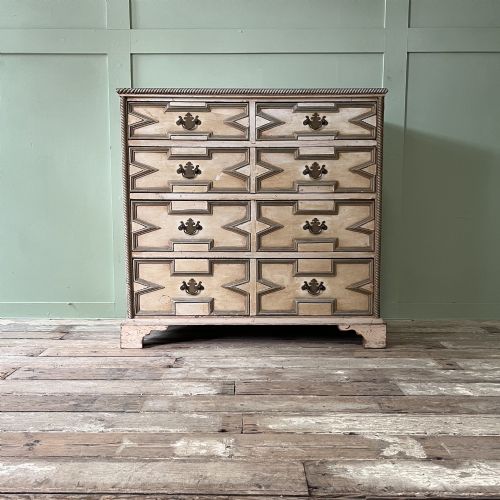
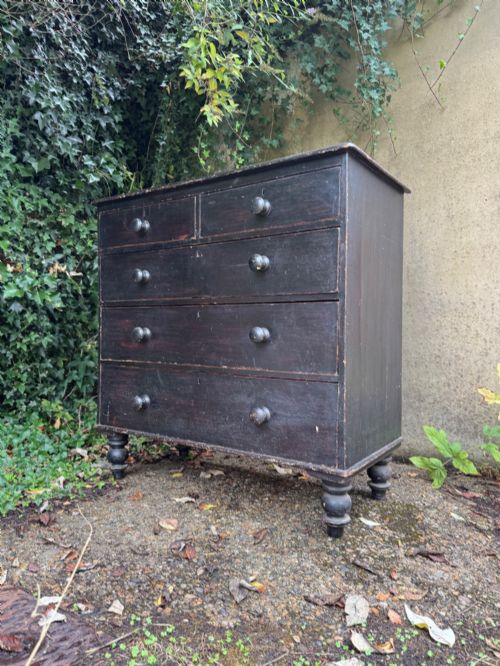
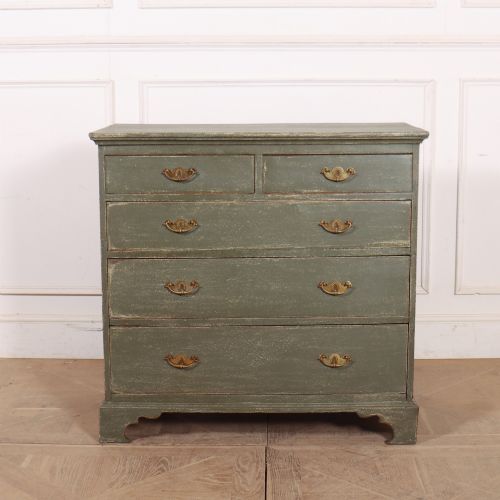
A painted wooden tallboy chest combines multi-drawer storage with a commanding vertical presence, often taking the form of a chest on chest or a tall five-drawer unit. These pieces emerge primarily from the eighteenth, nineteenth, and early twentieth centuries, spanning periods from Regency to Edwardian.
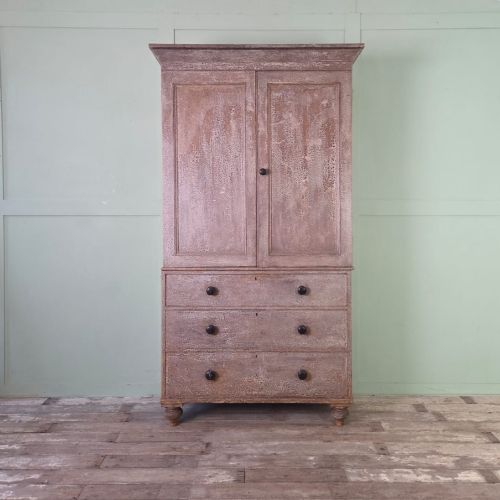
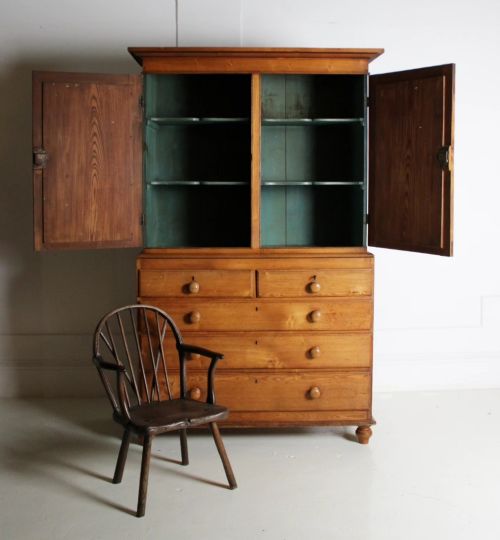
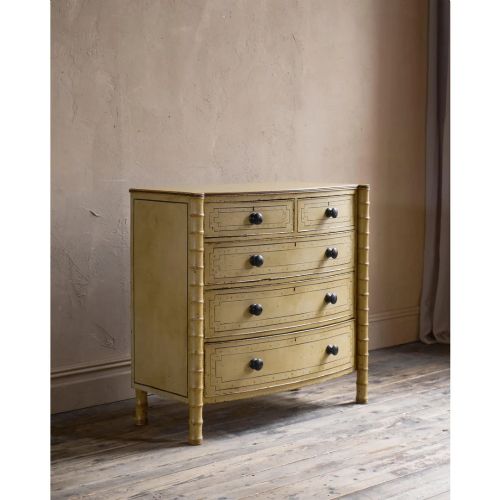
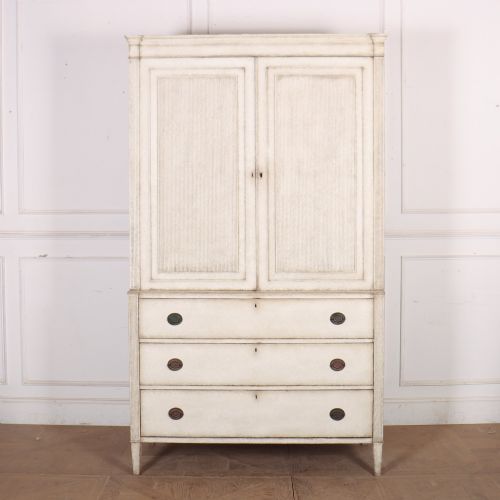
Buyers meet variations ranging from simple pine farmhouse pieces in original paint to sophisticated Chinoiserie or faux bamboo designs. Forms include standard chests, linen presses, and tall cabinets originating from English, Scottish, Scandinavian, and French workshops.
How they were made
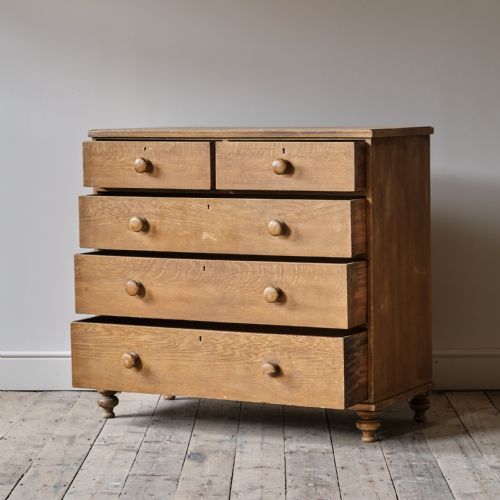
Makers utilised solid timbers such as pine and ash for the main carcase and drawers, frequently constructing taller examples in two separate parts for ease of transport. Metal hardware like brass handles and iron fittings completed the structural assembly.
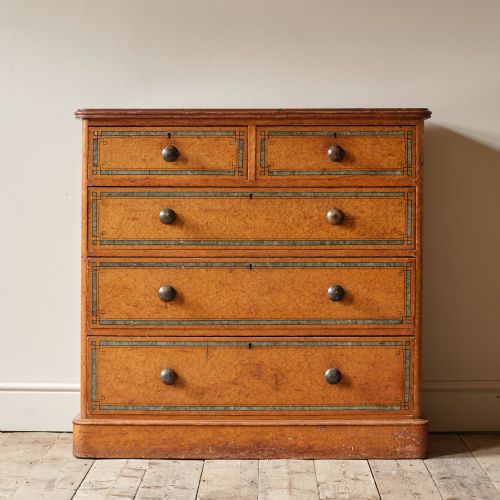
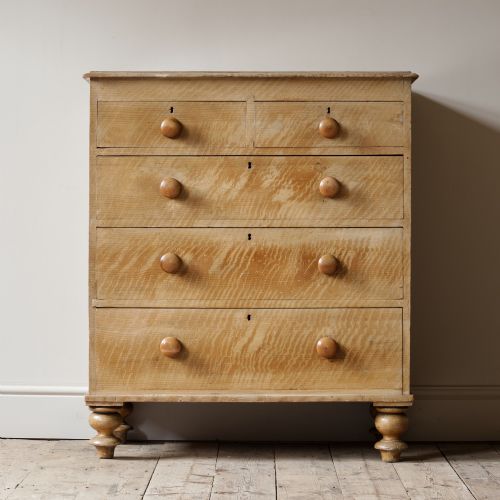
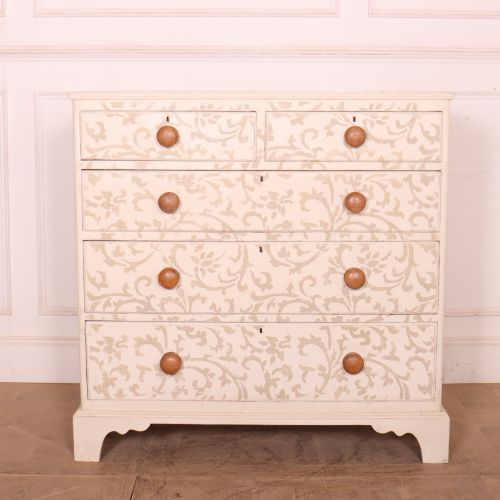
Surfaces were prepared and finished with traditional paints, scumble glazes, or hand-applied colours, often preserving original paint schemes that show decades of wear. Decorative treatments extended to simulated birch effects, chequered patterns, and hand-painted motifs.
Painted Wooden Tallboy Chest Retail Price Guide 2026
Typical asking prices for painted wooden tallboy chest among the pieces listed under this phrase on Sellingantiques today, from the lower quarter to the upper quarter. They describe what is for sale here now, not the wider market.
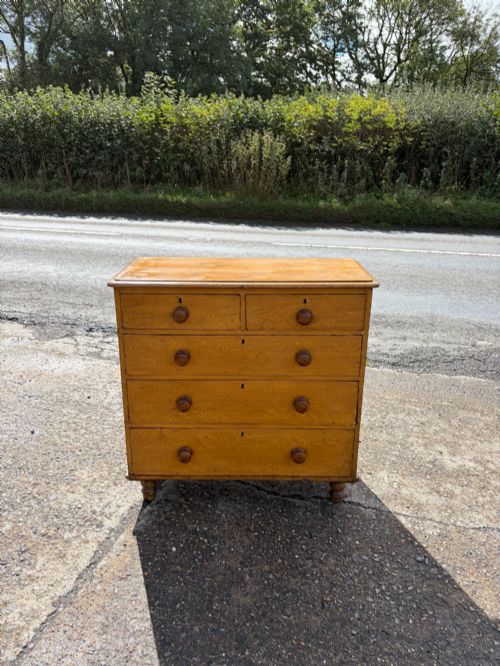
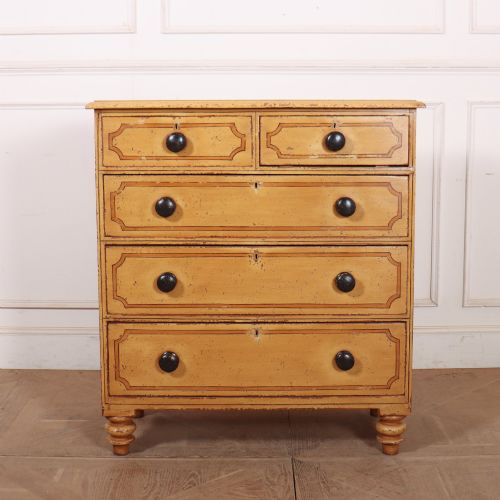
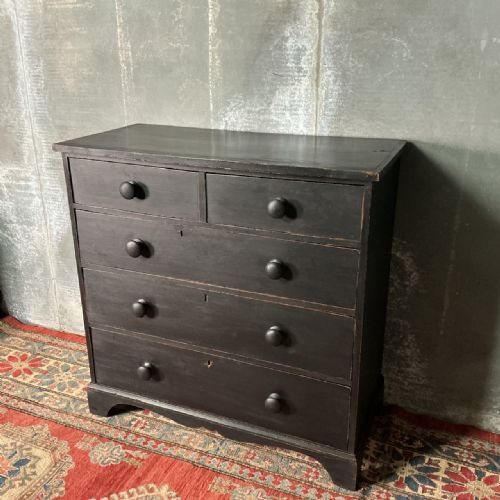
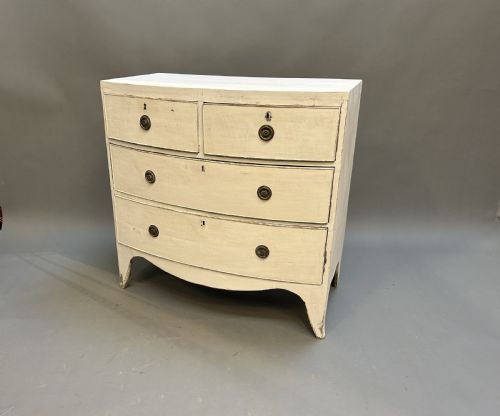
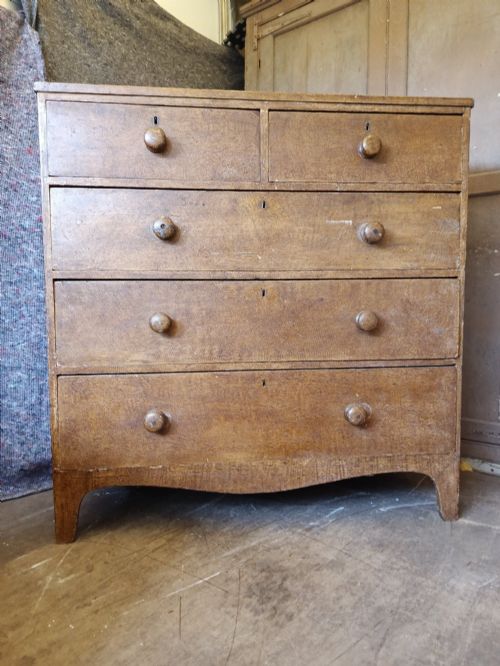
Original paint finishes survive on multiple nineteenth-century pine chests.
What varies in quality
The integrity of the surface finish dictates much of the character, distinguishing untouched original paint from later decorative overhauls. Original pigment layers that retain their historic patina hold greater visual weight than modern repainting.
Construction methods and timber selection also differentiate examples, visible in the stability of multi-part chests on chest and the precise execution of specialised details like faux bamboo turnings or hand-painted Chinoiserie scenes.
Sir Clough Williams-Ellis·Gemla Fabrikers
The Painted Wooden Tallboy Chest Glossary
- Tallboy
- A tall chest of drawers, often formed by placing one chest on top of another to maximise vertical storage capacity without increasing the floor footprint.
- Scumble
- A translucent or semi-opaque glaze applied over a lighter base coat and manipulated with combs or rags to simulate the grain of more expensive woods.
- Faux bamboo
- A decorative technique where solid wood is carved or turned to imitate the segmented stalks of natural bamboo.
- Linen press
- A tall cupboard or chest enclosing sliding trays or shelves originally intended for storing textiles and linens flat.
- Chinoiserie
- European decorative style employing Chinese-inspired motifs, motifs, landscapes, and figures, typically executed in paint and lacquer.
Painted Wooden Tallboy Chest: Frequently Asked Questions
What is a tallboy chest?
A tallboy is a stacked storage unit that provides multiple drawers within a tall vertical frame. This form makes efficient use of floor space while holding a substantial volume of clothing or linens.
Historically, these pieces were built in single or double sections to accommodate the ceiling heights and storage needs of period bedrooms.
Are these chests painted originally?
Many examples retain their original paint or historic surface treatments applied during the eighteenth, nineteenth, or early twentieth centuries. These finishes show natural wear and patination accumulated over decades of domestic use.
Other pieces have undergone later hand-redecoration using traditional colours and techniques to suit domestic interiors.
How do I place a tall chest?
Tall chests require solid wall placement to ensure stability, particularly when holding heavy loads in top drawers. Their vertical height makes them useful in bedrooms and dressing rooms where floor space is limited.
Two-part pieces can be separated slightly for moving and reassembly during room placement.
How are different periods told apart?
Periods are identified through structural details, timber choices, and decorative motifs characteristic of eras like the Regency or Victorian periods. Regency examples often feature neoclassical lines or faux bamboo, while Victorian pieces typically present robust pine construction with five-drawer layouts.
Later Edwardian and early twentieth-century pieces introduce distinct maker signatures or lighter decorative painting styles.