
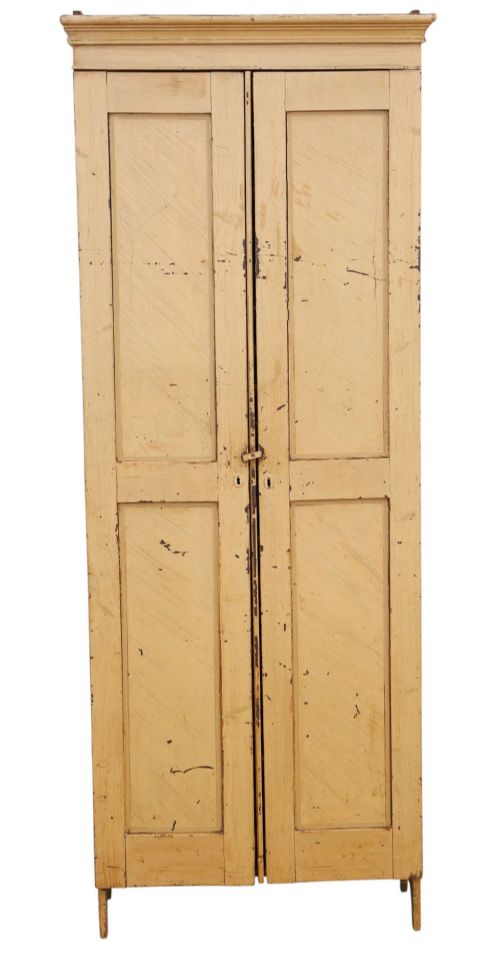
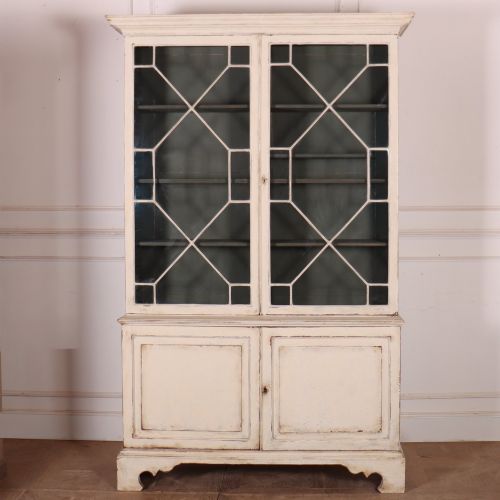
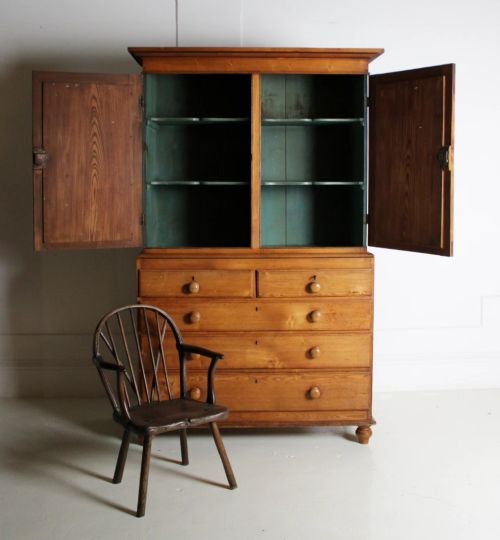
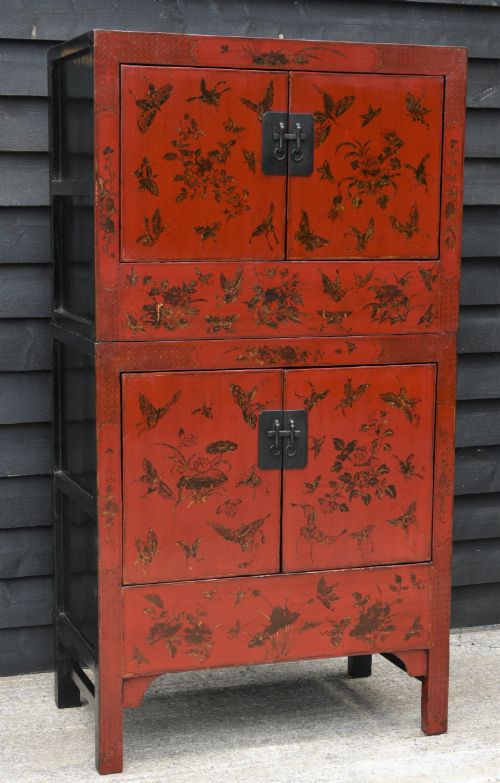
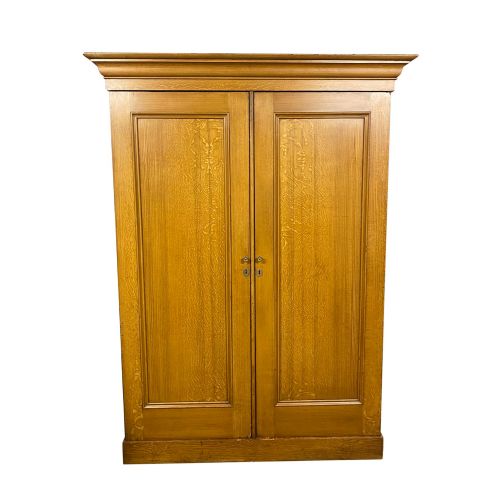
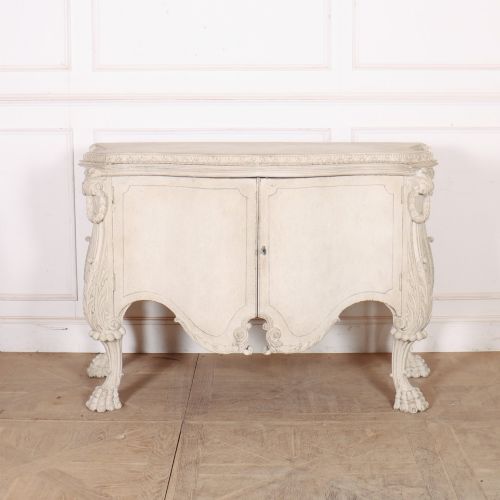
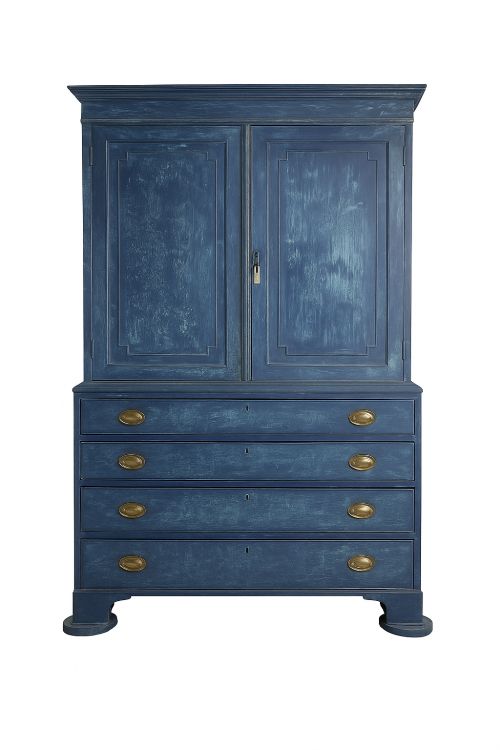
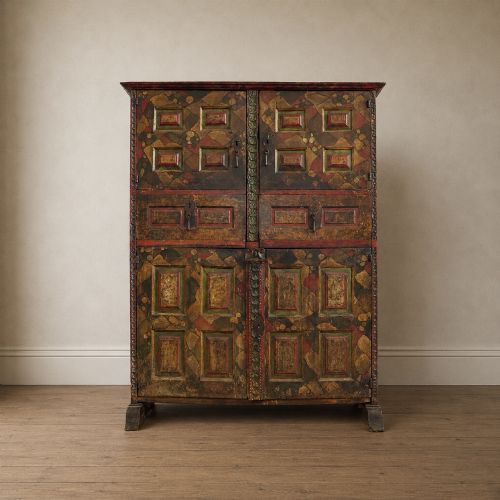
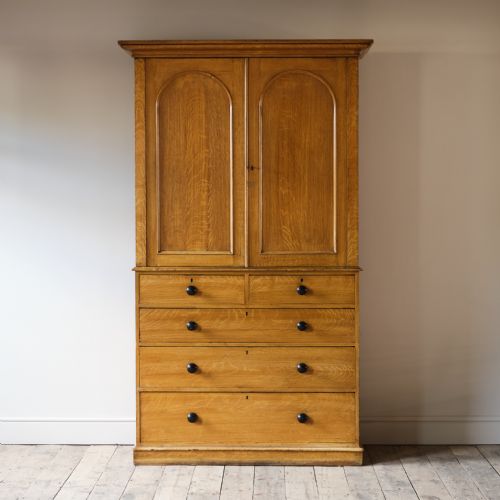
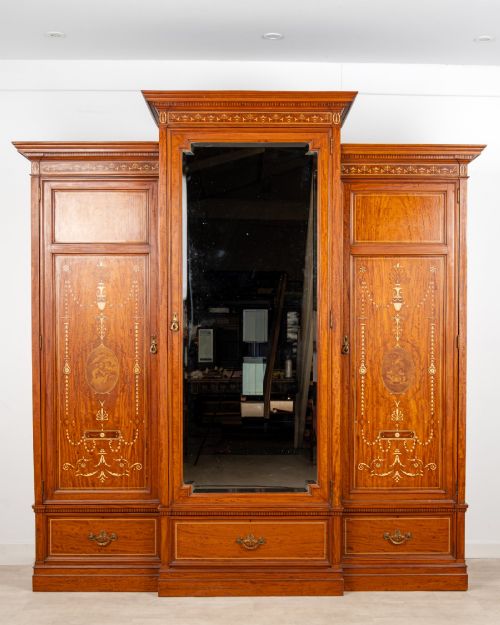
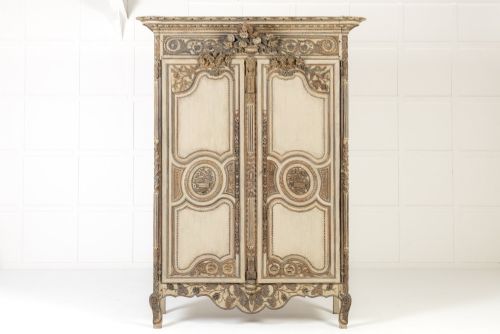
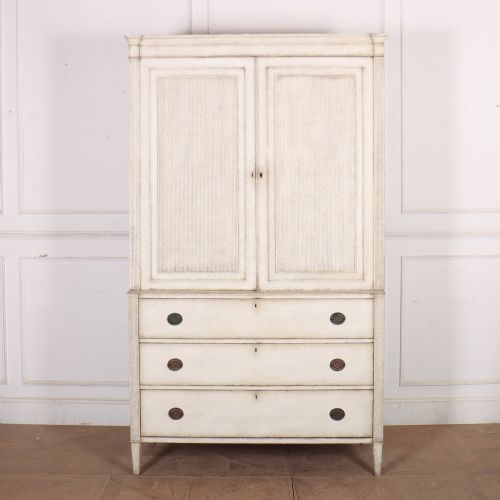
Painted Wooden Linen Cupboard
A painted wooden linen cupboard brings utility and decorative colour to a room, offering generous storage housed within historic character.
Painted Wooden Linen Cupboard
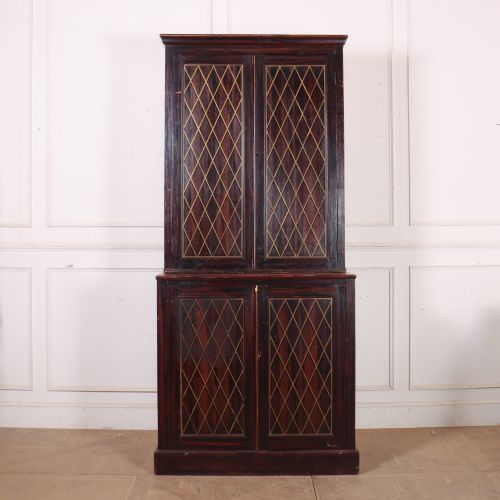
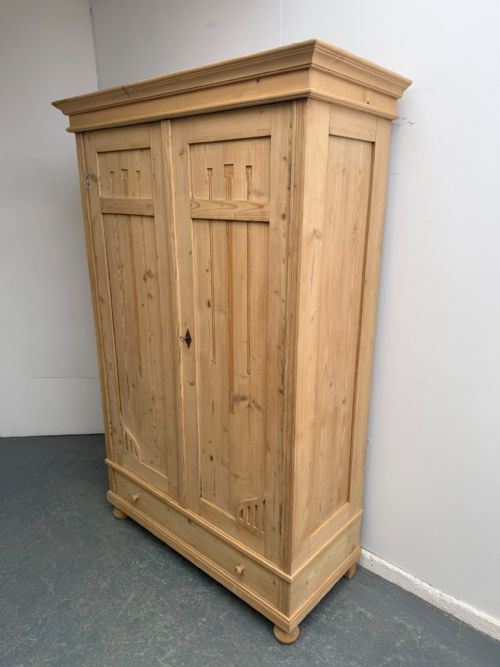
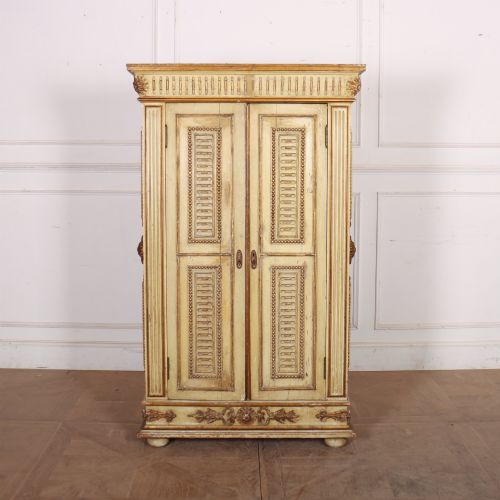
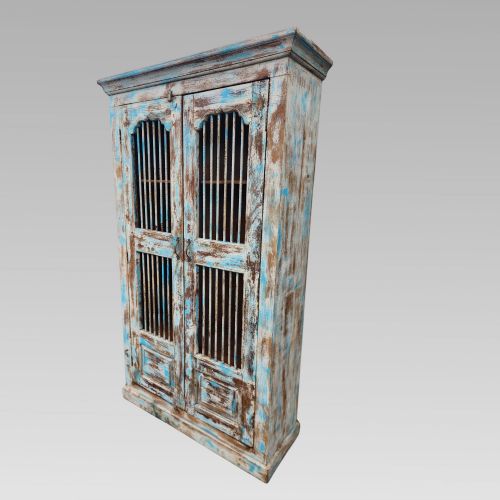
A painted wooden linen cupboard is a utilitarian storage piece encountered in various historical regional styles, including Scandinavian country, English country, and Victorian country forms. These items serve to store household textiles and garments while displaying traditional surface decoration.
The selection ranges from tall nineteenth-century pine housekeeper cupboards and Swedish two-door cabinets to eighteenth-century French armoires and Italian side cupboards. Buyers frequently meet pine and oak examples finished in historic coats of paint, scumble glaze, or polychrome decoration.
How they were made
Construction relies primarily on native timbers such as pine, ash, and oak, often shaped into knockdown wardrobes, presses, and compactum units using traditional joinery. Iron and brass hardware secure doors and hinges, anchoring the heavier wooden frames.
Surface finishes involve layers of paint, ranging from original blue, cream, and red lacquered coats to scumble faux oak paintwork and hand-painted Scandinavian pigments. These finishes protect the underlying wood while defining the regional aesthetic of each cabinet.
Listings feature pieces spanning from the 17th century through to the 1930s, constructed in pine, oak, ash, and teak.
What varies in quality
Quality rests in the survival of original surface finishes, where untouched early paintwork commands greater interest than later repainting. The integrity of the timber construction, from the weight of the pine or oak boards to the retention of period iron and brass fittings, dictates the standing of a piece.
Proportion and regional vernacular detail separate standard utility furniture from finer examples, such as Spanish Basque polychrome cabinets or Georgian press cupboards. Finer items exhibit considered joinery and distinct regional decorative traditions that remain intact across the centuries.
The Painted Wooden Linen Cupboard Glossary
- Scumble
- A decorative painting technique involving a translucent layer applied over a base coat to imitate the grain of wood like oak. It creates textured, aged surface patterns on nineteenth-century furniture.
- Polychrome
- The practice of decorating architectural elements or furniture in a variety of colourful paints. This method appears on Spanish and continental pieces to enrich the visual depth.
- Linen press
- A tall cupboard designed specifically for storing folded linen and garments, usually featuring sliding trays or shelves behind upper doors. Georgian and nineteenth-century examples often combine these with lower drawer sections.
- Compactum
- A fitted wardrobe designed to maximise internal storage by dividing the interior into hanging space, drawers, and shelving compartments. These appear in Victorian and later rooms.
- Armoire
- A large freestanding wardrobe or cupboard used originally for storing arms or garments. French and continental varieties often display panelled doors and traditional painted finishes.
Painted Wooden Linen Cupboard: Frequently Asked Questions
Where were these cupboards used?
These cabinets served utilitarian roles in country houses, farmhouses, and domestic kitchens across Britain, Scandinavia, and continental Europe. They functioned primarily to keep household textiles, linen, and garments clean and organised away from damp air.
Over time, owners moved them from functional service areas into bedrooms, hallways, and living spaces as decorative storage furniture.
How do I identify original paint?
Original paint shows natural wear, craquelure, and integration with the underlying timber that modern repainting cannot replicate easily. Examination under natural light reveals successive layers or age-related softening around handles and edges.
Applied patination sits differently on historic pine and oak surfaces compared to fresh decorative layers added in recent decades.
What is a knockdown wardrobe?
A knockdown wardrobe uses a modular construction held together by wooden pegs, wedges, or internal bolts rather than permanent glue. This clever engineering allowed large cupboards to be dismantled for transport between rooms or properties.
Households utilised this flexibility during the Georgian and Victorian periods when furniture needed to move through narrow staircases.
How do I clean painted wood?
Cleaning requires a soft, dry cloth to remove surface dust without disturbing fragile historic pigments or scumble glazes. Moisture should be kept to a minimum, and commercial detergents must be avoided to protect antique paint layers.
Preserving the dry, matte finish ensures the historic character of the pine or oak remains unaltered.