
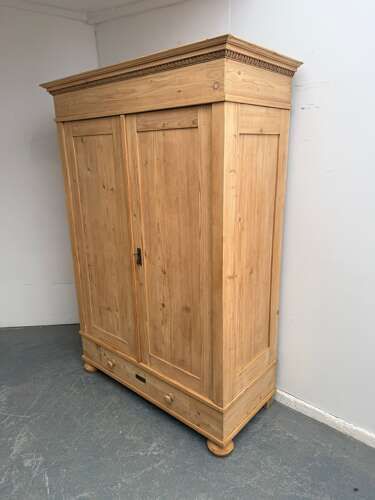
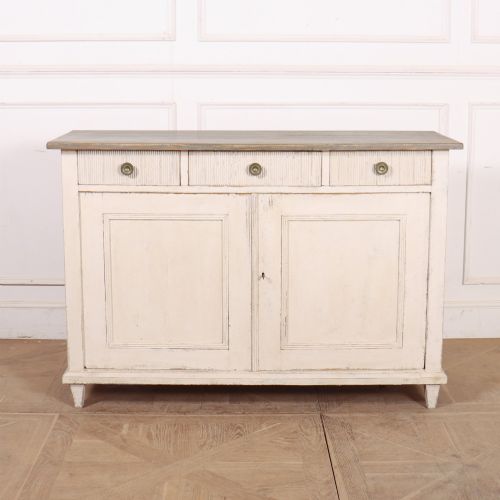
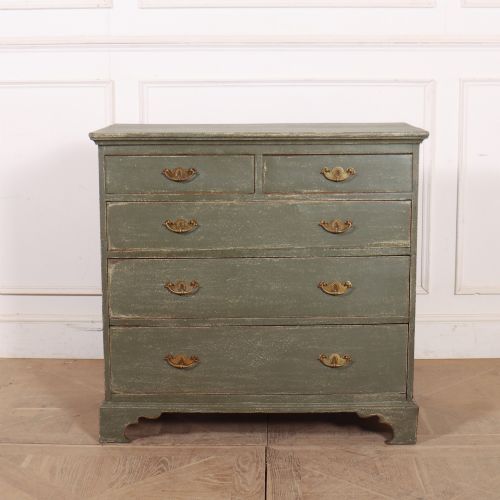
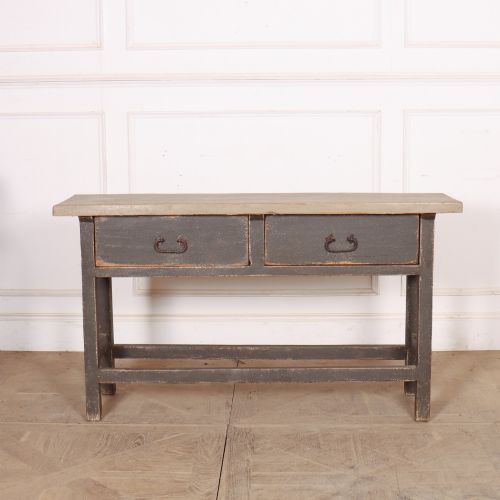
Painted Wooden Drawers
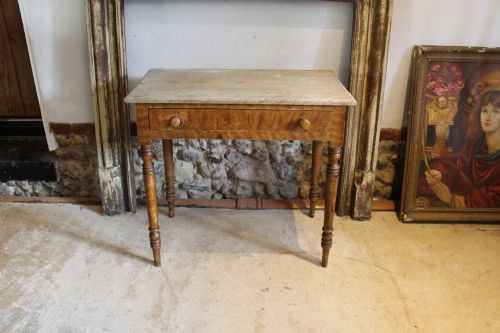
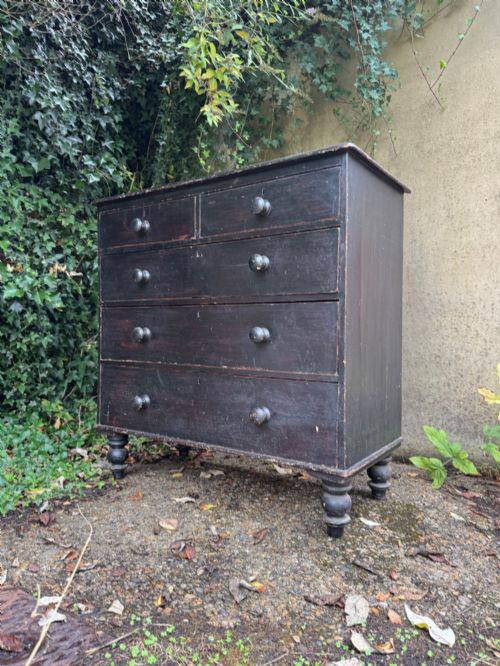
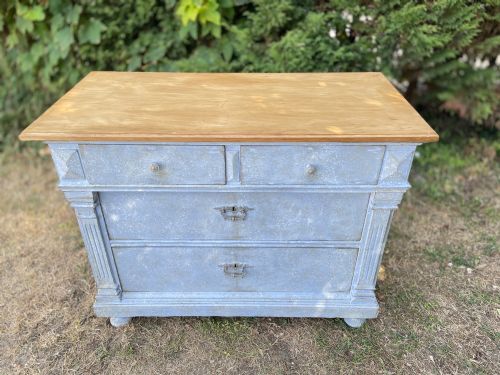
These painted wooden drawers offer functional storage through traditional pine and hardwood carcases finished in historical coats of paint.

Painted Wooden Drawers
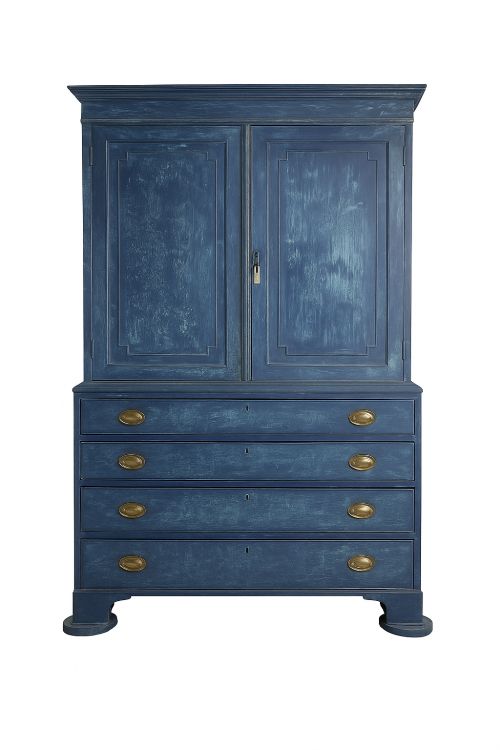
Painted wooden drawers encompass domestic storage forms ranging from nineteenth-century chests and banks of drawers to linen presses and commodes. You are most likely to encounter nineteenth-century and Victorian pine examples finished in original or later surface coatings.
The selection includes regional English country pieces alongside continental styles such as French provincial and Gustavian designs. Makers and workshops span the nineteenth and early twentieth centuries, bringing varied proportions and drawer configurations to domestic interiors.
Materials and Construction
Makers built these pieces primarily from solid pine and timber carcases, incorporating brass and iron hardware such as handles, drawer pulls and key escutcheons. Joinery methods reflect traditional cabinetmaking practices, including two-part construction on larger chests and dovetailed drawer boxes.
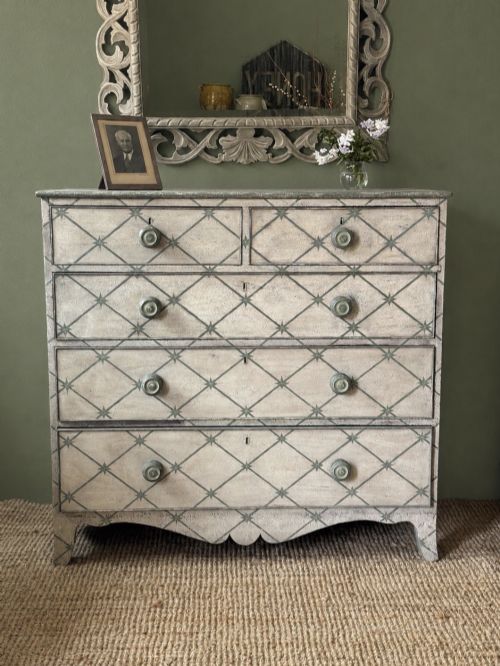
Surfaces received decorative treatments utilising paint, scumble glazes and faux finishes to mimic more expensive hardwoods or provide durable colour. Paint layers frequently survive from the period of manufacture or show later historical overpainting.
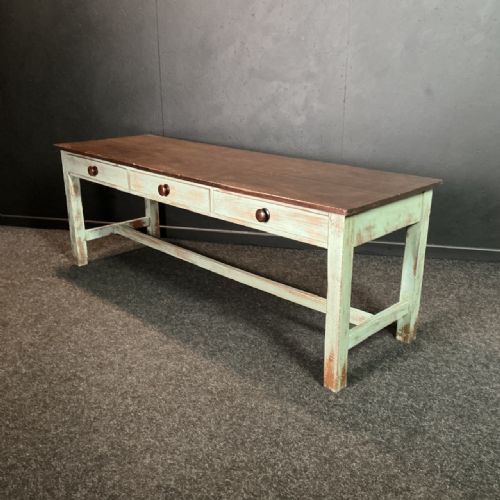
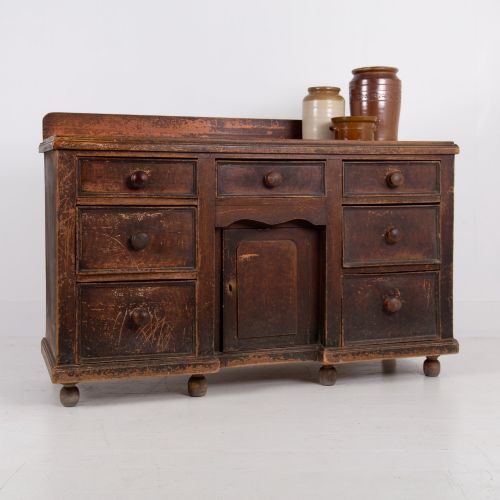
Object forms span conventional chests of drawers and commodes alongside specialised kitchen dressers, console tables and chemist shop fittings.
Assessing Quality
Quality rests in the integrity of the timber carcase, the smoothness of drawer operation and the survival of authentic surface finishes. Pieces retaining undisturbed original paint or scumble work command greater interest than those stripped or repeatedly painted.
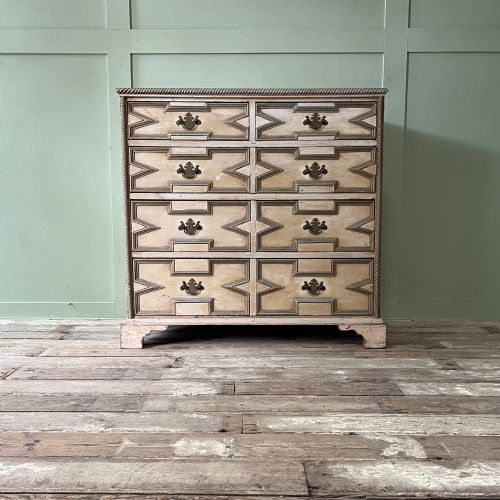
Proportions and decorative detailing set superior examples apart, from diamond-point mouldings to bespoke maker attribution. Structural soundness in the drawer runners and feet dictates how successfully a piece functions in a modern interior.
Sir Clough Williams-Ellis·Edwards and Roberts
The Painted Wooden Drawers Glossary
- Scumble
- A translucent decorative glaze applied over a base coat to create mottled or wood-grained effects. This technique was widely used in the nineteenth century to simulate costly timbers.
- Bank of drawers
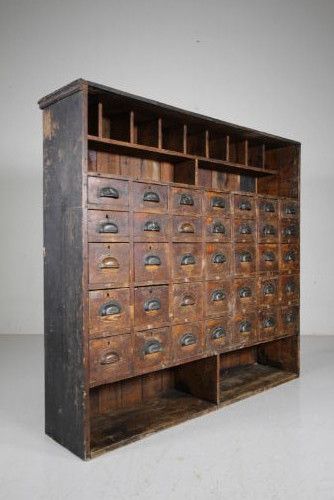
- A large multi-drawer unit originally built for commercial, apothecary or institutional storage. These tall pieces provide substantial organisational capacity.
- Linen press
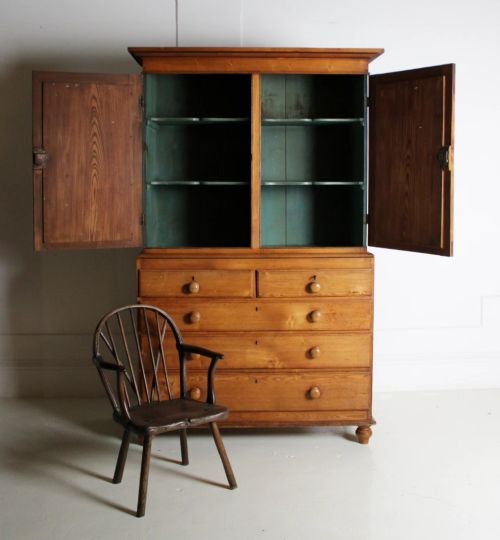
- A tall cupboard featuring upper shelving enclosed by doors and lower drawers for textile storage. They frequently appear in solid pine and ash.
- Commode
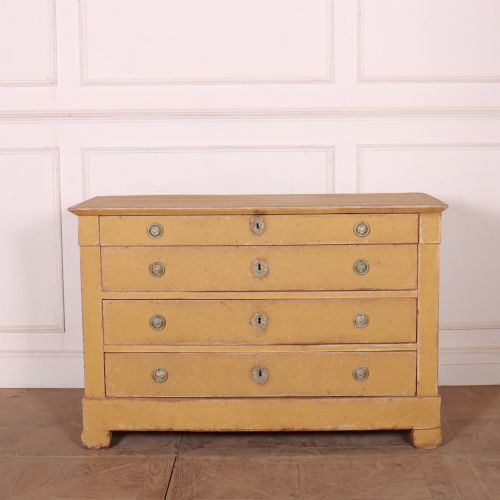
- A low French chest of drawers typically featuring decorative mounts or painted panels. Continental variants often display shaped aprons and neoclassical proportions.
- Faux bamboo
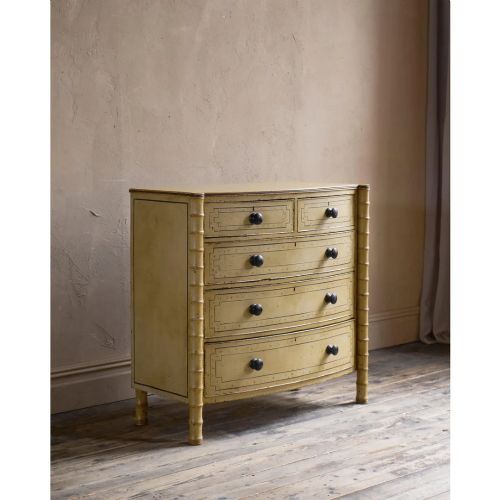
- A decorative turning technique on wood that mimics natural bamboo stems. Cabinetmakers applied this style to nineteenth-century furniture for an exotic aesthetic.
- Mule chest
- A blanket chest fitted with one or more drawers at the base. They bridge the gap between traditional trunk storage and modern drawer chests.
Painted Wooden Drawers: Frequently Asked Questions
How do I date a painted chest?
Dating relies on construction methods such as drawer dovetailing, timber choice and the composition of the paint layers. Nineteenth-century pieces typically employ solid pine carcases with hand-cut joints.
Surface examination reveals whether the paint is original or a later addition. Wear patterns around the drawer pulls and handles offer further clues to age.
Are painted wooden drawers practical?
These pieces provide deep and versatile storage suitable for bedrooms, hallways and living spaces. The drawer carcases run on traditional wooden guides that operate smoothly when properly waxed.
Care involves avoiding direct sunlight and excessive moisture to protect the timber and historic paint surface. Gentle dusting preserves the finish without abrasive cleaning products.
What is original paint?
Original paint refers to the primary decorative surface applied when the piece was first manufactured. This layer shows natural ageing, craquelure and wear consistent with decades of use.
Surviving early paint adds historical significance and character to country furniture. It distinguishes untouched examples from pieces repainted in subsequent eras.
Where were these pieces used?
Chests and commodes served primarily in bedrooms and dressing rooms for personal linen and garments. Larger banks of drawers and presses functioned in shops, country houses and institutional settings.
Their robust construction allowed them to withstand heavy daily use across generations. Today they adapt readily to contemporary domestic interiors as statement storage.