




Painted Wood Settee Bench
These painted wood settee bench options bring classical European seating into domestic spaces, offering decorative painted surfaces and upholstered comfort.
Painted Wood Settee Bench
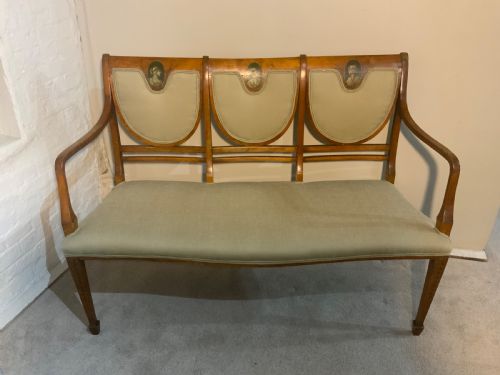
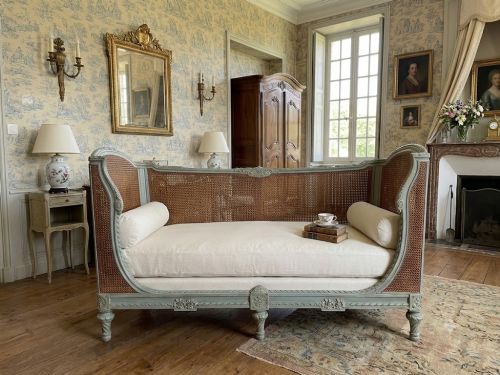
A painted wood settee bench brings together seating for multiple people and a decorative painted finish. These pieces range from compact two-seat sofas to larger daybeds and canapés.
You will most commonly encounter French and Swedish designs on this page. Pieces span periods from the eighteenth century through to the early twentieth century.
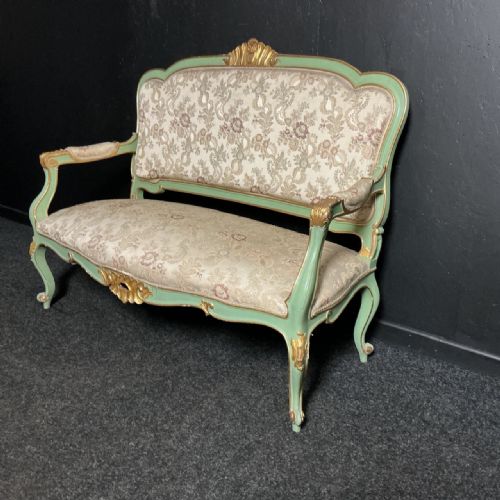
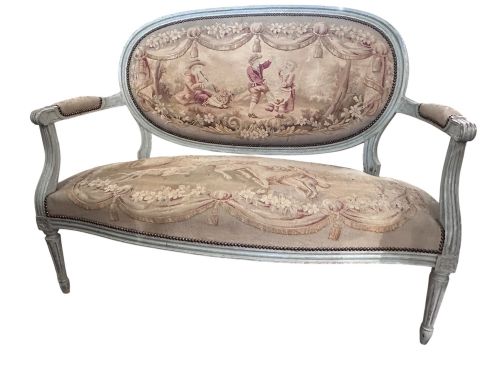
The styles present include Regency, Louis XV, Louis XVI, and Gustavian. These forms often feature exposed wooden frames finished in paint or gilding alongside fabric or cane panels.
Materials and construction methods
Makers utilised woods such as beech and satinwood to build structural frames. These frames were frequently carved with classical details like fluted legs and ornamental motifs.
Surfaces were prepared with paint and sometimes gilt to highlight the woodwork. Upholstery materials included linen and fabric, while other examples integrated woven cane panels into the backrests and sides.
One listed settee carries a literary association with Daphne Du Maurir's Rebecca from around 1920.
Judging the quality of a painted wood settee bench
Quality rests in the crispness of the carved woodwork and the fidelity of the period style. Pieces referencing Louis XVI or Regency designs rely on precise proportions and balanced decorative elements.
The application of the painted or gilded finish significantly influences the character of the piece. Original or well-preserved surface treatments demonstrate a harmonious integration between the woodwork and the textile or cane elements.
The Painted Wood Settee Bench Glossary
- Canapé
- A decorative French sofa or settee featuring an exposed wooden frame. These typically seat two or more people.
- Bergere
- An enclosed upholstered armchair or settee with solid upholstered sides. The design originates from eighteenth-century France.
- Gustavian
- A Swedish neoclassical design style characterised by pale painted finishes and restrained classical ornamentation. This aesthetic emerged during the late eighteenth century.
- Cane
- Woven rattan material used to form breathable panels on chair backs and seat bases. It appears frequently in French seating.
- Regency
- An English design period spanning the early nineteenth century. It draws heavily on classical Greek, Roman, and French motifs.
Painted Wood Settee Bench: Frequently Asked Questions
Where should I place a painted settee?
These pieces suit living rooms, hallways, and bedrooms where seating combines with visual impact. Their decorative frames work well against neutral walls.
Position the settee away from direct heat sources to protect the painted wood and textile elements from drying out.
How do I clean a painted wooden frame?
Dust the wooden surfaces regularly with a soft, dry cloth. Avoid harsh chemical cleaners that might strip the historic paint.
Test any cleaning method on a hidden area first to ensure the painted finish remains undisturbed.
What is the difference between a settee and a sofa?
The terms are often used interchangeably in antique listings. Settee historically refers to a small upholstered bench with a back and arms.
Sofas in older contexts frequently denote larger upholstered seating designs, though both categories overlap extensively here.
How do I identify a Louis XVI style piece?
Louis XVI style seating is distinguished by straight, fluted legs and geometric forms. The ornamentation reflects neoclassical restraint rather than the curves of the preceding Louis XV style.
Look for architectural lines, rectangular backs, and symmetrical carved details.