




Carved Wooden Banquette
A carved wooden banquette offers seating with historical character, bringing refined lines and traditional craftsmanship directly into a hallway, bedroom or living space.
Carved Wooden Banquette
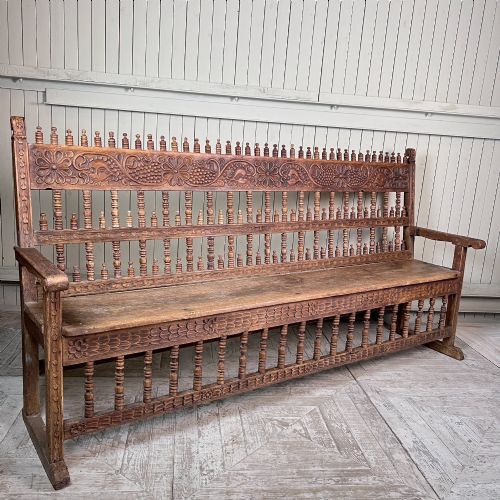
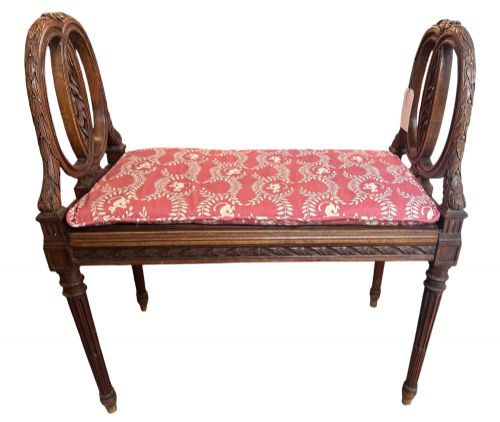
A carved wooden banquette brings together centuries of seating forms, appearing here as benches, window seats, settees and small two-seater sofas. When searching for a carved wooden banquette, buyers generally encounter pieces shaped by French Louis XVI, Neoclassical and Spanish Colonial traditions.
The material evidence spans the eighteenth and nineteenth centuries, alongside early twentieth-century examples from eighteen-eighty to nineteen-twenty. These seats emerge in configurations such as long benches, pairs, and compact end-of-bed seating.
Origins range across European workshops, taking in French chateau and country styles as well as Dutch painted surfaces. A buyer usually meets frames built from walnut, oak, beech, hardwood and painted or gilded wood.
How they were made
Makers shaped these frames from solid timbers including walnut, oak, beech and general hardwood, applying carving directly to the wood. Surfaces often received paint or gilding, transforming the structural timber into decorative furniture.
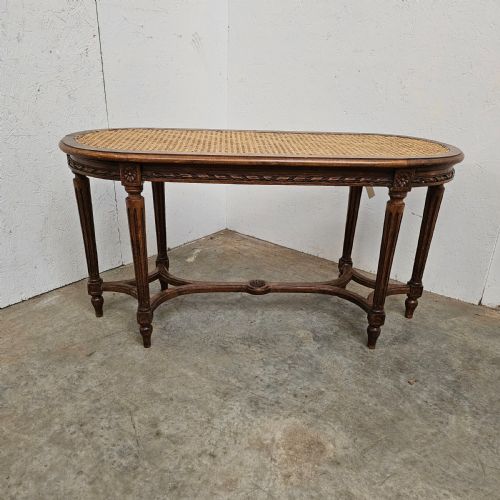
Upholstery completed the forms, utilising traditional fabrics alongside contemporary textiles such as Vaas by Emma Grant. Canework also appears, woven directly into wooden frames to create light, breathable seating panels.
Listings span the eighteenth, nineteenth and early twentieth centuries, recording forms from simple oak benches to gilded window seats.
What varies in quality
Quality rests in the precision of the hand-carved detail and the integrity of the underlying timber frame. Finer examples display crisp botanical or classical motifs carved directly into solid walnut, oak or beech, whereas simpler pieces rely on basic turned or moulded lines.
The treatment of the finish distinguishes the work, from original painted or gilded surfaces to carefully restored frames. The integration of materials such as cane or specialist upholstery fabric also elevates the execution of the piece.
The Carved Wooden Banquette Glossary
- Banquette
- An upholstered bench or long seat, often featuring a backrest or armrests. This form adapts well to hallways, bedroom ends and window recesses.
- Window seat
- A long, narrow bench specifically designed to sit beneath a window. These seats frequently showcase detailed woodwork along the front rail and legs.
- Gilded wood
- Timber coated with a thin layer of gold leaf or powder. This technique highlights carved details by catching the light.
- Spanish Colonial
- A style reflecting European design traditions adapted in Spanish territories during the eighteenth and nineteenth centuries. These pieces typically utilise heavy hardwoods and bold proportions.
- French Neoclassical
- A revival style drawing on classical Greek and Roman architecture. It is characterised by symmetrical lines, restrained carving and straight tapered legs.
Carved Wooden Banquette: Frequently Asked Questions
Where should I put a carved wooden banquette?
These pieces suit placement at the foot of a bed, beneath a large window, or along an entrance hallway. Their compact or elongated proportions allow them to fit into transitional spaces where standard chairs feel too bulky.
Selecting a location depends largely on the length and height of the specific frame. Lower window seats work well under sills, while taller settee forms anchor larger wall spaces.
How do I identify French styles?
French pieces often display characteristics of Louis XVI, Neoclassical or chateau traditions through carved floral motifs, fluted legs and exposed wooden frames. Beech and walnut are common woods used in these workshops.
Examining the crispness of the carved details helps differentiate regional country pieces from more formal urban workshop productions.
Are these seats comfortable for daily use?
Many examples feature upholstered seats covered in fabric or traditional textiles, providing a cushioned surface for sitting. The inclusion of arms or backrests varies by form, influencing how long one might sit comfortably.
Pairing a hard wooden bench with a loose cushion can adjust the seating comfort while preserving the exposed carved frame.
What is the difference between a banquette and a settee?
A banquette generally refers to a long bench or window seat, sometimes featuring upholstered elements and open ends. A settee often includes a defined backrest and armrests designed for two or more people.
Both forms overlap significantly in historical listings, frequently described interchangeably depending on the regional workshop tradition.