


Antique Style Caned Couch
An antique style caned couch brings light structural seating into a room through woven natural panels and period timber frames.
Antique Style Caned Couch
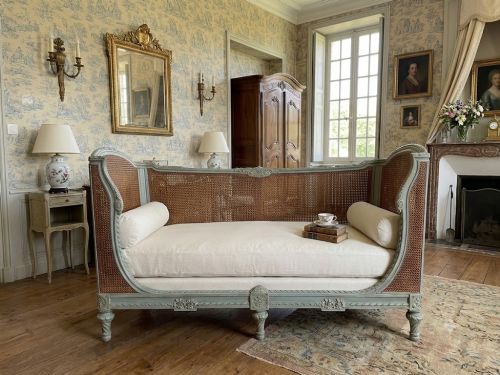
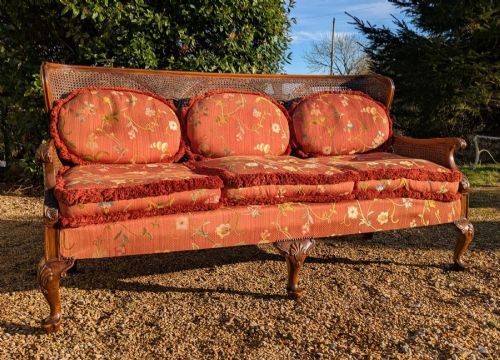
When you search for an antique style caned couch, you encounter a variety of nineteenth and twentieth-century seating forms that blend open woven panels with timber frames. These pieces include daybeds, settees, chaise longues, and three-seater sofas reflecting historical revivals from eighteenth-century French and English aesthetics. The version you are most likely to meet on this page is a French Louis XVI style or Anglo-Indian piece featuring traditional woven cane alongside walnut, beech, or hardwood construction.
Makers and workshops drew upon diverse stylistic vocabularies, ranging from Gustavian restraint to elaborate Louis XV carving. Listings span periods from the eighteenth century through the 1930s, showing how cabinetmakers adapted earlier seating designs for later domestic interiors. Forms vary from small painted canework couches to large walnut bergere sofas with feather cushions.
Materials and construction methods
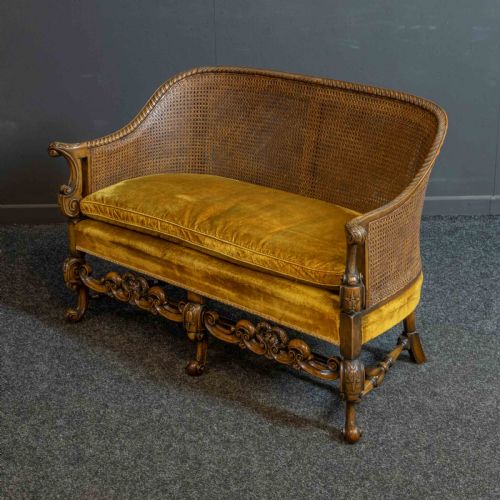
Frames are constructed from hardwoods such as walnut, beech, and Rio rosewood, often shaped through carving or finished with paint and bleaching. Master carpenters joined structural timbers to support the tension of woven cane panels set into backrests and seats. Some examples incorporate upholstered elements like linen and velvet cushions alongside the exposed woodwork.
The integration of woven cane provides both decorative lightness and resilient support within the wooden framework. Artisans combined traditional joinery with meticulous hand-weaving techniques, allowing air to circulate through the back and seat panels. Surface treatments vary from natural polished hardwood to painted or bleached finishes.
A nineteenth-century maker once decided a standard sofa needed tropical hardwood and hand-woven cane, inadvertently inventing the ultimate afternoon resting spot.
Factors influencing quality
The grade of an antique style caned couch depends on the precision of the timber carving and the tightness of the cane weaving. Superior examples exhibit finely detailed woodwork, such as the crisp moulding found on Louis XVI style frames or the dense grain of Rio rosewood. The structural integrity of the frame and the uniformity of the hand-woven cane panels determine the overall caliber of the piece.
Material selection also dictates distinction, with solid hardwoods and period-appropriate upholstery like feather cushions marking higher standards of production. The harmony between the painted or polished finish and the underlying woodwork reflects the original maker's skill. Pieces showing intact, uniform canework alongside robust joinery occupy the upper tier of this seating category.
The Antique Style Caned Couch Glossary
- Canapé
- A French upholstered sofa or settee, often built with an exposed wooden frame and decorative carved details.
- Bergere
- An enclosed upholstered armchair or sofa featuring built-in upholstered sides and typically a cane or cushion seat.
- Gustavian
- The Swedish interpretation of French neoclassical design, characterised by pale painted finishes and restrained symmetry.
- Anglo-Indian
- Furniture made in the Indian subcontinent by local craftsmen for British residents, frequently utilising dense exotic hardwoods.
Antique Style Caned Couch: Frequently Asked Questions
What is a caned couch?
A caned couch is a seating piece featuring panels of woven plant material, usually cane, set into a wooden frame for the backrest or seat.
These couches range from daybeds to three-seater sofas produced across various nineteenth and twentieth-century revival periods.
How do I care for cane?
Cane requires moderate humidity and regular dusting to prevent the natural plant fibres from becoming brittle over time.
Avoid placing these couches in direct sunlight or next to heat sources to maintain the strength of the weave.
What styles are available?
The available styles span French Louis XV and Louis XVI, Gustavian, Anglo-Indian, and Georgian Revival designs.
These pieces reflect historical European and colonial aesthetic movements executed in walnut, beech, and hardwood.
Are cushions included?
Some listings include loose cushions upholstered in materials such as linen, fabric, or velvet, while others rely entirely on the woven cane base.
Check individual descriptions to see whether feather cushions or specific upholstery fabrics accompany the frame.