
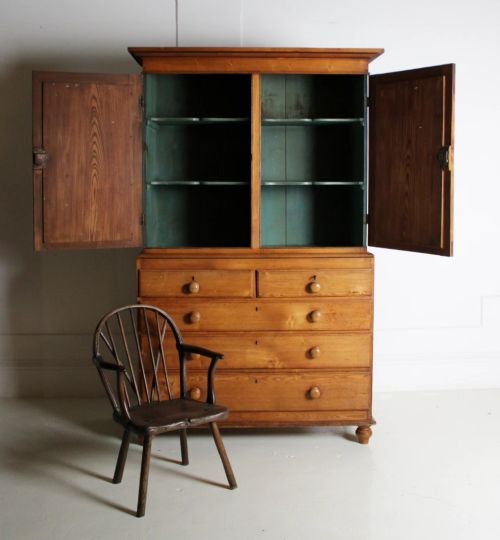
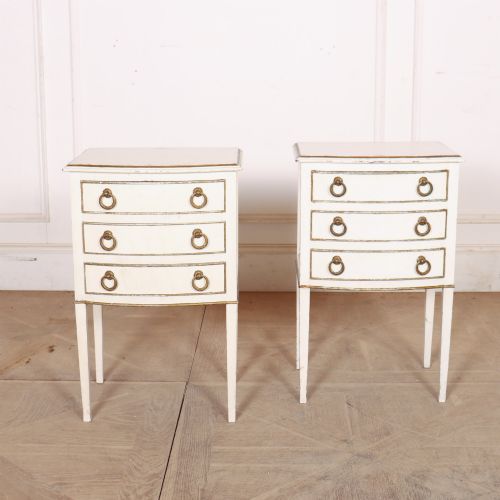
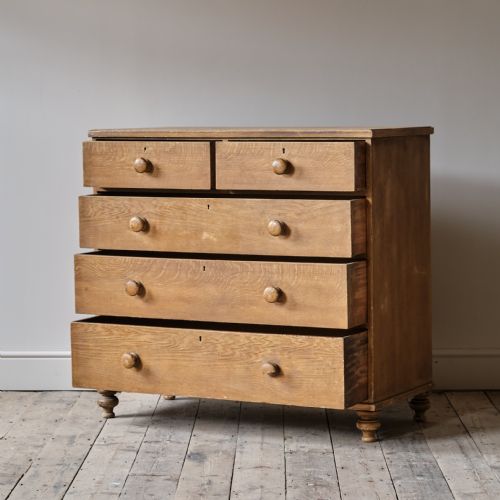
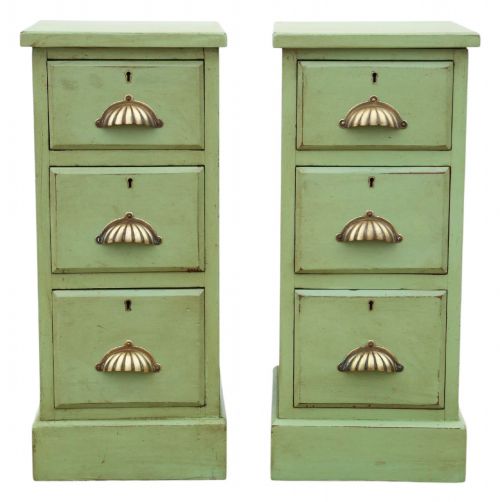
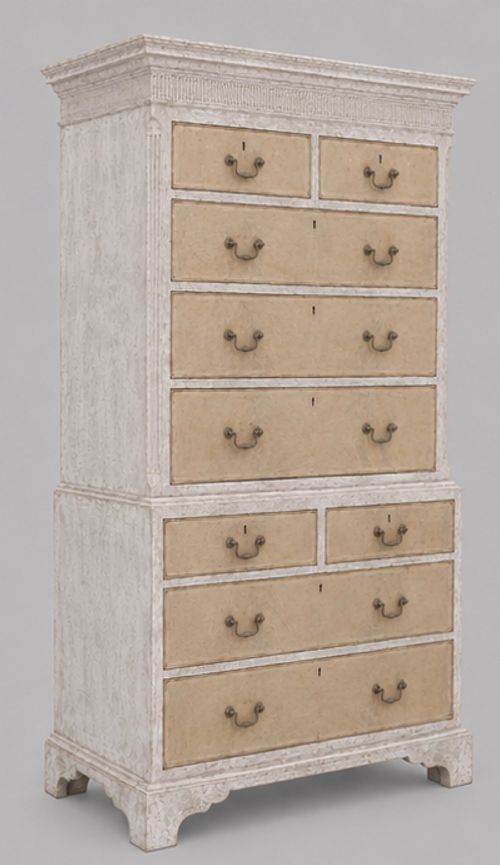
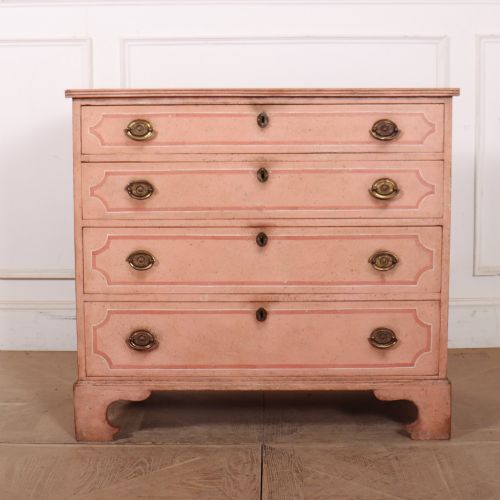
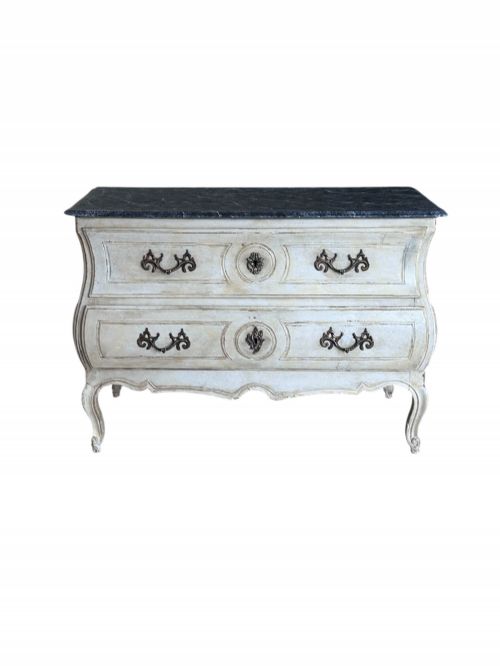
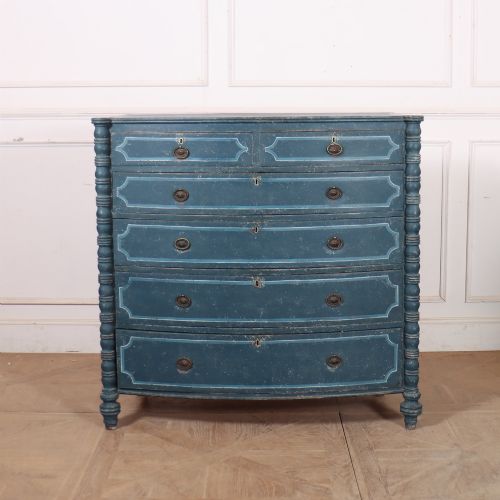
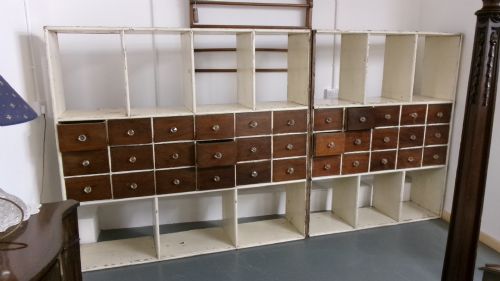
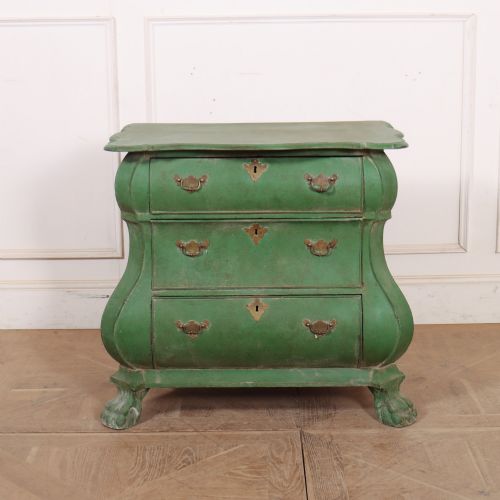
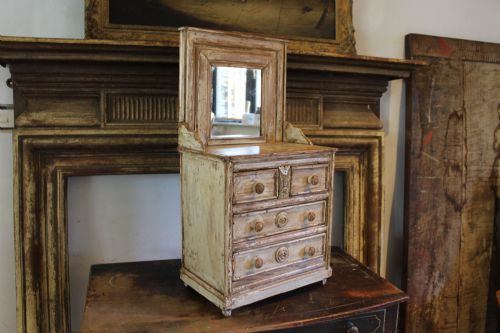
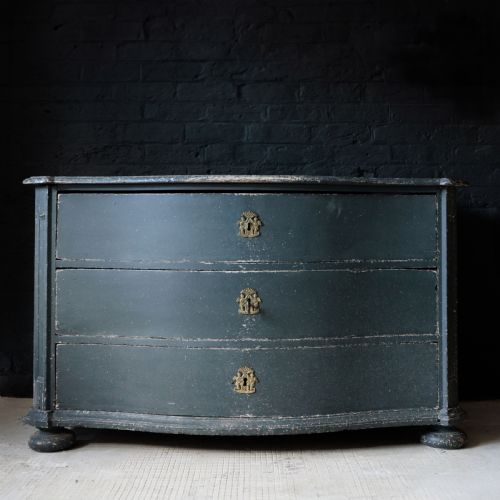
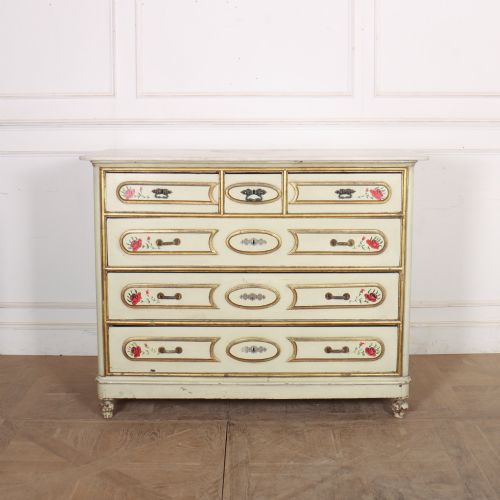

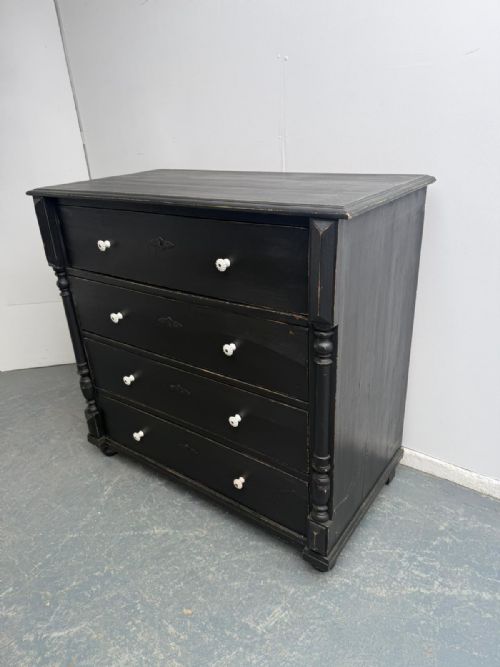
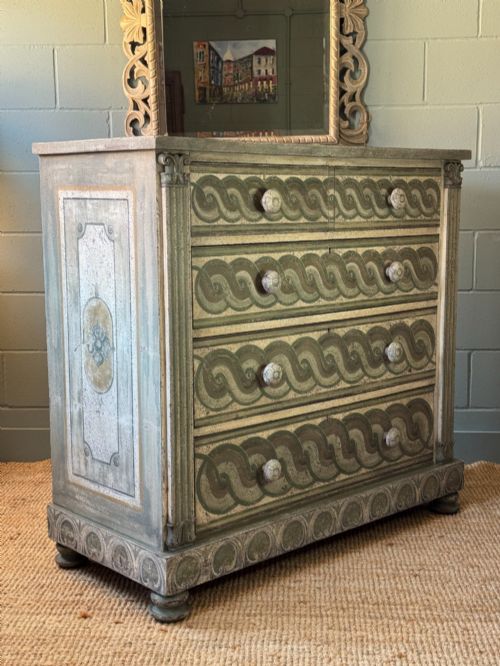
Painted Wood Chest Drawers
Painted wood chest drawers pieces bring character and storage to a room, offering practical design finished with decorative painted surfaces.

Identifying painted wood chest drawers
A painted wood chest drawers provides substantial storage capacity while introducing decorative colour and surface finish into a room. These pieces appear across several distinct stylistic traditions including English Country, Victorian, and continental interpretations.
Forms range from traditional English chest of drawers layouts to French serpentine commodes and Swedish two-drawer commodes. Each variation reflects the regional furniture making preferences of its period of origin.

Construction and materials
Makers built these pieces primarily using solid pine, incorporating brass hardware and occasionally ceramic details for handles and fittings. Construction methods rely on traditional joinery techniques suited to sturdy domestic carcases.
Surfaces received decorative treatments including layers of paint, scumble glazes, and simulated finishes like rosewood, alongside more ornate carved wood detailing on continental examples.
Retail Price Guide 2026
Typical UK retail prices for painted wood chest drawers, calculated from the Sellingantiques database of over a million retail prices indexed since 2003. This retail price guide relies exclusively on Sellingantiques data; no external sources or auction records are used, so the figures do not describe the wider market.
Listings feature pieces spanning the 19th Century and the Victorian era, utilising pine, painted wood, brass, and ceramic materials.
Judging quality in painted wood chests
Quality reveals itself in the integrity of the timber carcase and the historical honesty of the painted finish. Pieces retaining original surface treatments hold greater interest than later repainted examples.
Refinement of form separates standard country items from sophisticated continental styles like Louis XV or Gustavian commodes. The balance of proportions and the subtlety of decorative paintwork dictate the tier of a piece.
The Painted Wood Chest Drawers Glossary
- Scumble
- A decorative painting technique involving layers of translucent glaze manipulated to imitate the grain of more expensive timbers such as oak or rosewood. This finish adds visual depth to plain pine.
- Serpentine
- A front profile characterised by a gentle convex centre flanked by concave curves, commonly found on finer continental commodes. It requires considerable woodworking skill to execute properly.
- Commode
- A term used primarily for decorative chests of drawers, often applied to continental European forms from the eighteenth and nineteenth centuries. These pieces typically feature lower profiles and elegant proportions.
- Gustavian
- The Swedish interpretation of neoclassical design, featuring restrained ornamentation and pale painted finishes. These pieces emphasise light reflection and clean architectural lines.
- Sheraton Revival
- A late nineteenth-century movement drawing inspiration from the lighter furniture designs of the Georgian designer Thomas Sheraton. Items from this period often incorporate satinwood and delicate painted ornamentation.
Frequently Asked Questions
What is a scumbled pine finish?
Scumbling involves applying a translucent glaze over a lighter base coat and working it with tools to simulate wood grain or texture.
This technique allowed makers to give common pine the appearance of exotic hardwoods while creating unique decorative surface patterns.
How do English and French chests differ?
English country pieces generally feature straightforward rectilinear proportions built for utility.
French and continental examples often incorporate serpentine fronts and more ornate carving influenced by court styles.
Are these chests suitable for daily use?
Solid timber construction and deep drawers make these chests practical for everyday clothing and linen storage.
Care should be taken with historical painted surfaces to avoid excessive moisture and abrasive cleaning products.
How can I identify original paint?
Original paint shows natural wear patterns, craquelure, and integration with the underlying timber over decades of age.
Subsequent repainting often masks surface texture and lacks the subtle tonal variations found in period finishes.