
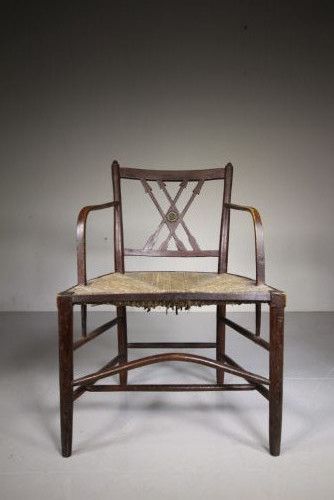
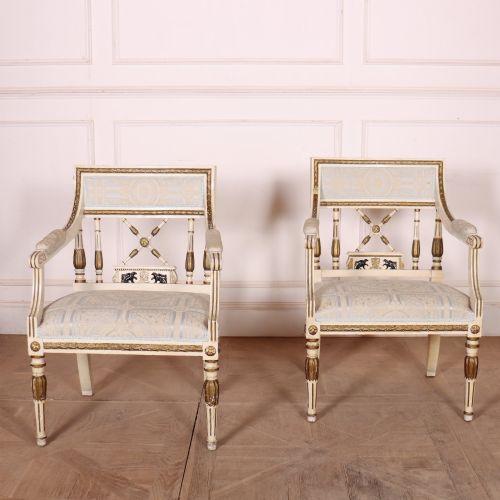
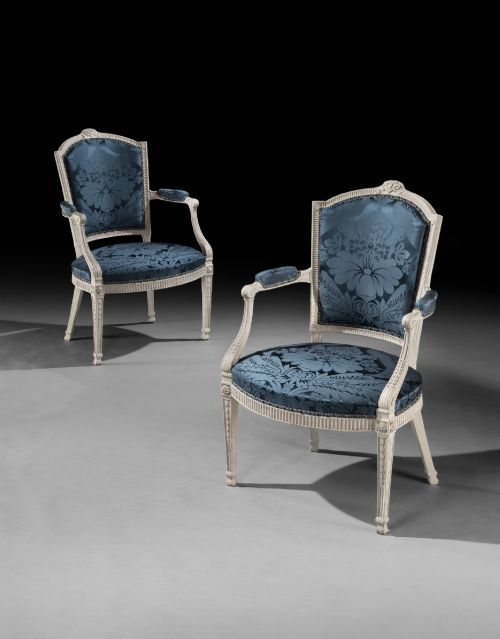


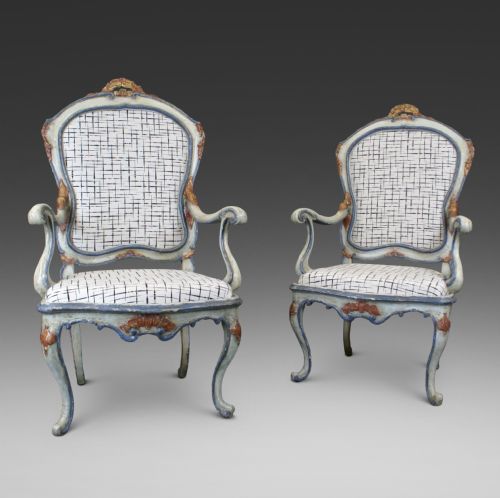


Painted Wood Carver
These painted wood carver chairs bring neoclassical line and vibrant colour into a room, offering both seating and strong visual presence.
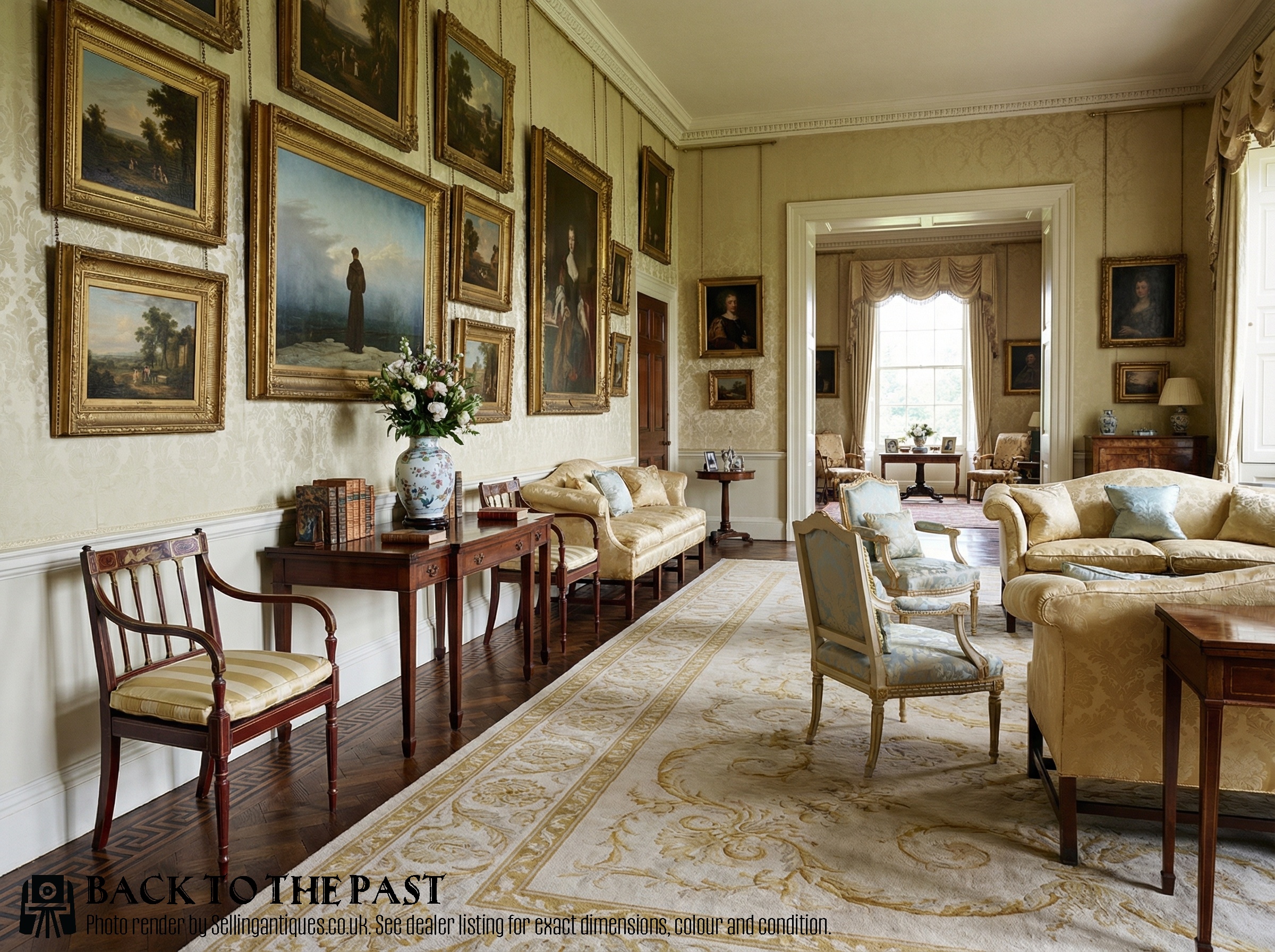
Painted Wood Carver
A painted wood carver functions as an armchair, often serving as the principal seat at a dining table or resting at a desk. These pieces emerge in styles ranging from Georgian and Regency to Swedish Empire and French Directoire.
Origins span English workshops, French studios, and Scandinavian centres, displaying varied regional interpretations of neoclassical design. The forms incorporate open arms and structural woodwork designed for domestic comfort.
How they were made
Construction relies upon solid timber frames shaped by hand, frequently enhanced with gesso layers to prepare surfaces for decorative finishes. Artisans apply paint directly to the wood, sometimes incorporating parcel gilt highlights to accentuate carved details.
Upholstered elements integrate traditional materials such as fabric, textile, and rush to form seats and backrests. These textiles complement the painted framework through patterned or plain coverings.
Some dining chairs arrive accompanied by musical decoration, suggesting tunes played silently while diners sat.
What varies in quality
Quality rests upon the crispness of the original woodwork and the preservation of early decorative surfaces. Pieces retaining undisturbed historic paint schemes command greater interest than those subjected to repeated modern overpainting.
Structural integrity of the timber frame dictates daily utility, particularly where delicate arms and slender legs meet the seat rails. Finer examples display meticulous joinery that withstands centuries of use without losing stability.
The Painted Wood Carver Glossary
- Carver chair
- An armchair designed to match a set of dining chairs, traditionally used at the head of a table.
- Gesso
- A plaster mixture applied to wooden surfaces to create a smooth base for painting and gilding.
- Bergere
- An enclosed upholstered armchair with wooden framing exposed around the sides and back.
- Parcel gilt
- A decorative technique applying thin gold leaf to specific raised portions of a painted wooden surface.
- Gustavian style
- A Swedish interpretation of French neoclassical design characterised by restrained ornament and pale painted finishes.
Painted Wood Carver: Frequently Asked Questions
What is a carver chair?
A carver chair is an armchair built with proportions that match smaller dining chairs, allowing it to sit comfortably alongside them at a table. These pieces often feature open arms and decorated backrests.
Historically, a pair or a single carver stood at the heads of a dining table for the hosts. Today, they function equally well as standalone seating in bedrooms or studies.
How do I date a painted chair?
Dating relies upon examining the underlying woodwork, structural fixings, and the chemical composition of the paint layers. Stylistic markers such as neoclassical shield backs or sabre legs offer initial clues.
Wear patterns on the timber and hand-mixed pigments beneath later finishes provide further evidence of age. Consulting records of known regional styles helps narrow down the decade of creation.
Where should I place a painted wood carver?
These chairs suit spaces where their decorative painted surfaces can be appreciated without sustaining heavy everyday trauma. A hallway, a bedroom corner, or a home office provides an ideal setting.
They also integrate into dining arrangements when paired with complementary tables. Placing them away from direct sunlight protects both the painted finish and the textile upholstery.
Are painted chairs durable for daily use?
Solid wooden frames provide robust structural support, though delicate decorative arms require thoughtful handling. Most historic chairs handle normal sitting comfortably.
Maintenance involves protecting the surface from moisture and avoiding harsh cleaning agents that might lift the historic paint. Regular inspection of the joints ensures the frame remains stable over time.