




Painted White Mantle Mirror
A painted white mantle mirror brings light and scale to a room, sitting naturally above a fireplace or anchoring a high wall.
Painted White Mantle Mirror
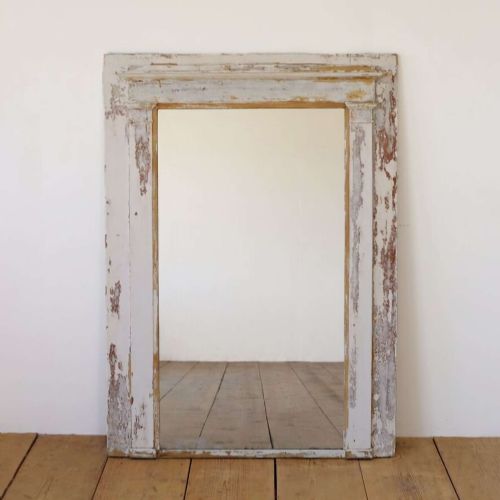
A painted white mantle mirror is typically a substantial architectural frame designed to sit above a fireplace, though wall-hanging variants also appear. These pieces mostly date from the nineteenth century, spanning Victorian, Edwardian, and Regency periods, with French and English origins.
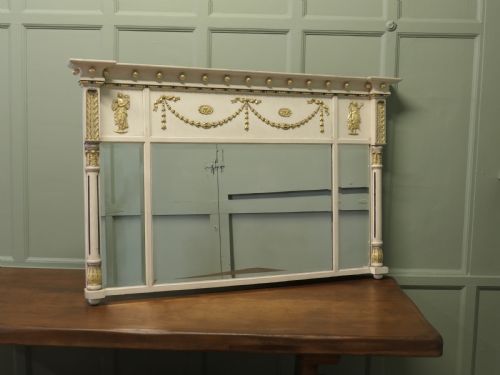
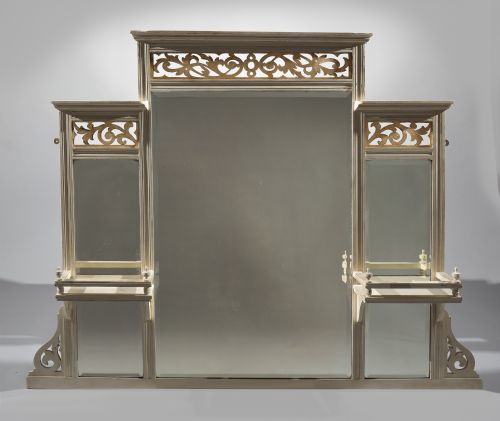
The format ranges from simple rectangular overmantels to elaborate arched, shaped top, and triptych designs. Many examples combine painted surfaces with parcel-gilt details, showing influences from Rococo Revival, Louis XVI, and Neoclassical styles.
Materials and construction
Makers constructed these frames from carved wood, applying layers of gesso to build up intricate relief decoration such as scrolls and foliage. Paint finishes were then applied over the gesso, often combined with gold leaf for parcel-gilt highlights.
Glass plates, including triple and triptych configurations, were set within the wooden carcasses. Original mirror glass frequently displays distinctive foxing and age spots developed over decades.
Listings span multiple decades from the mid-nineteenth century through the Edwardian era, featuring wood, gesso, paint, and gold leaf.
Assessing quality and craftsmanship
Quality rests in the depth and crispness of the carved wood and gesso ornamentation. Finer examples exhibit hand-carved detailing with sharp definition in motifs like acorn and oak leaf patterns, rather than heavily filled or soft mouldings.
The integrity of the original painted surface and the retention of early mirror glass contribute significantly to a piece's character. Frames that maintain their original structural joinery without excessive rebuilding demonstrate superior survival.
The Painted White Mantle Mirror Glossary
- Overmantel
- A large mirror specifically proportioned to hang on the wall directly above a mantelpiece or fireplace.
- Gesso
- A plaster-like mixture applied to wood frames to provide a smooth base for painting and intricate low-relief carving.
- Parcel-gilt
- A decoration technique where parts of an object are selectively gilded with gold leaf while other areas remain painted.
- Triptych
- A mirror divided into three distinct panels, often seen in wide Regency and Victorian overmantels.
- Foxing
- The natural age-related brown spots and speckling that develop within antique mirror glass plates.
Painted White Mantle Mirror: Frequently Asked Questions
Where should I hang a mantle mirror?
These mirrors traditionally anchor the space directly above a fireplace mantel, where their scale reflects room light and balances the hearth below.
Alternatively, they function effectively on large living room or hallway walls as standalone focal points.
How do I identify a Victorian mirror?
Victorian pieces often display heavier proportions and ornate carved wood and gesso decoration, drawing on stylistic revivals like Rococo and Classical.
Construction methods typical of the period include robust timber framing combined with traditional joinery techniques.
Are the mirror plates original?
Many surviving examples retain their original glass plates, which frequently exhibit light clouding, foxing, and minor surface oxidation.
Replacement glass does occur in pieces that have undergone restoration over their long lifespan.
What is parcel-gilt finish?
Parcel-gilt involves applying thin gold leaf to selected raised details of the carved frame while leaving the underlying paint visible.
This technique creates subtle contrast between the white painted areas and the gilded ornamentation.