



Painted Victorian Tilt Top
These painted victorian tilt top tables combine practical folding mechanisms with decorative painted surfaces, offering versatile display space and period charm.
Painted Victorian Tilt Top
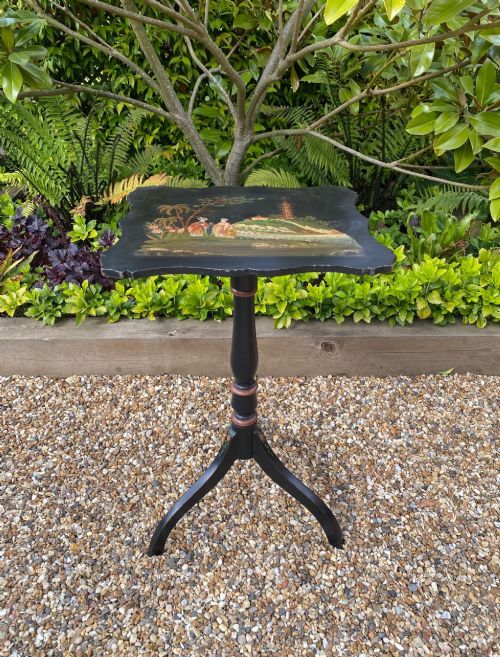
A painted victorian tilt top table is a folding occasional, side, or wine table designed to save space when not in use. These pieces typically date from the nineteenth century, including specific years like eighteen fifty, eighteen sixty, and eighteen eighty, alongside general victorian periods.
The form encompasses various functional types such as dining tables, hall tables, and tray tables alongside standard tilt top designs. Common stylistic influences appearing across the selection include chinoiserie, folk art, and anglo-indian aesthetics, reflecting diverse nineteenth century tastes.
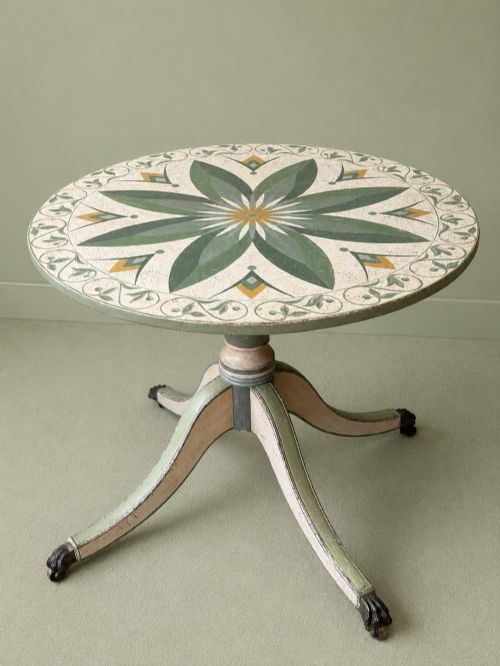
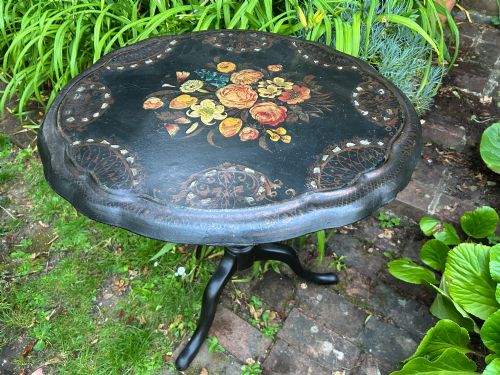
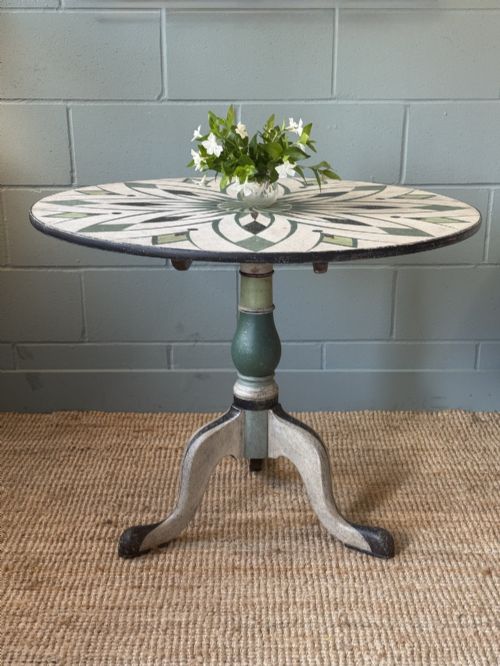
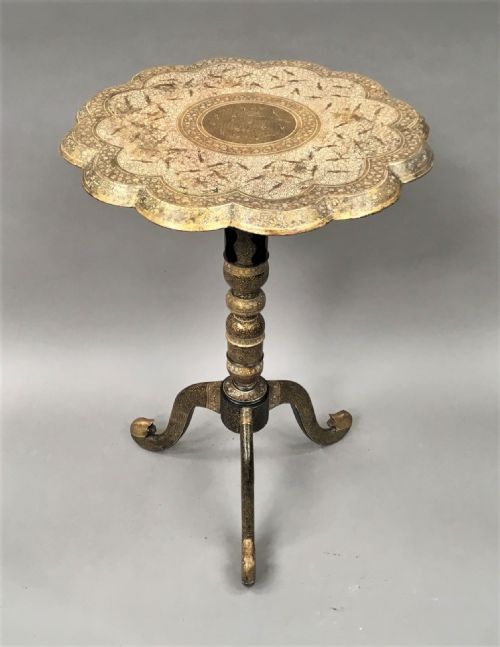
Buyers will most frequently encounter circular tops mounted on tripod bases that allow the surface to pivot vertically. These tables serve multiple roles in modern interiors as decorative accents or practical bedside and corner furniture.
Construction and decoration
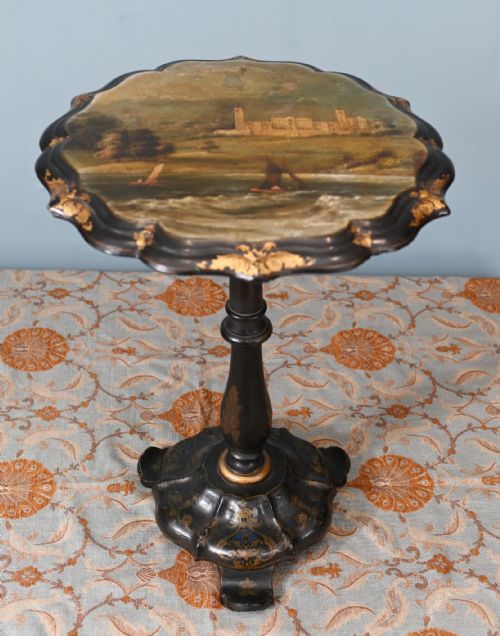
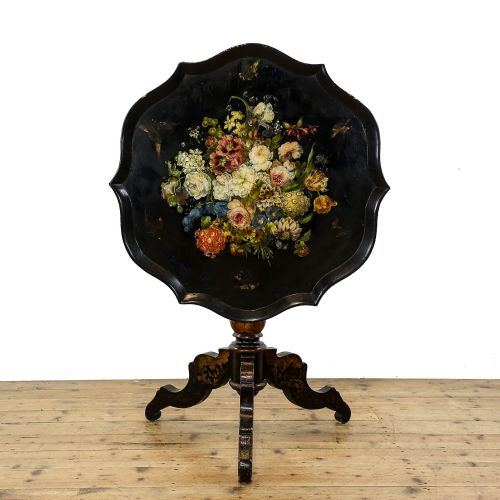
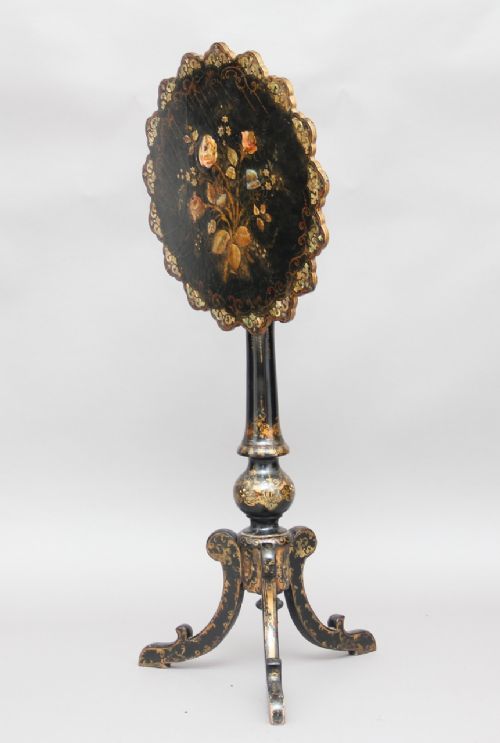
Construction relies upon timber, papier-mache, and lacquer as primary structural and surface materials. Workshops utilised brass for mechanical fittings and hinges on the tilting mechanisms.
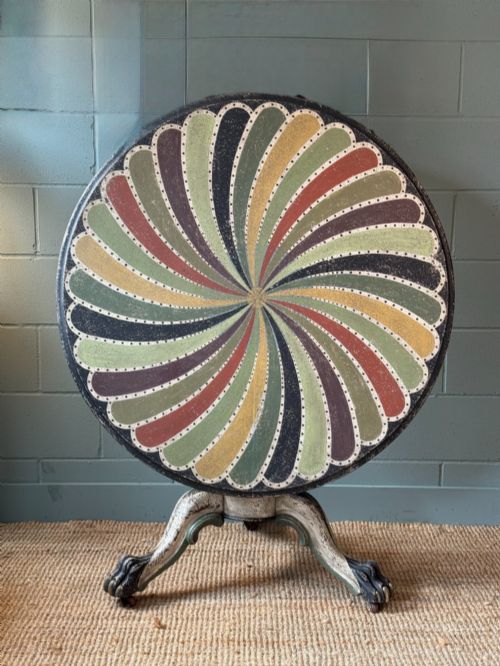
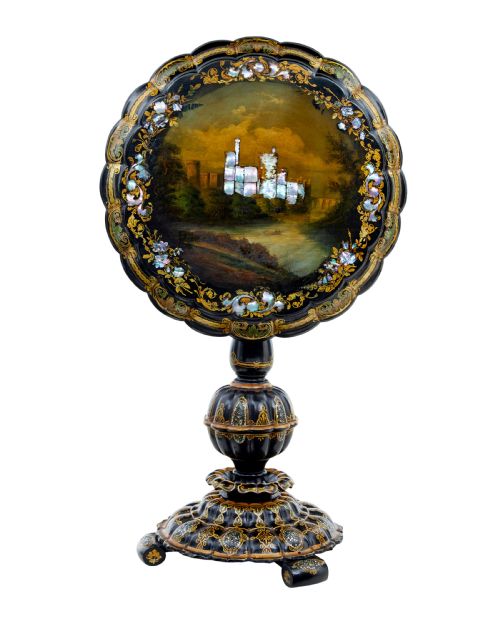
Decoration involves hand applied paint, gilt highlights, and mother of pearl inlay embedded within lacquer or papier-mache bodies. Some examples feature later painted floral, petal, or faux slate designs applied over earlier surfaces.
Several tables feature clever tilting mechanisms originally designed to hide extra dining space right where guests could not see it.
Assessing quality and craftsmanship
Quality separates through the precision of the tilting mechanism and the stability of the tripod base when locked flat. Superior examples maintain tight joints without excessive play in the pivot pivot axis.
The intricacy and preservation of the hand painted details, gilt work, and mother of pearl inlay dictate the visual merit of the piece. Original decorative schemes command greater interest than later applied floral or faux finishes.
The Painted Victorian Tilt Top Glossary
- Tilt top
- A table mechanism featuring a catch and pivot that allows the tabletop to lock vertically against the pedestal base. This design enabled tables to be stored flat against walls when room was needed.
- Papier-mache
- A composite material made from paper pulp or layers of paper mixed with glue and resin, pressed and baked into sturdy forms. It provided a smooth base for lacquer and mother of pearl inlay during the nineteenth century.
- Chinoiserie
- European interpretations of Chinese and East Asian artistic styles, often featuring figures, pagodas, and landscapes rendered in paint and gilt. This aesthetic was widely applied to lacquer furniture.
- Japanned
- European furniture finished with dark varnishes and painted or raised metallic decorations in imitation of Asian lacquerwork. The technique involved multiple layers of heat treated varnish.
- Tripod base
- A pedestal support terminating in three individual feet, commonly used on small occasional and tilt top tables to ensure stability on uneven floors. This configuration maximises legroom around the central column.
Painted Victorian Tilt Top: Frequently Asked Questions
How do tilt top mechanisms work?
The tabletop mounts to a pivoting block secured by a brass latch or wooden catch underneath. Releasing this catch allows the surface to swing ninety degrees into a vertical position.
Engaging the catch locks the top horizontally for use as a stable display or dining surface. This clever engineering allowed nineteenth century households to clear floor space quickly.
Where were these tables used?
Victorian households placed these versatile pieces in parlours, drawing rooms, and hallways as decorative stands for lamps or decorative objects. Their compact footprint made them suitable for smaller seating areas.
When tilted vertically, they stood against walls or in corners out of the way. Today they function effectively as bedside stands or prominent accent pieces in living spaces.
Are papier-mache tables durable?
Papier-mache furniture possesses surprising structural rigidity due to the dense layering and pressing techniques used during manufacture. These surfaces withstand normal daily use when treated with care.
Protecting the lacquer and painted decoration from moisture and direct heat remains essential for long term preservation. Gentle dusting maintains the polished finish without harming delicate gilt work.
How do I spot later painted decoration?
Examination under magnification often reveals modern pigment consistency and brushwork differing from nineteenth century application methods. Wear patterns on the paint surface should align naturally with the age of the underlying timber or papier-mache.
Many period tables received decorative updates in subsequent decades to match changing interior tastes. Both original and later painted surfaces hold distinct historical interest for collectors.