


Painted Vernis Martin
Painted vernis martin brings together delicate pictorial lacquer panels, rich timber carcases and cast ormolu mounts from nineteenth-century France.
Painted Vernis Martin
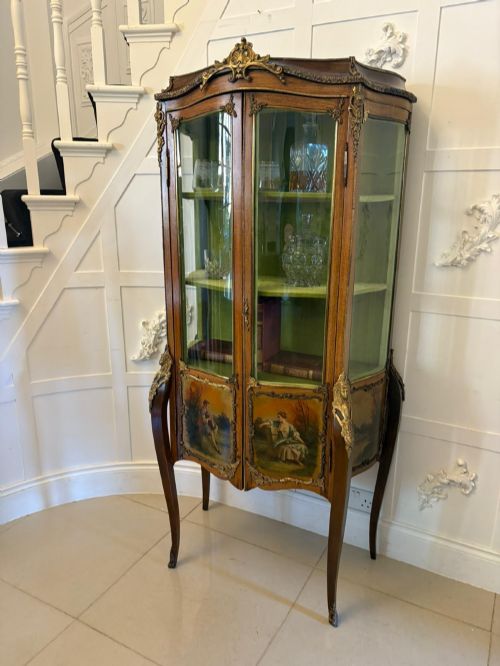
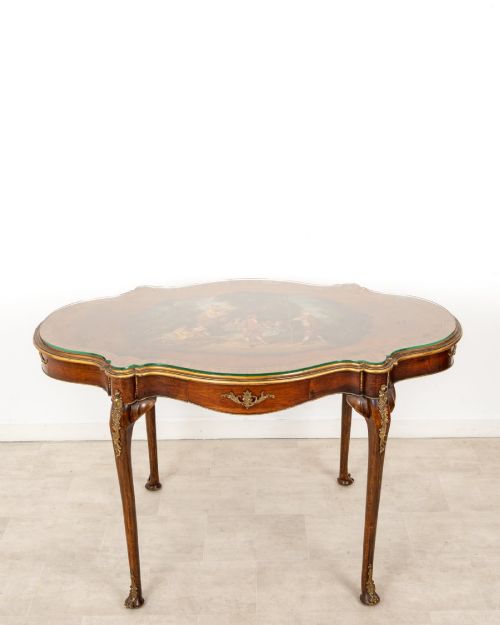
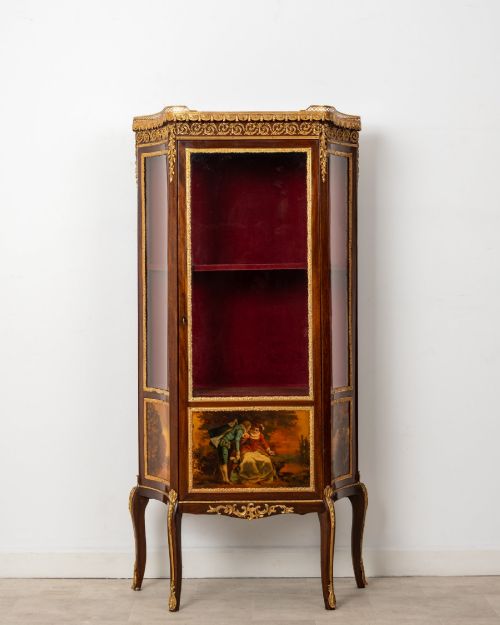
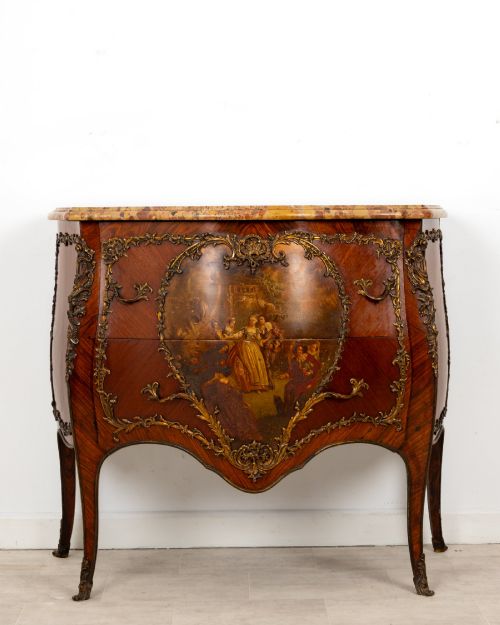
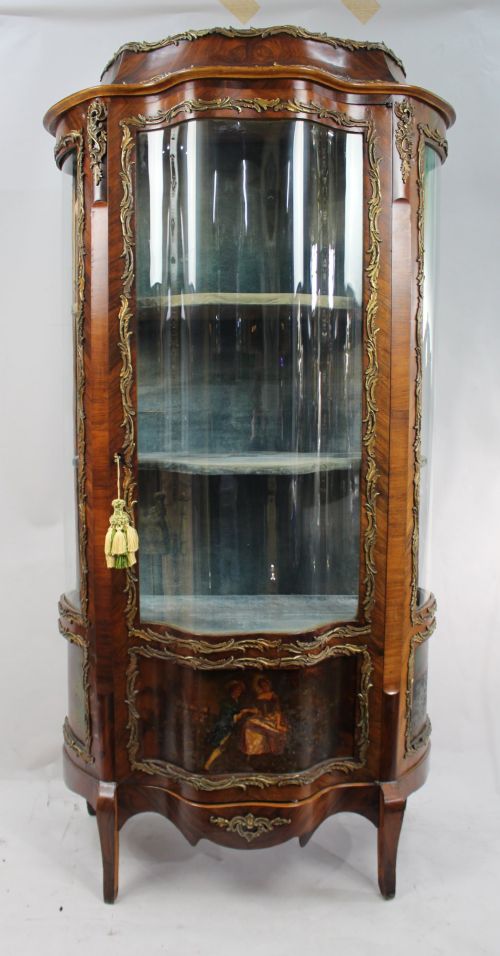
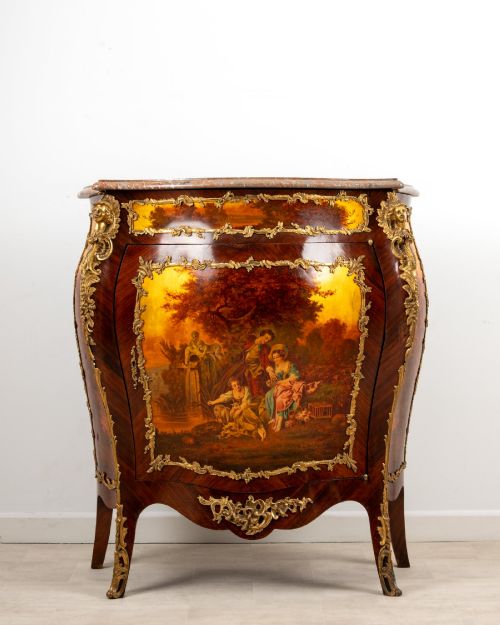
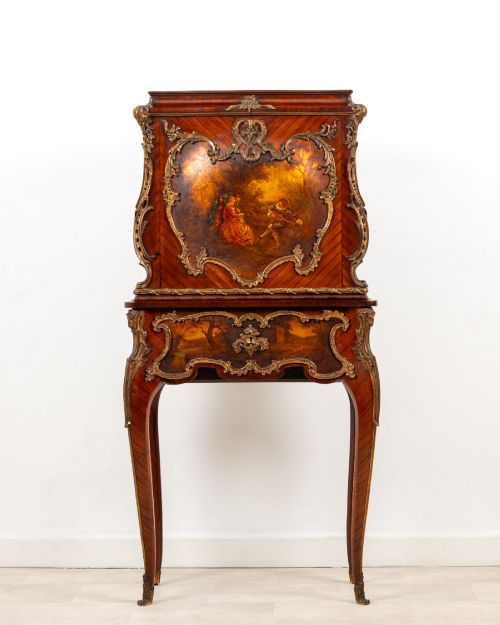
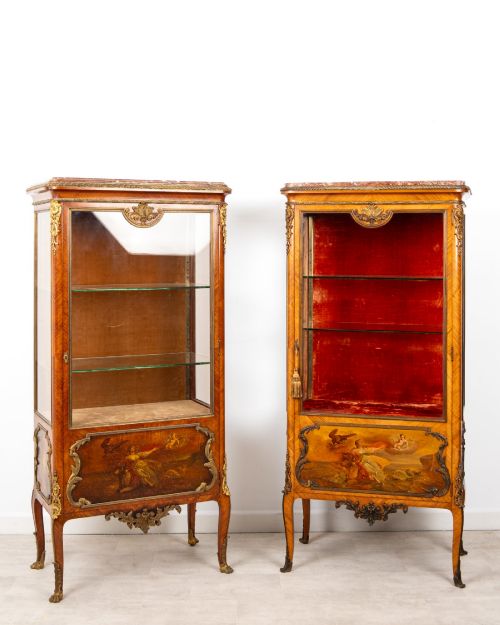
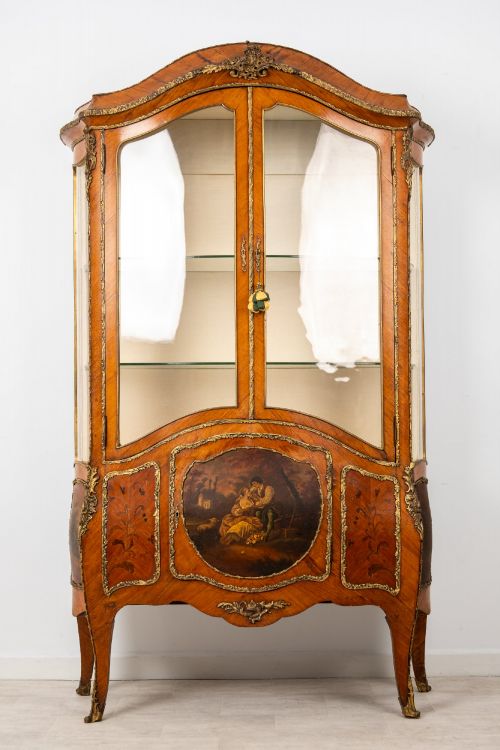
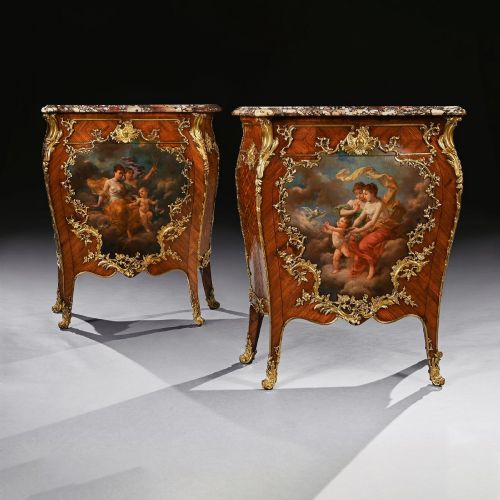
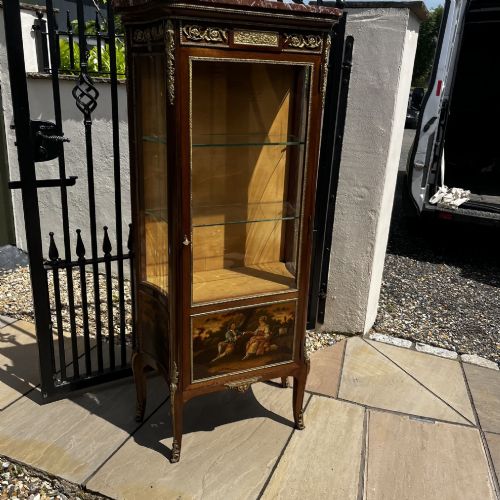
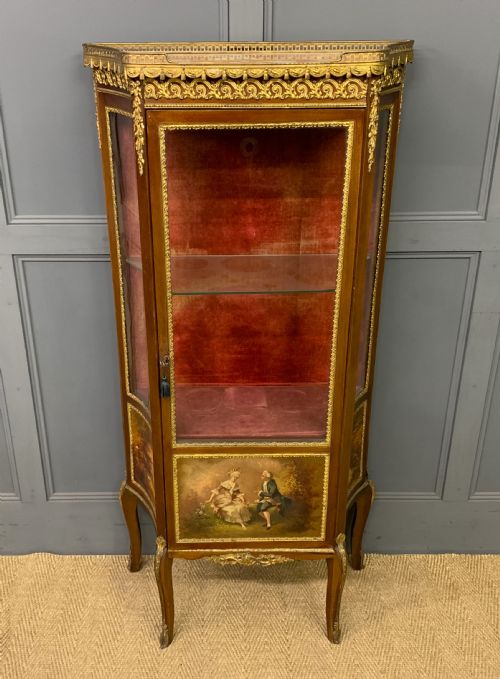
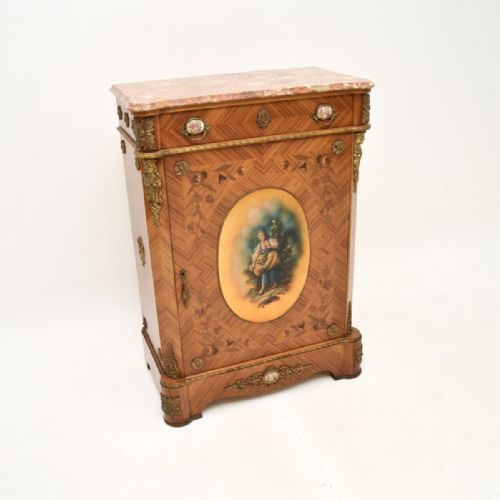
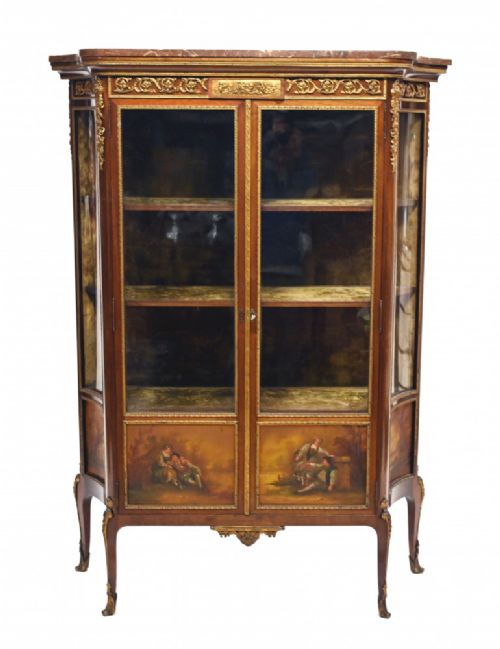
When you search for painted vernis martin, you encounter case furniture decorated with simulated lacquer panels in the eighteenth-century French manner. The most common forms on this page are display cabinets, vitrines, commodes and writing desks originating from nineteenth-century France. These pieces range from grand exhibition-quality vitrines to smaller side cabinets and occasional tables.
The aesthetic draws heavily on Louis XV and Rococo revival styles, often pairing figured timbers with figurative painted scenes. Surviving examples reflect the popularity of French furniture design during the Victorian and Edwardian eras, combining traditional cabinet-making with decorative painted surfaces.
How they were made
Makers constructed the carcases using timbers such as kingwood, mahogany and rosewood, frequently shaped into serpentine or bombé forms. Panels were finished with layered varnishes and painted with classical or pastoral scenes in the manner of the Martin brothers, then protected with clear topcoats.
Gilt bronze or ormolu mounts were cast and chased to highlight corners, feet and friezes, complementing marble tops and glass panels on vitrines and display cabinets.
Object forms span display cabinets, side cabinets, commodes, writing desks, centre tables, pedestal stands and occasional tables.
What varies in quality
Quality separates through the crispness of the bronze ormolu casting and the depth of the timber veneers used in the carcase. Finer examples display meticulous hand-painted detail on the lacquer panels rather than mechanical transfer work, along with heavier, more substantial marble tops.
The integration of the mounts into the structure also distinguishes the standard of manufacture. Superior pieces demonstrate precise fitting of doors, drawers and glass, maintaining the balanced proportions associated with Louis XV revival cabinet-making.
The Painted Vernis Martin Glossary
- Vernis Martin
- A type of simulated Japanese lacquer developed in eighteenth-century France by the Martin brothers, featuring painted pastoral or romantic scenes under translucent varnishes. Nineteenth-century revival pieces adopted this technique for cabinet panels and vitrines.
- Ormolu
- Gilt bronze mounts applied to furniture edges, feet and cornices to accent the shape and protect vulnerable areas. The quality of these metal fittings depends on the sharpness of the chasing.
- Kingwood
- A dense, richly figured Brazilian timber prized by cabinet-makers for its contrasting dark and golden brown grains. It frequently forms the ground veneer on French revival commodes and desks.
- Vitrine
- A glass-fronted display cabinet designed for the exhibition of porcelain and small decorative objects. These cabinets often feature glazed side panels to maximise light entry.
- Secrétaire à abattant
- A tall writing cabinet featuring a fall-front desk flap that conceals inner drawers and pigeonholes. Examples on this page frequently combine this form with painted lacquer panels and marble tops.
Painted Vernis Martin: Frequently Asked Questions
What is vernis martin?
Vernis Martin refers to a specialised European lacquer technique imitating Asian export screens and cabinets. Developed in France, it uses layered varnish over painted compositions.
Nineteenth-century makers revived the finish for display cabinets and commodes, applying pastoral scenes to kingwood and mahogany carcases.
How do I clean a marble top cabinet?
Marble tops require gentle cleaning with a soft, damp cloth and mild soap to avoid dulling the polished stone surface. Acidic liquids must be kept away from the marble to prevent etching.
Dry the stone thoroughly after wiping to maintain its finish and protect the surrounding ormolu mounts.
Are these pieces original eighteenth century?
Most pieces listed under this search originate from the nineteenth century during the Louis XV revival periods. Makers recreated eighteenth-century aesthetics using contemporary techniques and materials.
Cabinets from this later era incorporate nineteenth-century construction methods alongside traditional veneer and lacquer work.
Where should I place a vitrine?
Vitrines suit drawing rooms or dining spaces where glass shelving can display collections safely. Direct sunlight should be avoided to protect both the painted lacquer panels and the timber veneers from fading.
Positioning the cabinet away from intense heat sources preserves the stability of the wood and the integrity of the varnished surface.