

Painted Top Console Table
A painted top console table brings architectural presence and decorative surface to a hallway or reception room.
Painted Top Console Table
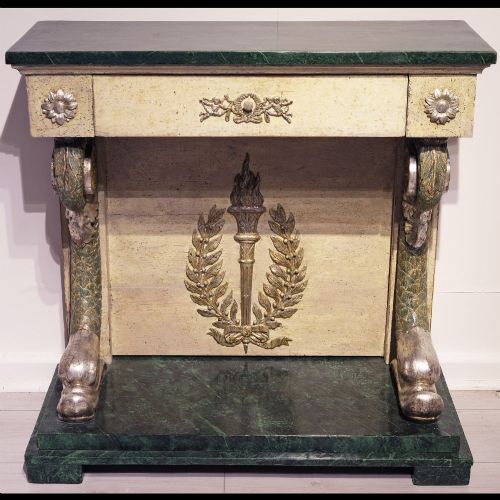
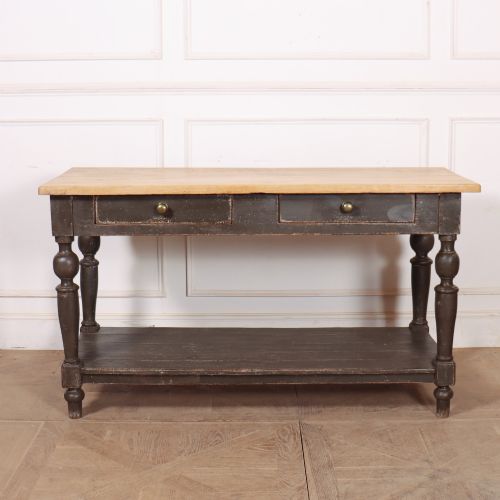
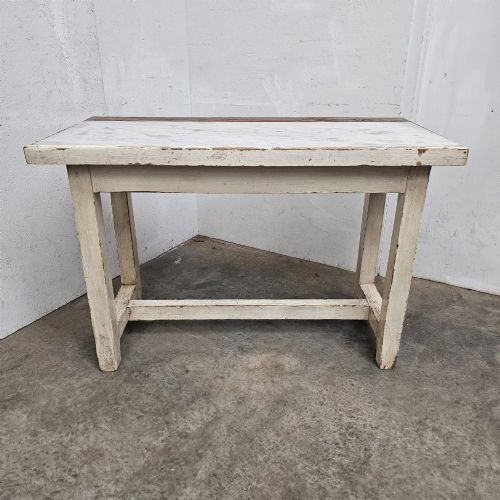
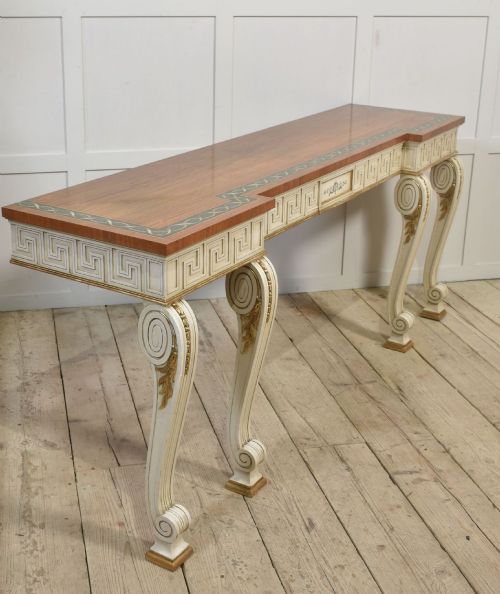
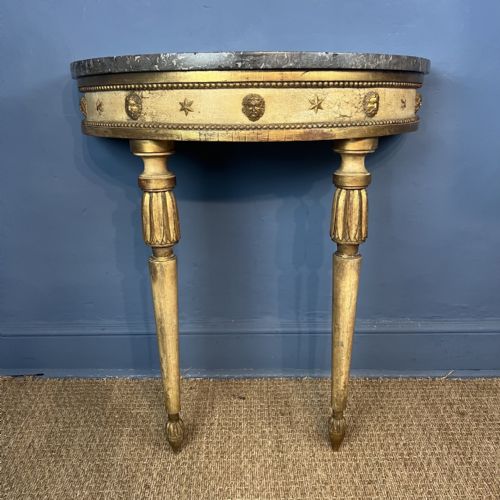
A painted top console table serves primarily as a decorative and functional wall-mounted or freestanding surface, historically designed for placement in hallways, parlours and formal reception rooms. When searching for a painted top console table, buyers encounter an array of forms ranging from shallow demi-lune shapes to grand side tables with distinct regional characteristics.
The pieces available span the 18th century through to the early 20th century, drawing heavily on French, Italian, Swedish and English cabinet-making traditions. Gustavian, neoclassical and rococo styles dominate the selection, often featuring distressed paint finishes, carved details and contrasting decorative surfaces.
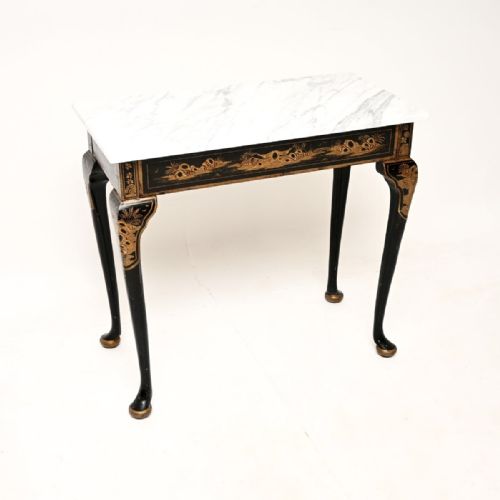
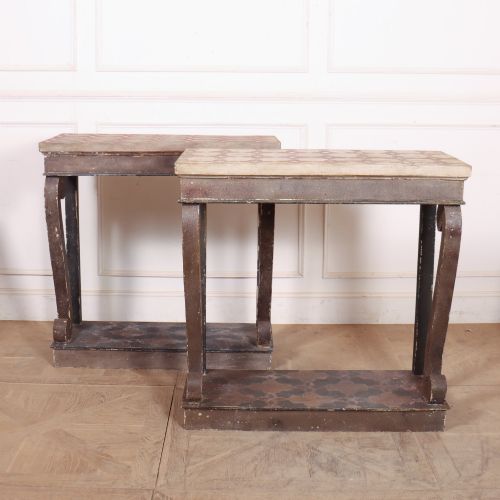
Many examples incorporate hard surfaces such as marble or faux porphyry alongside timber construction, whilst others present hand-painted geometric designs, gilt accents or lacquered chinoiserie. The form frequently overlaps with side tables, card tables and prep tables, reflecting how domestic furniture was adapted for diverse functional uses over the centuries.
Materials and construction
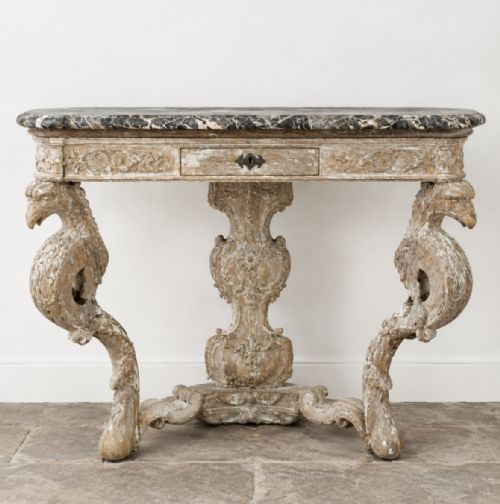
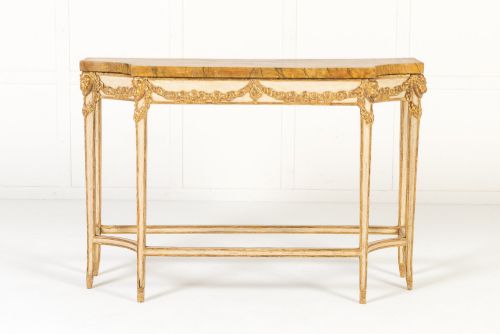
Makers constructed the structural framework of these tables using solid timbers such as pine, satinwood and carved wood, frequently applying multiple layers of gesso and paint to achieve a dense, protective ground. Gilding with gold leaf or parcel-gilt highlights was often added to carved mouldings and cabriole legs to catch the light in formal interiors.
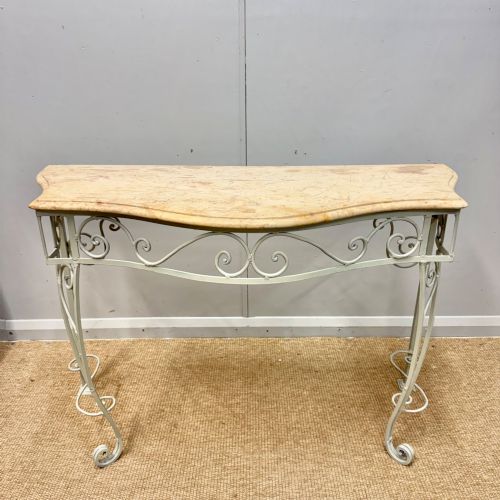
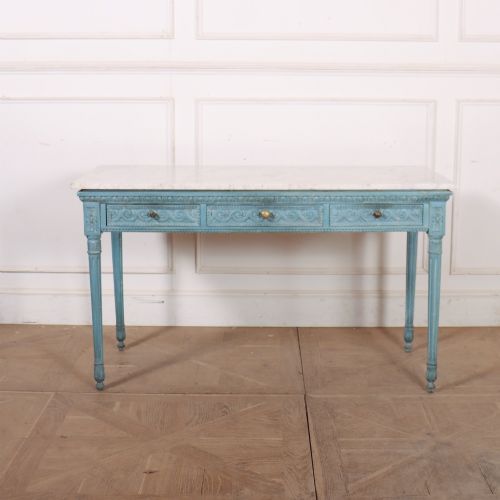
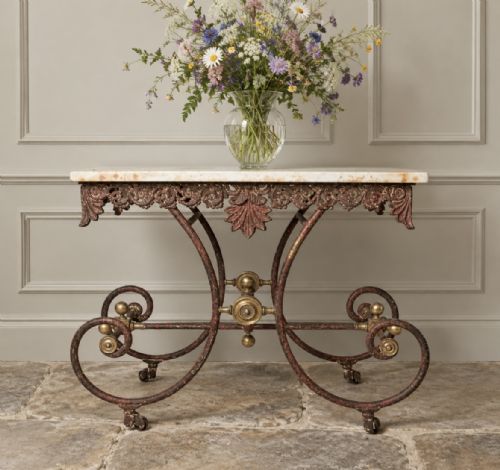
Table tops utilise a diverse range of materials, most notably heavy stone slabs including Carrara, Sienna, breccia and rouge marble, alongside wood tops finished with hand-painted decoration, lacquer or inset suede. Wrought iron and cast iron also appear in structural bases, particularly on pieces intended for garden or orangery use.
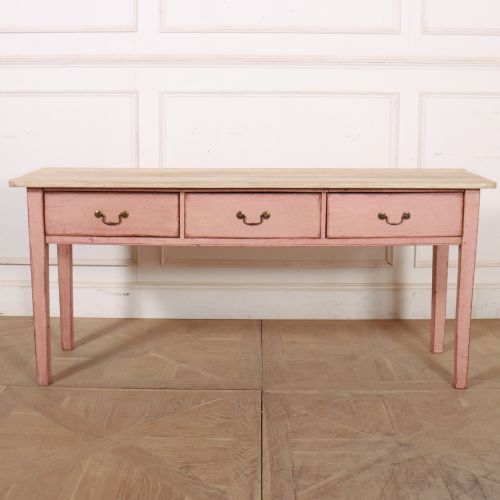
Several tables spent their early working lives quietly holding butter in dairies before moving indoors to hold porcelain.
Defining quality
Quality rests significantly on the depth and execution of the decorative finish, distinguishing robust hand-painted surfaces and delicate parcel-gilding from simpler utilitarian coatings. The crispness of carved wooden details, whether in rococo scrolls or neoclassical swags, separates standard workshop output from finer bespoke commissions.
The choice and thickness of the top material also dictate grade, with heavy inset marble slabs or specialist faux porphyry finishes representing a higher tier of craftsmanship than basic painted timber boards. Proportion and structural integrity, particularly in shallow demi-lune frames designed to stand flush against a wall, govern the overall architectural balance of the piece.
The Painted Top Console Table Glossary
- Demi-lune
- A half-moon shape used for console tables designed to sit flat against a wall. This profile became especially popular in neoclassical and Gustavian furniture design.
- Gesso
- A plaster-like mixture applied to wood surfaces as a smooth base for paint and gold leaf. It allows for crisp carved details to remain sharply defined under decorative finishes.
- Parcel-gilt
- Partially gilded with gold leaf, usually highlighting specific carved motifs against a painted background. This technique creates a subtle contrast between metallic sheen and matte paint.
- Chinoiserie
- European decorative style reflecting Chinese artistic motifs, popular in lacquered furniture. Artisans used this technique to introduce exotic pictorial scenes onto table surfaces.
- Faux porphyry
- A painted or treated surface simulating the rich, speckled purple-red igneous rock prized in antiquity. Italian and French workshops frequently employed this decorative simulation on high-status tables.
Painted Top Console Table: Frequently Asked Questions
Where should I place a console table?
These tables are traditionally positioned in entrance halls, corridors or against living room walls where floor space is limited. Their shallow depth allows them to sit neatly without obstructing walkways.
They also function well beneath large mirrors, paintings or trumeau frames, creating a balanced focal point in a reception room.
Were these tables meant to be wall fixed?
Many grander historical console tables relied on wall fixings or brackets for stability because their narrow frames could not support heavy stone tops independently. Free-standing versions typically feature four legs or a heavier structural base.
Checking the underframe reveals whether a piece requires supplemental support against a wall or stands securely on its own.
How do I care for a painted and marble top?
Painted wooden surfaces respond best to dusting with a dry, soft cloth, avoiding modern chemical polishes that can degrade historical finishes. Moisture should be wiped away promptly from both paint and timber.
Marble tops require neutral cleaners to prevent staining or etching from acidic liquids, preserving the natural stone underneath.
What is the difference between regional styles?
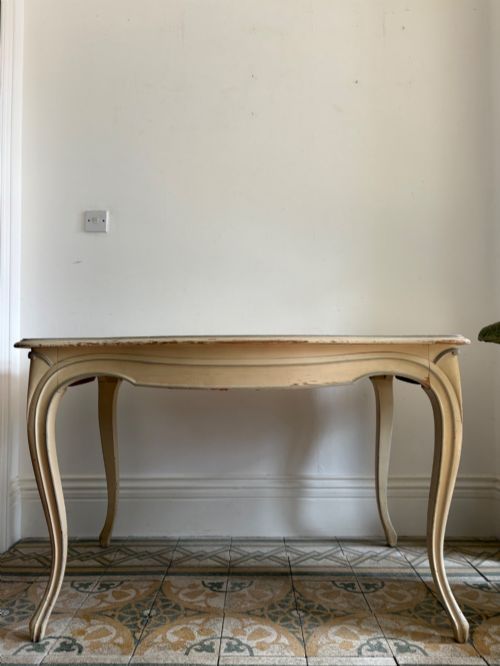
Swedish Gustavian tables often feature pale, restrained cream paint and simple neoclassical lines designed to maximise light in northern interiors. Italian and French pieces tend toward bolder carving, heavier gilding and more dramatic marble tops.
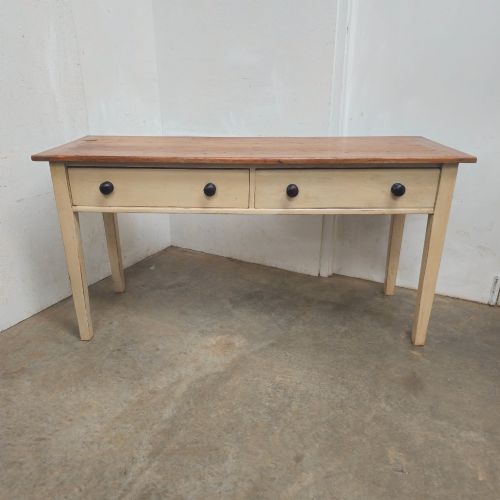
English country house examples frequently display simpler painted pine or dairy table constructions with practical, utilitarian origins.