






Rustic Wooden Entry Table
A rustic wooden entry table grounds a hallway with honest timber grain and age, offering a practical surface the moment you step through the door.
Rustic Wooden Entry Table
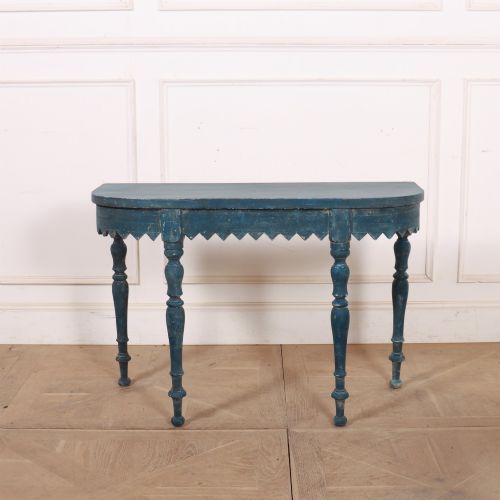
The selection ranges widely across European traditions, featuring English bow ends, Swedish folk pieces, and substantial Spanish or French provincial designs. Dating spans from the seventeenth century through the Victorian era and into the early twentieth century.
Most examples lean towards country house aesthetics, scrubbed surfaces, or painted finishes rather than formal parlour polish. They serve as hardworking furniture designed to hold daily essentials while adding architectural character to an entrance.
Materials and construction
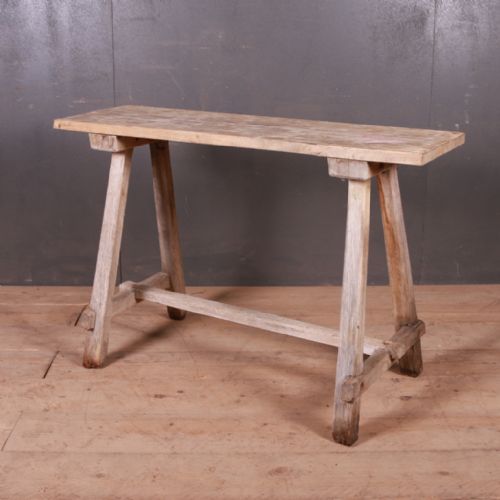
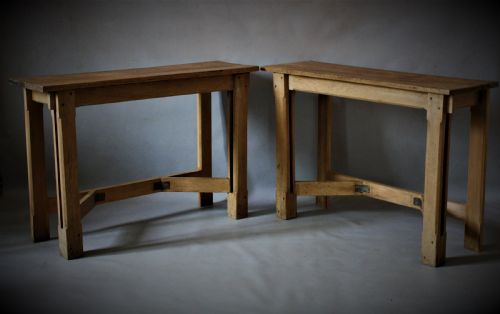
Makers built these tables using robust native hardwoods and softwoods, including oak, walnut, pitch pine, elm, and sycamore, often joined with trestle supports or sturdy underframes. Iron components occasionally appear in structural braces or hardware.
Surfaces show the marks of hand-planing and scrubbing, with some pieces retaining early paint layers or deliberate bleaching to lighten the timber. Construction relies on traditional joinery suited to heavy daily use in busy domestic spaces.
Rustic Wooden Entry Table Retail Price Guide 2026
Typical asking prices for rustic wooden entry table among the pieces listed under this phrase on Sellingantiques today, from the lower quarter to the upper quarter. They describe what is for sale here now, not the wider market.
Several tables show the literal grit of history, retaining the scrubbed marks of past housemaids cleaning pine boards with sand.
Judging quality
Quality rests in the integrity of the timber selection and the restraint of any surface intervention, such as honest scrubbing versus aggressive over-cleaning. Tables with well-proportioned narrow depths and stable structural framing command greater respect among collectors.
The character of the patination tells the story of the piece, separating honest historic wear from recent fabrication. Regional details, such as distinctive trestle bases or folk carpentry methods, elevate a table beyond basic utilitarian carpentry.
The Rustic Wooden Entry Table Glossary
- Console table
- A table designed to stand against a wall, traditionally fixed with brackets or supported by front legs. These narrow formats suit entrance halls and tight corridors.
- Trestle table
- A table consisting of horizontal beams supported by two vertical legs or frames at each end. This form allows maximum legroom and provides robust stability.
- Scrubbed
- A finish achieved by vigorous washing and scouring of the timber to remove old polishes and dirt, revealing the pale, clean grain beneath.
- Bow end
- A table top featuring a convex, curved front edge. This shape softens the profile of furniture in narrow spaces.
Rustic Wooden Entry Table: Frequently Asked Questions
Will a narrow console fit my hallway?
These tables are specifically proportioned for compact corridors and entrance spaces where floor area is restricted.
Checking the depth measurements against your clearance space ensures doors open freely past the timber edge.
How do I care for scrubbed timber?
Unpolished wood surfaces respond best to dry dusting and occasional soft waxing to protect against moisture marks.
Avoiding harsh chemical cleaners preserves the historic texture and pale tone of the aged boards.
What is the difference between trestle and console formats?
Console tables typically rely on standard leg placement at the corners or against the wall, whereas trestle tables use end supports connected by a stretcher.
Trestle versions often offer a more architectural appearance rooted in vernacular country traditions.
How do I identify a regional style?
Regional pieces display distinct material choices and joinery habits typical of their origin, such as Swedish folk paintwork or heavy Spanish walnut construction.
Comparing the timber species and base structure helps pinpoint the likely geographic source.